
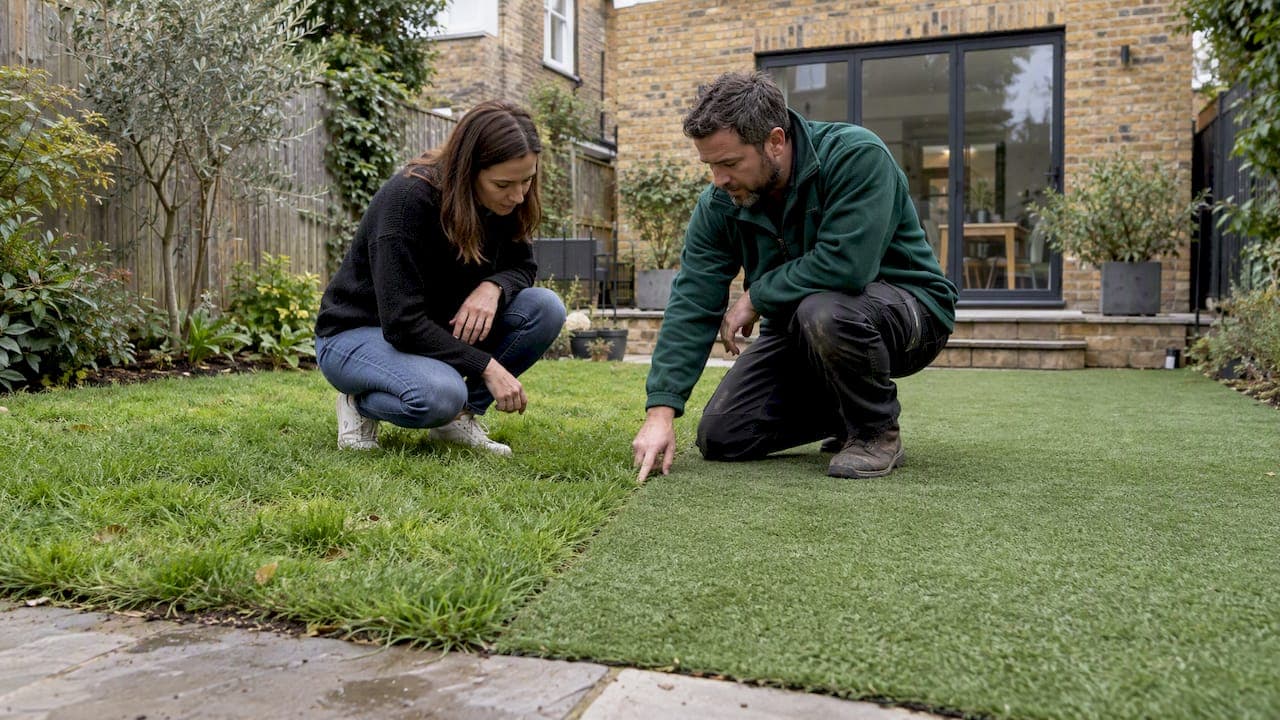
Artificial grass suits most home gardens, while sports-grade turf systems are built for high-intensity community and competition use. The right choice comes down to three trade-offs: upfront and lifecycle cost, surface heat and safety, and how well the site can handle drainage. A domestic lawn and a 3G football pitch are solving different problems, and the construction underneath each one reflects that.
TL;DR:
- Artificial turf surfaces generate more heat than natural grass, which can impact comfort for barefoot play and pets, especially in summer.
- The construction of sports-grade turf includes shockpads and specific infill materials, which influence safety, injury risk, and environmental impact; proper drainage is essential for high-traffic sites.
- Maintenance requirements differ: artificial grass needs regular brushing and infill top-ups to prevent matting and wear, with a lifespan of over a decade under proper care.
- Proper site assessment is crucial, especially for drainage and environmental conditions, to avoid unexpected costs and ensure compliance with local standards.
- Costs differ: natural turf has lower initial installation but higher ongoing maintenance, while artificial grass involves higher upfront costs but lower recurring expenses, with total costs depending on usage and site conditions.
Table of Contents
- Construction and materials: pile, backing, infill, shockpads and sub-base differences
- Where each surface actually gets used
- Pros and cons: playability, injury evidence and surface temperature
- Maintenance, expected lifespan and total cost of ownership
- Drainage, environmental impact and recycling: what to plan for
- Choosing between artificial grass and turf: a practical checklist
- Where we fit into artificial grass projects
- Get a quote for your artificial grass project
- FAQ
- Sources
Construction and materials: pile, backing, infill, shockpads and sub-base differences
The biggest differences between a domestic lawn and a sports pitch sit below the visible grass. Pile height and yarn type set the feel underfoot: shorter, denser pile suits realistic lawns, while longer, more resilient yarns on sports turf resist flattening under repeated sprinting and tackling.
Infill fills the gaps between blades and affects both performance and safety:
- Silica sand adds weight and stability, commonly used in lower-traffic domestic lawns.
- ELT (recycled tyre rubber) infill gives shock absorption for sports pitches but raises end-of-life handling questions.
- EPDM rubber offers a cleaner alternative to ELT with similar performance.
- Bio-based infill made from cork or plant material is increasingly used to reduce environmental impact.
Backing holds the tufts in place and often includes drainage holes, while shockpads sit beneath sports-grade systems to absorb impact and protect players' joints. Domestic installs typically rest on a compacted aggregate sub-base, whereas sports pitches need engineered, permeable sub-bases designed to National standards for sustainable drainage systems (SuDS), since they must handle far higher rainfall volumes without surface flooding.
Where each surface actually gets used
Matching the surface to its job matters more than picking a generic winner.
- Domestic lawns and gardens: homeowners generally want a neat, low-maintenance appearance rather than sports performance, so shorter pile and realistic colour variation take priority.
- Play areas: child-friendly surfacing needs softer underfoot feel and careful infill choice, since children spend more time in direct contact with the ground.
- Community and school multisport facilities: these follow specific artificial grass pitch (AGP) standards because different sports (hockey, football, rugby) place different demands on pile height and ball roll.
- High-performance or biodiversity-sensitive sites: natural or hybrid turf remains preferable where cooler surface temperatures or ecological value matter more than year-round durability.
Sport England's guidance frames this well: the surface should be chosen to match intended use, site conditions and the maintenance resources available, not selected as a generic "turf versus grass" decision.
Pros and cons: playability, injury evidence and surface temperature
Artificial systems generally withstand far more hours of play than natural grass, which is why sports clubs with heavy fixture schedules favour them. They do not go muddy in winter or bald in goal areas, and they stay playable through weather that would close a grass pitch.
Surface heat is a genuine trade-off. Some comparative field measurements have recorded artificial turf running several degrees hotter than nearby natural grass at midday, which matters for barefoot play, pets and long training sessions in summer.
On injury risk, the evidence is more nuanced than a simple "safer" or "riskier" verdict. A PubMed-indexed review found that overall injury rates on artificial surfaces are broadly comparable to natural turf, though abrasions and some foot and ankle injuries appear more frequently on artificial systems.
- Pile height and infill choice directly affect abrasion risk and ball behaviour.
- Lower-quality infill or worn pile increases friction burns during sliding tackles or falls.
- Shockpad quality under sports turf influences joint loading more than the visible grass itself.
- Regular brushing and infill top-ups help keep abrasion risk closer to natural grass levels.
Maintenance, expected lifespan and total cost of ownership
Artificial grass is lower-maintenance than natural turf, but it is not maintenance-free, and ignoring upkeep shortens its working life.
- Brush the pile regularly to stop fibres matting down, particularly in high-footfall areas.
- Clear leaves, moss and debris before they break down into the infill layer.
- Top up infill periodically, since compaction and weathering reduce depth over time.
- Rinse and disinfect where pets use the lawn to prevent odour build-up.
Domestic artificial lawns typically last well over a decade with reasonable care, while sports-grade systems under heavy fixture use wear faster and need earlier renovation or re-infilling. Budgeting should cover installation, any drainage works, ongoing maintenance, and eventual disposal, since usage intensity and site conditions (shade, drainage, footfall) all shift the real lifecycle cost beyond the initial price.
Drainage, environmental impact and recycling: what to plan for

Drainage is not optional for a well-performing installation, and it becomes a regulatory matter at scale. Sports pitches need permeable sub-bases and sometimes attenuation tanks to meet SuDS design principles, which prioritise managing rainfall close to where it falls rather than piping it away.
Environmentally, the picture involves trade-offs rather than a clean winner. Life-cycle assessment research shows artificial turf carries higher impacts at the construction stage, but per hour of use, intensively played pitches can come out lower impact than natural grass once mowing, irrigation and fertiliser are factored in. Infill choice changes this picture substantially.
- Bio-based or recycled infill reduces several lifecycle impacts compared with virgin polymer infill.
- Storing or treating old artificial turf is subject to environmental permit conditions designed to limit microplastic loss.
- Sealed drainage and impermeable storage areas are part of compliant handling during removal.
- Planning end-of-life removal before installation avoids costly surprises later.
Pro Tip: Ask any installer upfront whether infill provenance is documented and whether they have a plan for removing and recycling the old surface, not just laying the new one.
Choosing between artificial grass and turf: a practical checklist
Before comparing quotes, decide what actually matters for the site rather than the surface in isolation.
- Define intended use first: a quiet family garden has very different requirements from a club pitch used daily.
- Think in capex versus opex: artificial grass costs more upfront but less in recurring labour; natural turf is cheaper to lay but needs ongoing mowing, feeding and repair.
- Factor in heat and pets: shaded gardens or pet-heavy households may do better with cooler-running infill or partial natural areas.
- Check drainage capability on-site: a sloped or heavy-clay garden needs a proper assessment, not assumptions based on a neighbour's lawn.
- Confirm planning requirements: larger commercial or sports installations may need permissions tied to drainage or land use.
When asking contractors for quotes, press for specifics: how is drainage designed, what infill is specified, what does the warranty actually cover, and what happens to the old surface at removal. A quote with no site survey, no drainage plan and a vague warranty is a red flag worth walking away from. For London gardens where groundworks, drainage prep and installation need coordinating under one team, LookDeVis Services can manage the project from survey through to finished lawn.
Where we fit into artificial grass projects
Projects often begin with a practical site check: ground condition, existing drainage, access and the intended use of the space. Typically, the scope covers removal of the old lawn, ground preparation, excavation, base installation and the finished artificial grass, with waste cleared through licensed waste handling. These services can be provided across residential and commercial properties, and projects may be coordinated as a single job rather than several separate trades.
— Roman
Get a quote for your artificial grass project
We handle site preparation, drainage groundwork and installation as one coordinated job, so you are not juggling separate contractors for digging, base-laying and turfing.

For a fast, accurate quote, send us the approximate dimensions of the area, a few photos of the current garden or ground, and how the space will be used day to day. If irrigation or water-saving options are part of the plan, our garden irrigation guidance partner resource is worth a read alongside your quote. Request a free quote from LookDeVis Services and we will get back to you with next steps.
FAQ
What are the downsides of artificial turf?
Artificial turf runs hotter than natural grass in direct sun, which affects comfort for bare feet and pets, and some injury review evidence points to more frequent abrasions and certain foot or ankle injuries compared with natural grass. It also requires eventual disposal and drainage planning that natural lawns do not.
Is it cheaper to turf or use artificial grass?
Natural turf is cheaper to install but carries ongoing costs for mowing, feeding and repair, while artificial grass costs more upfront but needs far less recurring maintenance. Which works out cheaper overall depends on usage intensity, site conditions and how long you intend to keep the surface.
Can weeds grow through artificial grass?
A properly prepared base with a weed-suppressant membrane largely prevents weeds growing up through artificial grass, though windblown seeds can occasionally take root in surface debris or infill. Regular brushing and keeping the surface clear of organic build-up reduces this risk significantly.
Are artificial turf and artificial grass the same?
They describe the same general material but are engineered differently depending on purpose: domestic "artificial grass" is designed for appearance and light use, while sports-grade "turf" systems include shockpads and infill specified for performance and player safety. Sport England's guidance treats surface selection as use-led rather than a single generic product choice.
Sources
- Injury rates for sports on artificial versus natural turf (PubMed indexed review)
- Sport England: Outdoor surfaces design and cost guidance
- Gov
Prices, timescales and information provided in this article are for general guidance and may vary depending on the property, site conditions, materials and scope of work. Please contact LookDeVis Services for an individual assessment and quotation. Where regulatory, planning or legal requirements apply, appropriate professional advice should be obtained.