
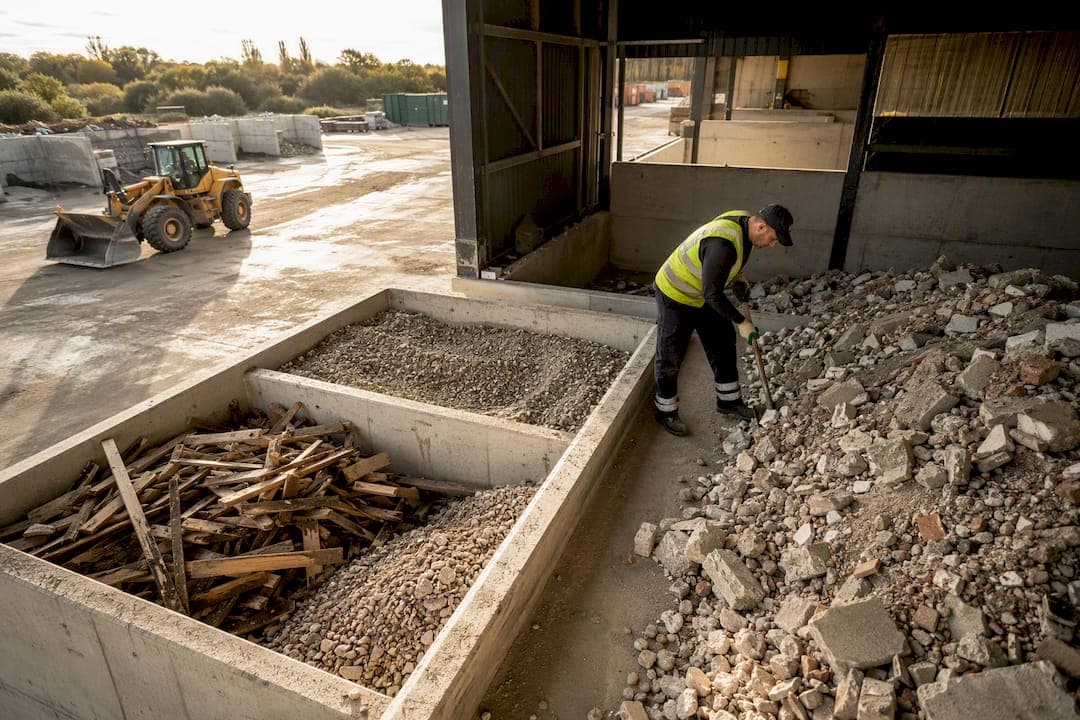
Duty of care applies from the moment you produce construction waste until it reaches an authorised operator, and it does not end when a skip leaves your site. You must classify every waste stream with the correct EWC code, checking for the hazardous asterisk (*), then hand it only to a registered carrier backed by a Waste Transfer Note or Hazardous Waste Consignment Note. Skip any of these three steps and liability for illegal disposal can land back on you, however far the waste has travelled.
TL;DR:
- All waste leaving a construction site must be classified with correct EWC codes and marked if hazardous, with proper testing for suspicious loads.
- Only registered waste carriers can transport waste legally, and owners must verify their registration and retain transfer documentation for at least two to three years.
- Storing hazardous waste improperly or mixing waste streams increases the risk of breaches, enforcement actions, and rejection of loads.
- Using licensed waste removal services in London shifts compliance responsibilities and ensures proper paperwork like WTNs and disposal receipts are handled.
- Breaching waste duty of care can result in criminal prosecution, even if the waste is disposed of by unlicensed carriers or ends up fly-tipped.
Table of Contents
- Your legal responsibilities: duty of care and who is liable
- Classifying construction waste: LoW/EWC codes and hazardous asterisks
- Moving waste off site: carrier registration, WTNs and consignment notes
- On-site storage, segregation and handling of hazardous materials
- Permits, exemptions and site registration: when authorisation is needed
- Enforcement, penalties and responding to illegal disposal
- Practical compliance checklist for builders
- Local perspective: why a licensed local contractor reduces risk in London
- How Lookdevisservices helps with compliant waste removal in London
- Sources
- FAQ
Your legal responsibilities: duty of care and who is liable
Duty of care is not a one-off form you sign and forget. It is a continuing legal obligation that runs from the moment waste is produced on your site until it reaches someone authorised to treat, recycle, or dispose of it lawfully. The Waste duty of care code of practice requires producers to prevent unauthorised disposal, transfer waste only to authorised persons, and keep accurate records throughout. Breach it, and you are looking at a criminal offence, not a paperwork slip.
Several parties can hold legal duties on the same job, and each has a distinct role:
- Producer — whoever generates the waste, usually the main contractor or property owner commissioning the work.
- Carrier — anyone transporting the waste, including a subcontractor moving rubble in their own van.
- Broker or dealer — anyone arranging disposal on behalf of another party without physically handling the waste.
Subcontractors clearing their own debris still need their own carrier registration; borrowing the main contractor's paperwork does not cover them. Keep transfer records and receipts for every load, because liability does not automatically disappear once waste leaves your hands. If it ends up fly-tipped because the carrier you chose was never registered, you can still be the one facing enforcement action.
Classifying construction waste: LoW/EWC codes and hazardous asterisks
Every load leaving a building site needs a List of Waste (LoW) or European Waste Catalogue (EWC) code before it moves anywhere. Government guidance on classification sets out a three-step approach: identify the chapter that matches the waste's source, check for a mirror entry describing the same material as hazardous or non-hazardous, then test for hazardous properties where the description is unclear.
Pro Tip: Never guess hazardous status on a suspicious load. Treat it as hazardous and get it tested rather than assuming it is safe to mix with general rubble.
An asterisk (*) next to a code marks the waste as hazardous under UK law, and confusing hazardous with non-hazardous streams is one of the most common (and costly) mistakes on site:
17 06 01*— insulation containing asbestos, always hazardous.17 01 01— concrete, typically non-hazardous.17 04 05— iron and steel, typically non-hazardous.17 05 03*— soil and stones containing dangerous substances, hazardous where contamination is confirmed.
Accurate descriptions matter because sites and transfer stations will refuse or delay loads that arrive mislabelled, and a wrong code on a consignment note can itself trigger enforcement scrutiny.
Moving waste off site: carrier registration, WTNs and consignment notes
Anyone transporting construction waste as part of their business, including a builder using their own van, typically needs a valid waste carrier registration. Owning the vehicle and holding commercial insurance is not the same as being registered to carry waste, so check this separately before any load leaves the site.
- Verify the carrier on the Environment Agency's public register before booking a collection; legitimate registrations carry a reference beginning "CBDU".
- Complete a Waste Transfer Note for non-hazardous loads, recording a written description of the waste, quantities, and both parties' details.
- Issue a Hazardous Waste Consignment Note for anything asbestos-related, contaminated, or otherwise hazardous; the note travels with the load until it reaches its destination.
- Retain copies of every WTN and consignment note, since these are your evidence of lawful transfer if a dispute or inspection follows.
Pro Tip: Add a short line to your WTN confirming the waste hierarchy was considered, prevention, reuse, recycling, recovery, disposal, in that order. It is a small addition that demonstrates reasonable steps during any audit.
On-site storage, segregation and handling of hazardous materials
Poor storage is where compliant paperwork often unravels. Waste that leaks, blows away, or gets mixed between skips becomes misdescribed waste, and misdescribed waste is where duty of care breaches begin.
- Keep hazardous and non-hazardous streams in clearly labelled, separate containers, never sharing a skip.
- Cover open skips and use bunded containment for liquids such as solvents or waste oils to stop run-off.
- Store asbestos-containing material in sealed, labelled bags away from general traffic routes, following HSE asbestos guidance and COSHH principles for handling.
- Inspect storage areas daily to catch cross-contamination before it spreads to an otherwise clean load.
Good housekeeping here is cheap insurance against a rejected load or a much bigger enforcement problem later.
Permits, exemptions and site registration: when authorisation is needed
Most small building jobs run under standard exemptions rather than a full environmental permit, but thresholds exist and they matter. Storing hazardous waste on site above certain amounts generally triggers registration requirements, and larger transfer operations sit under formal permit limits. Regulations governing construction, demolition and excavation waste transfer stations cap what a site can accept annually and how much can be stored at any one time.
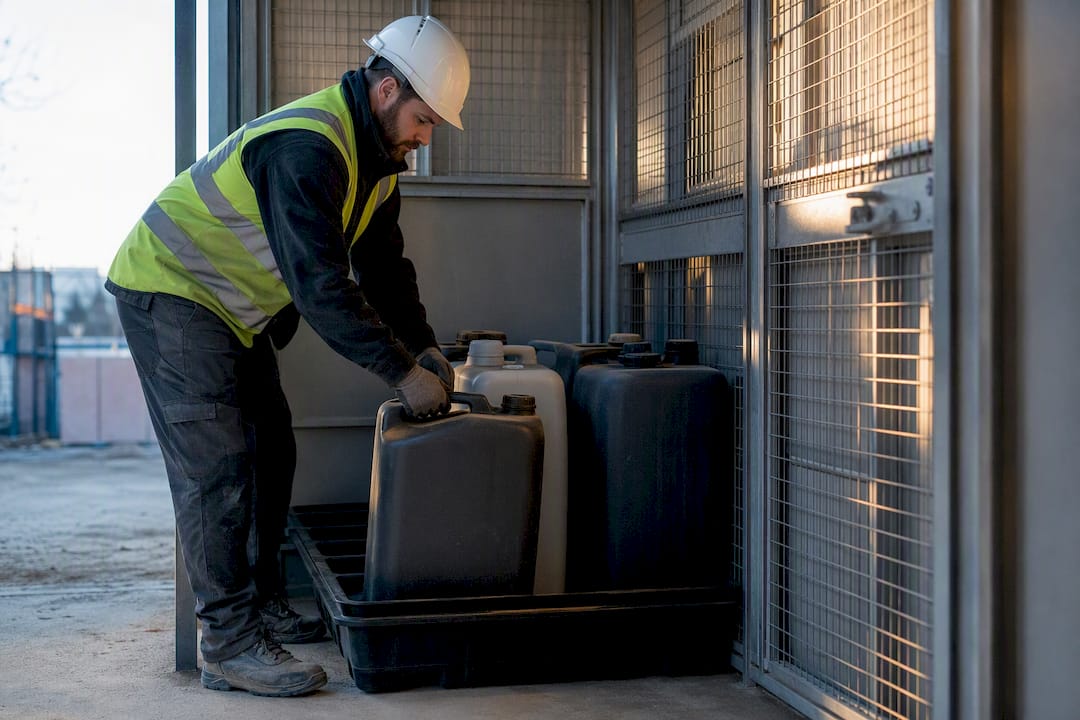
Common exemptions, such as a U1 registration for storing waste prior to recovery or a Paragraph 19 exemption for treating certain wastes, can cover typical site activity, but they are not automatic. Check with the Environment Agency, Natural Resources Wales, SEPA, or DAERA before you rely on one, because using an exemption you do not actually qualify for is itself an offence.
Enforcement, penalties and responding to illegal disposal
Breaching duty of care is a criminal offence, and the FMB's guidance for construction businesses is blunt about the risk of using cheap, unlicensed operators: the original producer can still be prosecuted if that waste ends up fly-tipped. If you discover a load has been dumped illegally, collect your WTNs, photographs of the collection, and the carrier's registration check immediately, then report it to the Environment Agency. Audit carriers regularly and refuse any unverified collection offer, no matter how competitive the price looks.
Practical compliance checklist for builders
- Before work starts — map expected waste streams, plan segregation, and flag anything likely to be hazardous.
- Before removal — verify carrier registration on the public register, complete the WTN or consignment note, and label every load correctly.
- After transfer — collect disposal receipts, file WTNs and consignment notes together, and diarise a quarterly audit of your carrier records.
Pro Tip: Keep WTNs for at least two years and hazardous consignment notes for at least three, matching standard retention expectations under the duty of care code, longer if you are managing a larger commercial contract.
Local perspective: why a licensed local contractor reduces risk in London
Handling waste yourself means owning every one of these obligations. Working with a licensed waste carrier covering Greater London shifts the administrative burden onto a team already set up to issue WTNs correctly. Many builders now build disposal costs directly into client quotes rather than treating waste as an afterthought once the job is under way.
— Roman
How Lookdevisservices helps with compliant waste removal in London
Using a licensed waste carrier that handles collection, correct documentation, and disposal helps reduce the compliance burden on busy London sites.

Waste removal teams can supply the Waste Transfer Notes and disposal receipts needed to keep a clean audit trail, whether it is a single skip of rubble or ongoing waste from a refurbishment project. Disposal costs are often included directly in client contracts, treating disposal as a fixed line item rather than a variable risk. If you are quoting a job and want the waste side handled properly from collection through to paperwork, get a free quote for licensed waste removal in London and we will talk you through what your site actually needs before a single skip arrives.
This article is general information, not a substitute for advice from a qualified lawyer. Consult a qualified legal professional about your own circumstances before acting on anything here.
Sources
- Construction and demolition waste: how to classify
- Waste duty of care: code of practice
- Carrying waste: ensure your construction business avoids hidden fines
FAQ
What are the new bin rules for 2026 in England?
Household bin collection changes relate mainly to domestic recycling streams and do not alter the commercial duty of care rules covering construction waste; builders still classify, document, and transfer waste through authorised carriers regardless of any household bin reforms.
Are waste disposals legal in the UK?
Waste disposal is legal only when carried out through an authorised route, meaning a registered carrier, a permitted or exempt site, and the correct Waste Transfer Note or Hazardous Waste Consignment Note; disposing of construction waste outside these channels is a criminal offence under the duty of care code.
What are the current waste laws in the UK covering builders?
Builders are governed primarily by the waste duty of care, the requirement to classify waste using LoW/EWC codes, and carrier registration rules, all of which sit alongside site-specific permit or exemption requirements depending on volume and waste type.
Do I need a Hazardous Waste Consignment Note for every job?
Only for waste marked with a hazardous asterisk (*), such as asbestos-containing material or contaminated soil; non-hazardous streams like concrete or timber need a standard Waste Transfer Note instead.
How do I check if a waste carrier is properly registered?
Search the carrier's name or CBDU reference number on the Environment Agency's public register before booking a collection; a licensed carrier such as Lookdevisservices will have this registration ready to show on request.
Recommended
- Licensed Waste Removal & Rubbish Clearance Services in London
- Licensed Waste Removal & Rubbish Clearance Services in London
- Avoid Fly Tipping: 5 Legal Mattress Disposal Routes in London
Prices, timescales and information provided in this article are for general guidance and may vary depending on the property, site conditions, materials and scope of work. Please contact LookDeVis Services for an individual assessment and quotation. Where regulatory, planning or legal requirements apply, appropriate professional advice should be obtained.