
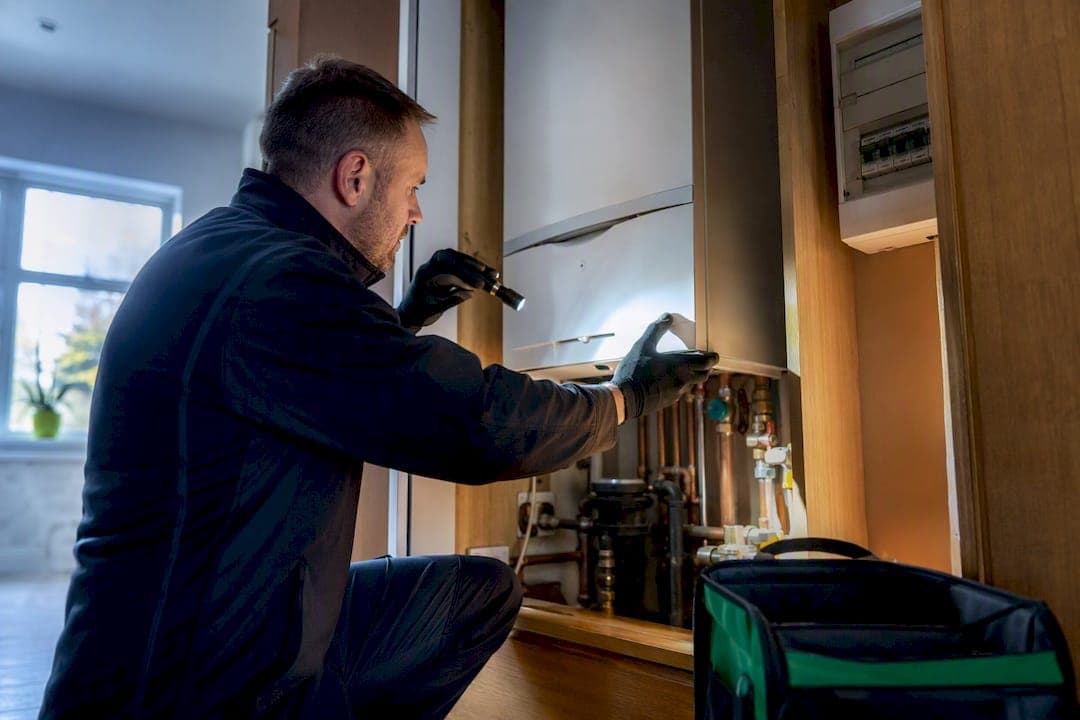
The safest approach is a frequency-based commercial property maintenance checklist that runs from daily housekeeping through to annual statutory checks, with every task logged against an asset register. Prioritise the legal non-negotiables first: an annual Gas Safe check, an EICR every five years, and a current fire risk assessment. Book any overdue statutory work with a licensed contractor immediately; for scheduled grounds, exterior and refurbishment work, a practical local option is available across Greater London.
TL;DR:
- Regularly log all maintenance tasks within an asset register, including inspection dates, responsible persons, and specific details for accountability.
- Prioritize statutory checks such as annual gas safety, five-year electrical inspections, and annual fire risk assessments to stay compliant and prevent costly failures.
- Conduct visual inspections for faults like leaks, scorch marks, or blocked drains, and escalate issues promptly to licensed contractors for repairs.
- Focus on external and ground maintenance, including drainage, fencing, and tree safety, to avoid structural damage and liability from weather-related damage.
- Use a single, insured contractor for grounds, cleaning, waste removal, and external repairs to simplify scheduling and ensure comprehensive property upkeep.
Table of Contents
- What should a quick maintenance checklist include?
- What does an area-by-area inspection actually involve?
- Who is legally responsible for maintenance in England and Wales?
- How do you turn this into a working schedule?
- Does preventive maintenance actually save money?
- How do you adapt this checklist for your building?
- What London landlords ask us to prioritise
- Get your commercial maintenance schedule sorted
- Sources
- FAQ
What should a quick maintenance checklist include?
A workable property maintenance guide sorts tasks by how often they need doing, not by which trade carries them out. Grouping by frequency stops small jobs slipping through the cracks between annual site visits.
Daily
- Communal area cleaning and litter checks
- Waste collection and bin store management
- Quick walk-round safety check (trip hazards, blocked exits, lighting)
Weekly
- HVAC filter checks on high-use systems
- Communal area and stairwell inspection
- Grounds tidy, including paths and entrances
Monthly
- Water temperature logs at sentinel outlets
- Visual electrical checks (sockets, panels, obvious damage)
- Landscaping tasks: hedge growth, drainage gullies, weed control
Quarterly or biannual
- PAT spot checks on portable equipment
- Fire door visual inspections (seals, self-closers, signage)
- Sprinkler and stop-valve checks where fitted
Annual
- Gas safety certificate renewal
- EICR (Electrical Installation Condition Report)
- Roof and structural survey
- Full fire risk assessment and legionella review
This is the backbone of any preventive maintenance for buildings programme. The detail behind each line, and what to look for on site, sits in the area-by-area breakdown below.
What does an area-by-area inspection actually involve?
A commercial maintenance tasks list only earns its keep once it tells you what a fault actually looks like and what to do about it. Here's the practical detail behind each building system.
- Roof and structure. Watch for slipped or cracked tiles, sagging guttering, and any fresh staining on internal ceilings, which usually signals a slow leak long before it becomes an emergency. If you spot any of these, get a roofing contractor to survey the area rather than patching it yourself; a missed slip today is a collapsed ceiling next winter.
- HVAC. Filters need replacing on a schedule set by usage, not a calendar guess, and condensate trays and coils should be checked for blockages at the same time. Larger commercial systems (typically over 12kW cooling capacity) fall under TM44 inspection obligations, which is worth confirming with your building's records if you're not certain your system qualifies.
- Electrical. Staff can safely do visual checks on sockets, switches and the consumer unit, looking for scorch marks, loose fittings or warm covers. An EICR goes deeper, testing the wiring itself, and an EICR every five years is the standard recommendation for commercial premises, with older or higher-risk installations needing more frequent testing.
- Plumbing and drainage. Check for slow leaks under sinks, blocked external gullies after heavy rain, and signs of standing water near foundations. Legionella risk sits here too: sentinel outlets need regular temperature monitoring, and HSE guidance treats legionella control as risk-based rather than fixed-interval, so many managers review full assessments every two years or sooner after any change to the water system.
- Fire safety. Weekly call-point testing, monthly fire door checks (do they close fully and seal properly?), and a visual sweep of escape routes for stored boxes or blocked exits should all happen without exception. Emergency lighting needs a monthly function test and an annual full-duration test.
- External areas and grounds. Paving, fencing and drainage channels take a beating from weather and footfall, and overgrown vegetation can hide structural damage to walls or foundations. Tree inspections matter too, particularly for mature trees near car parks or building entrances where a falling limb creates real liability.
- Cleaning. Beyond daily housekeeping, façades, signage and entrance glazing benefit from a scheduled deep clean, which also makes small defects (cracked render, loose fixings) far easier to spot.
Pro Tip: Keep a phone photo log every time you do a walk-round check. Six months of dated photos turns a vague "it's been fine" into evidence you can hand a surveyor or insurer if a dispute ever arises.
Who is legally responsible for maintenance in England and Wales?
Lease terms decide who pays for what day to day, but they don't override statutory duty. Commercial landlords retain core legal responsibilities for structural safety, fire safety, gas and electrical compliance, and managing hazardous materials such as asbestos, regardless of what the lease says about repairs.
The statutory checks that sit with the landlord (or whoever holds legal control of the building) typically run on these cycles:
- Gas safety: annual Gas Safe certificate for any gas appliances or installations
- Electrical: EICR every five years, sooner for higher-risk or older wiring
- Fire risk assessment: reviewed annually, or sooner after any layout change
- Legionella: risk assessment reviewed roughly every two years, or after system changes
Full repairing and insuring (FRI) leases often push day-to-day repair costs onto the tenant, but in multi-let buildings the picture gets messier: shared plant, communal areas and structural elements usually stay with the landlord. A schedule of condition, agreed at the start of a tenancy, limits how much dilapidations liability a tenant can be landed with later. Keeping certificates on file, being transparent about service-charge spend, and commissioning a professional survey whenever structure or asbestos is in doubt are the three habits that keep legal exposure manageable.
How do you turn this into a working schedule?
An asset register is what separates a checklist from an actual maintenance system. For every system or feature, log its location, serial number, next inspection date and the person responsible.
- Asset register fields: system name, location, serial/reference, inspection frequency, next due date, responsible person
- Minimum records to keep: inspection reports, safety certificates, contractor invoices, tenant notifications
- Workflow: map each checklist item to an owner, a frequency, and an escalation path if it's missed
A spreadsheet template covers most small portfolios; larger estates benefit from a basic CMMS or a general maintenance app with custom categories for statutory versus routine work. Either way, the goal is the same: nobody should have to remember when the EICR is due.
Does preventive maintenance actually save money?
Preventive inspections catch problems early and reduce both emergency repair bills and the tenant disruption that comes with them. Water ingress from neglected drainage or guttering remains one of the most common routes to expensive structural repair, which is exactly why grounds and exterior checks sit near the top of any sensible annual property inspection checklist.
Routine grounds and drainage maintenance carried out at a managed site in Wembley HA9 showed the practical value of staying ahead of small issues: clearer surface drainage and fewer reactive call-outs once regular visits replaced ad hoc fixes.
Prioritise high-risk assets, fire, gas, water and electrics, for early inspection, and let lower-risk decorative items sit on longer cycles.
How do you adapt this checklist for your building?
- Scale frequencies to occupancy and age: an older building or a high-footfall site needs shorter inspection cycles than a modern, lightly used unit.
- Record every defect with a photo, date and location before you escalate it to a contractor or notify affected tenants.
- Download and print the checklist below, then share it with your site team or letting agent so everyone works from the same schedule.

What London landlords ask us to prioritise
Roman, LookDeVis Services
Drainage, grounds upkeep and urgent tree work top the list our clients raise most often, alongside regular cleaning of exterior façades. Our insured teams and licensed waste carrier status let us build flexible plans around whatever a site actually needs. If your checklist has gaps, ask us for a free quote or site visit.
— Roman
Get your commercial maintenance schedule sorted
LookDeVis Services is the practical alternative to juggling three or four separate contractors for the tasks on this checklist. Instead of chasing a groundskeeper, a waste carrier and a cleaning firm separately, one insured team covers grounds maintenance, exterior cleaning and clearance work across Greater London on a schedule that matches your asset register.
Our commercial property services cover the areas that map directly onto the checklist above: recurring commercial grounds maintenance for weekly and monthly tasks, pressure washing for façades and paving, licensed waste removal for daily and turnaround needs, and tree surgery for the external inspection points that carry real liability if ignored. Every quote is free, teams are insured, and waste is handled through a licensed carrier, so there's no guesswork about who's covering what.
If any part of your annual property inspection checklist is overdue or you simply want one provider handling grounds and exterior maintenance instead of several, request a free quote for commercial grounds maintenance and tell us your building's schedule so we can slot straight into it.
Sources
FAQ
How often does a commercial EICR need renewing?
Every five years is the standard recommendation, though older or higher-risk electrical installations may need testing more frequently.
Who is responsible for fire risk assessments in a let commercial building?
The landlord or whoever holds legal control of the building retains this duty, even when a lease places day-to-day repairs on the tenant.
What records should a facility manager keep for compliance?
An asset register plus inspection reports, safety certificates, contractor invoices and tenant notifications, all linked to each item's inspection frequency.
How often should legionella risk be reviewed?
There's no fixed legal interval; HSE guidance is risk-based, and many managers review full assessments roughly every two years or after any change to the water system.
Can LookDeVis Services help with the grounds and exterior items on this checklist?
Yes, LookDeVis Services provides insured grounds maintenance, pressure washing, waste removal and tree surgery across Greater London that map directly onto the external checklist items above.
Recommended
Prices, timescales and information provided in this article are for general guidance and may vary depending on the property, site conditions, materials and scope of work. Please contact LookDeVis Services for an individual assessment and quotation. Where regulatory, planning or legal requirements apply, appropriate professional advice should be obtained.