
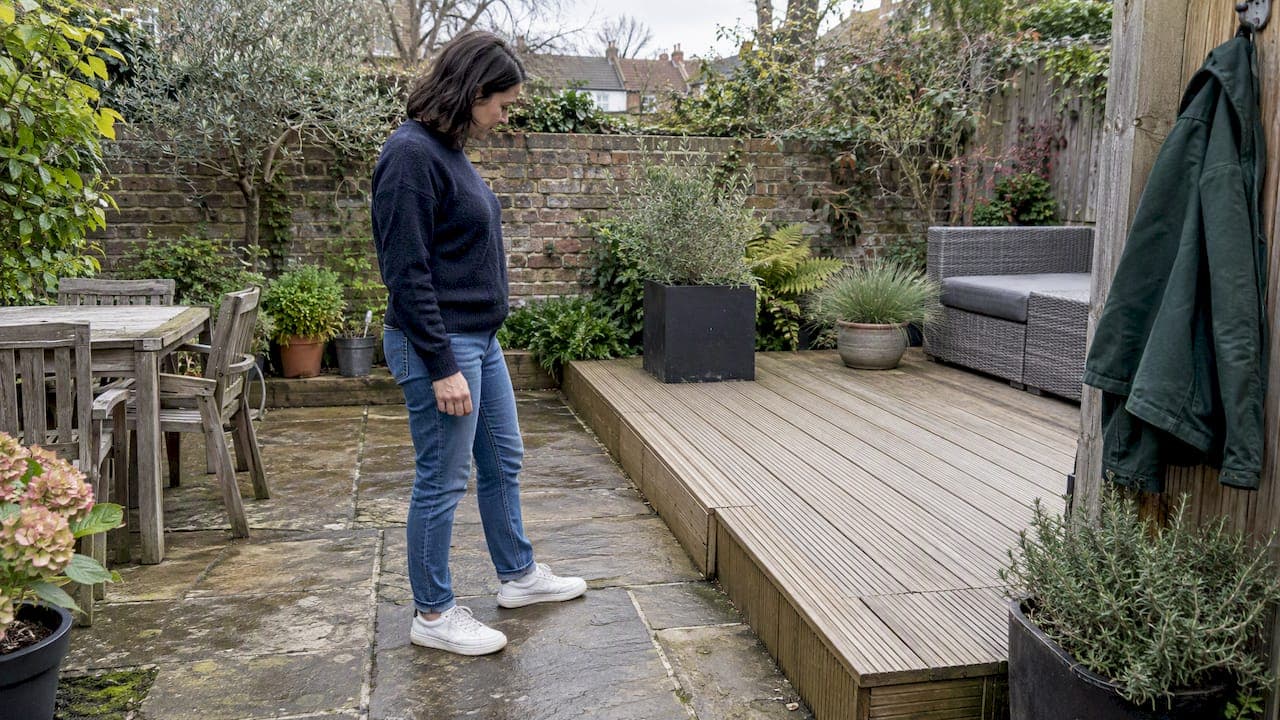
Choose decking when you need a raised or quick-install platform, especially on sloping or uneven ground; choose a patio when you want the most robust, low-maintenance ground-level surface for heavy furniture and daily use. Decking generally costs less upfront but asks for more upkeep, patios cost more to lay well but last longer with less fuss, and anything over 0.3 metres high counts as a raised platform under permitted development rules. A quick comparison table follows so you can scan the trade-offs before reading on.
TL;DR:
- Decking is ideal for sloping or uneven gardens and is quicker to install, but it requires regular maintenance like oiling or cleaning.
- Patios offer long-term durability with less upkeep, making them suitable for heavy furniture and frequent foot traffic, but they involve more complex groundwork.
- Softwood decking costs around £2,300 for non-elevated versions, while composite decking can reach up to £22,000 when elevated with rails and stairs.
- Patio installation for a 25 square metre area typically starts at £2,560, depending on sub-base depth, materials, and site conditions.
- Building rules restrict decking over 0.3 metres in height without planning permission, and proper drainage design is crucial for lasting performance.
Table of Contents
- Decking vs patio at a glance
- Decking types, benefits and what to plan for
- Patio materials and where they outperform decking
- What decking and patios actually cost
- Ongoing care and realistic lifespans
- Planning rules and drainage you need to check first
- How to turn your preference into a workable brief
- How long the work takes and how to limit disruption
- A surveyor's honest view on decking vs patio
- Get a site survey from our team
- FAQ
- Sources
Decking vs patio at a glance
The table below sets out typical costs, upkeep and lifespan so you can match a surface to your garden before requesting quotes.
| Factor | Softwood decking | Composite decking | Patio (slabs/pavers) |
|---|---|---|---|
| Typical installed cost | Lower, from around £2,300 for a standard non-elevated deck | Higher, reaching up to £22,000 for an elevated deck with rails and stairs | Mid to high, around £2,560 for a 25 square metre example before extra groundwork |
| Maintenance | Regular oiling and board checks | Occasional cleaning, little warping or rot | Periodic joint and weed care |
| Expected lifespan | Shorter without upkeep | Longer with low intervention | Long with proper groundwork |
| Best site/use | Sloping or uneven gardens, raised platforms | Families wanting low maintenance | Heavy furniture, level ground, long-term use |
| Drainage note | Needs positive fall and ventilation | Needs positive fall and ventilation | Needs permeable design or routed runoff |
| Installation time | Faster on straightforward sites | Faster on straightforward sites | Longer due to sub-base and jointing |
If you are working to a tight budget and comfortable with occasional maintenance, softwood decking is the quickest route to a usable garden. Families who want to install once and largely forget about it tend to prefer composite decking or a well-laid patio. Anyone thinking long-term, particularly where the surface will carry garden furniture, a hot tub or regular foot traffic, usually gets better value from a patio.
Decking types, benefits and what to plan for
Softwood decking is the most affordable option and works well for raised platforms or awkward, sloping plots, though it needs regular oiling and periodic board replacement to avoid rot. Hardwood decking costs more but resists decay for longer with less frequent treatment. Composite decking, made from recycled wood fibre and plastic, tends to resist warping and rot with lower ongoing maintenance than timber, which makes it attractive for busy households.
Decking suits uneven or sloping gardens because the substructure can be built up or levelled without the heavy groundworks a patio demands. Getting that substructure right matters: specification guidance from the Timber Decking and Cladding Association covers ventilation, falls and board spacing as the details that decide how long a deck performs, whatever material sits on top.
Common issues with decking include:
- Poor underfloor ventilation leading to damp and early rot.
- Insufficient fall away from the house, causing standing water.
- Algae build-up on boards that are rarely cleaned.
Pro Tip: Leave a gap of 5 to 8 millimetres between boards and build in a positive fall away from the building, as recommended in TDCA board specification guidance, so water drains rather than pools.
Patio materials and where they outperform decking
Porcelain paving is frost-proof and stain-resistant, though it tends to cost more upfront than other patio materials. Natural stone, such as sandstone or limestone, gives a premium look but often needs sealing to resist staining and some finishes become slippery when wet. Concrete paving is a budget-friendly, durable choice for simple layouts, while block pavers offer flexibility for curved or detailed designs and are straightforward to lift and relay if access is needed underneath.
Patios suit gardens where heavy furniture, hot tubs or constant foot traffic are the priority, since a well-built base rarely shifts and cleaning is usually a case of sweeping and an occasional wash. Installation is more involved than decking: it typically calls for excavation, a compacted sub-base, bedding and jointing, and poor groundwork at this stage is what leads to cracked slabs or weeds pushing through joints later.
Practical points to weigh before choosing a patio material:
- Polished or honed stone can be slippery in wet weather, so check the finish.
- Natural stone often needs periodic sealing to prevent staining.
- Jointing method affects how easily weeds establish between slabs.
What decking and patios actually cost
Ballpark figures help you sense-check a quotation rather than replace one. Checkatrade's cost guide puts a standard non-elevated softwood deck at around £2,300 installed, while an elevated composite deck with rails and steps can run up to £22,000 depending on scale. A 25 square metre patio example sits around £2,560 before any additional groundwork is added.
| Surface | Indicative installed cost | Main cost drivers |
|---|---|---|
| Softwood decking (non-elevated) | From around £2,300 | Area, substructure, access |
| Composite decking (elevated, with rails/stairs) | Up to £22,000 | Height, rails, stairs, material grade |
| Patio (25 square metre example) | From around £2,560 | Sub-base depth, material, jointing |
Beyond the headline figures, groundworks, drainage provision, steps, handrails, site access and waste removal routinely shift a quote up or down. A garden with poor existing drainage or restricted side access for machinery will usually cost more to prepare than a flat, open plot.
Before requesting quotes, it helps to prepare a short site pack: approximate area, a few photographs, notes on access and any existing changes in level. This gives contractors enough to price accurately and makes it far easier to compare quotes on a like-for-like basis.

Ongoing care and realistic lifespans
Timber decking generally needs oiling or staining every one to two years along with spot repairs to worn boards. Composite decking asks for little beyond an occasional wash to remove surface grime. Patios need periodic attention to pointing and joints, with weed growth in joints the most common ongoing nuisance, and routine cleaning is often one of the main recurring costs homeowners budget for with patios.
Typical care tasks by surface:
- Softwood decking: oiling, board checks, occasional replacement.
- Composite decking: washing, light brushing to remove debris.
- Patios: joint maintenance, weed control, occasional resealing for natural stone.
Ventilation and drainage quality under decking, and correctly specified falls under a patio, are what most often shorten a surface's working life when they are done poorly.
Pro Tip: Ask for construction costs and ongoing maintenance recommendations as separate line items in any quote, so you know what you are paying for now versus what you will need to budget for later.
Planning rules and drainage you need to check first
Before building, two sets of rules matter most. GOV.UK permitted development guidance treats decking over 0.3 metres (30 centimetres) high as a raised platform, which may need planning permission, particularly near boundaries or on prominent sites. Separately, GOV.UK guidance on permeable surfacing recommends permeable or porous construction, or routing runoff to a permeable area, to avoid creating surface-water problems, and the same principle applies to patios as much as front driveways.
- Check whether your proposed deck height exceeds 0.3 metres and would count as a raised platform.
- Confirm whether your property sits in a conservation area or is listed, as different rules may apply.
- Design drainage into the plan from the outset, using permeable paving or a routed fall rather than treating it as an afterthought.
- Contact your local planning authority or a qualified professional if any point above is unclear.
How to turn your preference into a workable brief
Once you have a leaning towards decking or a patio, turning it into a usable brief saves time and avoids misunderstandings with contractors.
- Walk the site and note changes in level, existing drainage and how water currently moves across the garden.
- List what the surface needs to carry: garden furniture, a hot tub, bins, bikes or regular foot traffic.
- Check access for materials and machinery, including gates, side passages and parking.
- Decide your tolerance for ongoing maintenance against your budget for the initial build.
- Ask for a written quote that specifies sub-base depth, drainage approach, waste removal and any guarantee offered.
Pro Tip: Treat a quote with no site visit, vague groundworks description or no mention of waste removal as a red flag, and ask for a revised written scope before accepting.
How long the work takes and how to limit disruption
A standard patio of 30 to 40 square metres often takes around 5 to 7 days on site, while a comparable deck often takes around 3 to 5 days, assuming straightforward access and no unexpected groundwork.
- Clear access routes and move pots or furniture before the team arrives.
- Confirm parking arrangements so materials and machinery can reach the site easily.
- Ask your contractor to confirm their waste removal plan and any contingency for unforeseen groundwork.
A surveyor's honest view on decking vs patio
The materials matter less than what sits beneath them. A short site visit, checking levels, drainage and access, prevents more problems than any choice between timber, composite or stone ever will.
— Roman
Get a site survey from our team
Whether your garden needs decking, a new patio, improved drainage or a full clearance before work begins, our gardening, landscaping and hard landscaping teams can handle the groundworks, surfacing and waste removal as one coordinated job. We work as fully insured teams and operate as a licensed waste carrier, so the mess goes with us when the job is done.

Gather a rough area measurement, a few photographs and any access notes, then get in touch to arrange a site survey. You can expect a written quote that separates construction costs from any recommended maintenance, so there are no surprises once work is under way.
FAQ
What is the 30cm rule for decking?
GOV.UK permitted development guidance treats decking higher than 0.3 metres (30 centimetres) as a raised platform, which may need planning permission. This applies particularly near boundaries or on prominent sites, so it is worth checking with your local planning authority before building.
What's the average cost for a large deck?
Costs vary enormously by size, material and height. Checkatrade's cost guide shows a standard non-elevated softwood deck from around £2,300, while an elevated composite deck with rails and stairs can reach up to £22,000.
Are slabs or decking cheaper?
Softwood decking is typically the lower-cost starting point, from around £2,300 installed, while a patio example of 25 square metres sits from around £2,560 before extra groundwork. Elevated or composite decking can exceed patio costs depending on height, rails and material grade.
Is a deck or paver patio more expensive overall?
It depends on specification rather than surface type alone. An elevated composite deck with rails and stairs can run up to £22,000, well above a standard patio, while a simple non-elevated deck can undercut a patio of similar size.
Sources
- Permitted development rights for householders: technical guidance
- Specification for timber decking | TDCA
Prices, timescales and information provided in this article are for general guidance and may vary depending on the property, site conditions, materials and scope of work. Please contact LookDeVis Services for an individual assessment and quotation. Where regulatory, planning or legal requirements apply, appropriate professional advice should be obtained.