
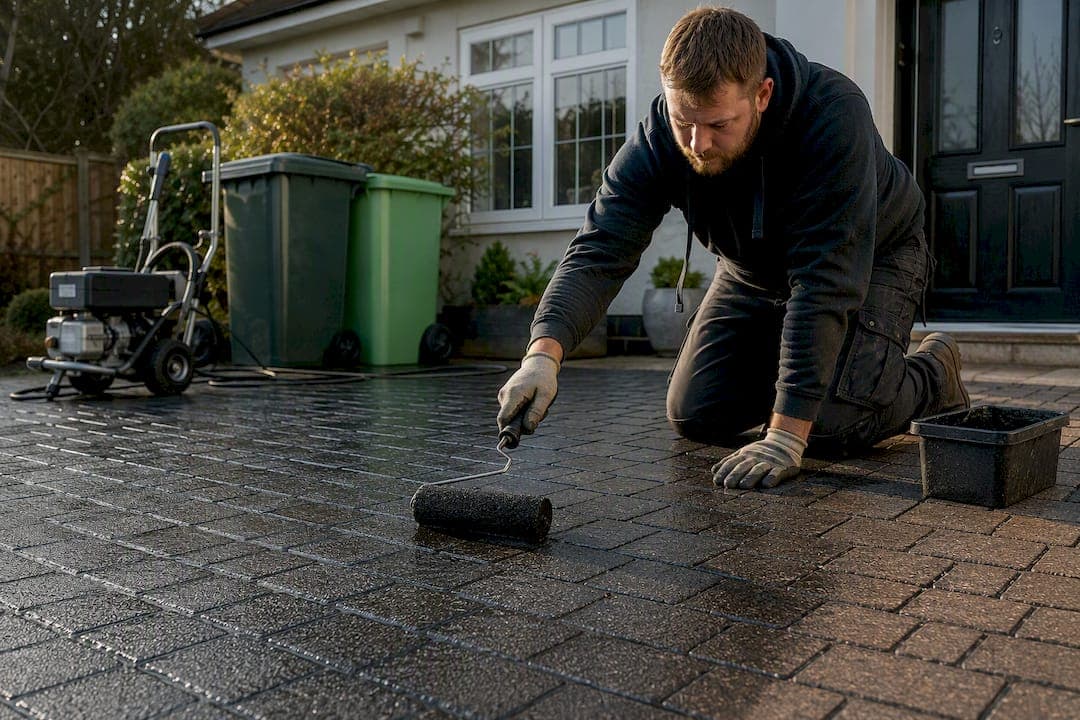
Most UK driveways cost between £240 and £560 to clean and seal, based on a typical 40m² area priced at £6 to £14 per square metre for a combined service. Sealing on its own runs £3 to £8 per m², while cleaning alone typically costs £3 to £6 per m². Booking both together usually works out cheaper than paying for each separately.
Here's what that looks like across common driveway sizes:
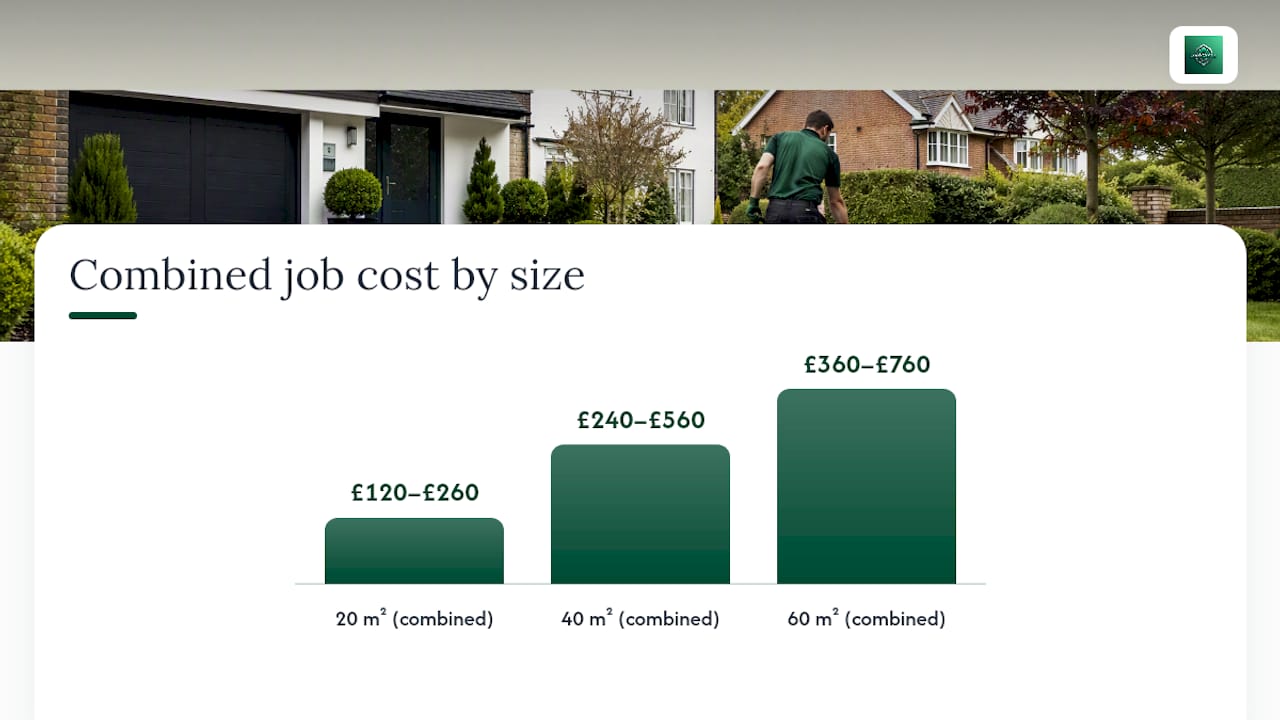
- Small driveway (20m²): roughly between a low to moderate combined cost
- Medium driveway (40m²): roughly £240–£560 combined
- Large driveway (60m²): roughly between a low to moderate combined cost
Your actual quote depends on three things: how dirty the surface is, what it's made from, and where in the UK you live. A neglected block paving drive covered in oil stains and moss will always cost more to prepare than a concrete driveway that's just had its first winter. Some UK homeowner guides put the realistic combined range as wide as £150 to £650, which tells you condition and material matter more than any single national average.
Key Takeaways
Combined driveway cleaning and sealing typically costs £6 to £14 per m² in the UK, with material, condition, and region driving most of the variation.
| Point | Details |
|---|---|
| Typical combined cost | £240–£560 for a standard 40m² driveway, per Checkatrade cost guides. |
| Cleaning vs sealing split | Cleaning alone runs £3–£6/m²; sealing alone £3–£8/m², often discounted 10–15% together. |
| Surface changes the maths | Block paving benefits most from sealing; porous natural stone can be damaged by it. |
| Reseal every 3 to 5 years | Manufacturer lifespans like Resiblock's suggest resealing every 3–5 years depending on use. |
| Choose an insured, itemised provider | Lookdevisservices offers free itemised quotes across Greater London with licensed waste disposal included. |
Table of Contents
- How much does driveway sealing cost UK homeowners per m²?
- Does driveway material change the sealing price?
- What makes a driveway sealing quote go up?
- Is DIY driveway sealing cheaper than hiring a professional?
- How long does driveway sealing last before you need to reseal?
- What does a trustworthy driveway sealing quote actually include?
- What warranty or guarantee should you expect on driveway sealing?
- Does the season affect the price or timing of driveway sealing?
- The real cost question people forget to ask
- Get a free driveway cleaning and sealing quote
- Sources
- FAQ
How much does driveway sealing cost UK homeowners per m²?
Break the job into its two components and the pricing becomes far easier to plan around. Cleaning and sealing are priced separately by most tradespeople, then often bundled at a discount.
Cleaning alone typically costs £3 to £6 per m², depending on how much moss, algae, and grime has built up. A driveway that's been jet washed annually will sit at the lower end; one that hasn't been touched in five years, with ingrained lichen and tyre marks, pushes toward the top. Sealing alone costs £3 to £8 per m², with the variation coming down to the number of coats applied and the sealer quality used. Combined, professionals typically charge £6 to £14 per m² for the full clean-and-seal job, and many providers knock 10 to 15% off when you book both in one visit rather than as two separate call-outs.
Here's how that scales across typical driveway sizes:
| Driveway size | Cleaning only | Sealing only | Combined (discounted) |
|---|---|---|---|
| 20m² (small) | £60–£120 | £60–£150 | £120–£260 |
| 40m² (medium) | £120–£240 | £120–£320 | £240–£560 |
| 60m² (large) | £180–£340 | £180–£440 | £360–£760 |
Most tradespeople in the UK apply a minimum call-out charge, usually somewhere between £80 and £150, regardless of how small the driveway is. This covers travel, equipment setup, and the pressure washer's fuel or water costs, so a tiny 10m² courtyard driveway rarely costs proportionally less than a 20m² one. If your drive falls below that threshold, expect to pay closer to the minimum charge than a true per-m² rate.
Where you live changes the maths too. Homeowners in London and the South East should expect to pay toward the higher end of every range quoted here, sometimes 15 to 25% above the UK average, largely because labour and van costs run higher in and around the capital. Rural areas and parts of the North and Midlands tend to sit closer to the lower end of the national bracket, assuming the driveway itself is in similar condition.
A few extra points worth factoring into your budget:
- Steep or narrow driveways that limit machine access can add 10 to 20% to labour time.
- Driveways requiring a generator (no accessible outdoor power) may incur a small equipment surcharge.
- Multi-visit jobs, where cleaning happens one day and sealing the next after drying time, sometimes attract a slightly higher combined price than a single-visit job.
Does driveway material change the sealing price?
Yes, and the difference can be significant. Not every surface needs sealing, and not every surface can safely take it, so understanding your material is the first real budgeting step.
Block paving is the surface sealing was really designed for, and it's where the investment pays off most visibly. Expect £3 to £8 per m² for sealing alone, with combined clean-and-seal jobs at the standard £6 to £14 per m². Sealing block paving does more than protect the surface colour: a polyurethane or "wet look" sealer helps stabilise the jointing sand between blocks, reducing weed growth and preventing individual blocks from shifting under vehicle weight. This is arguably the surface where sealing earns its keep fastest.
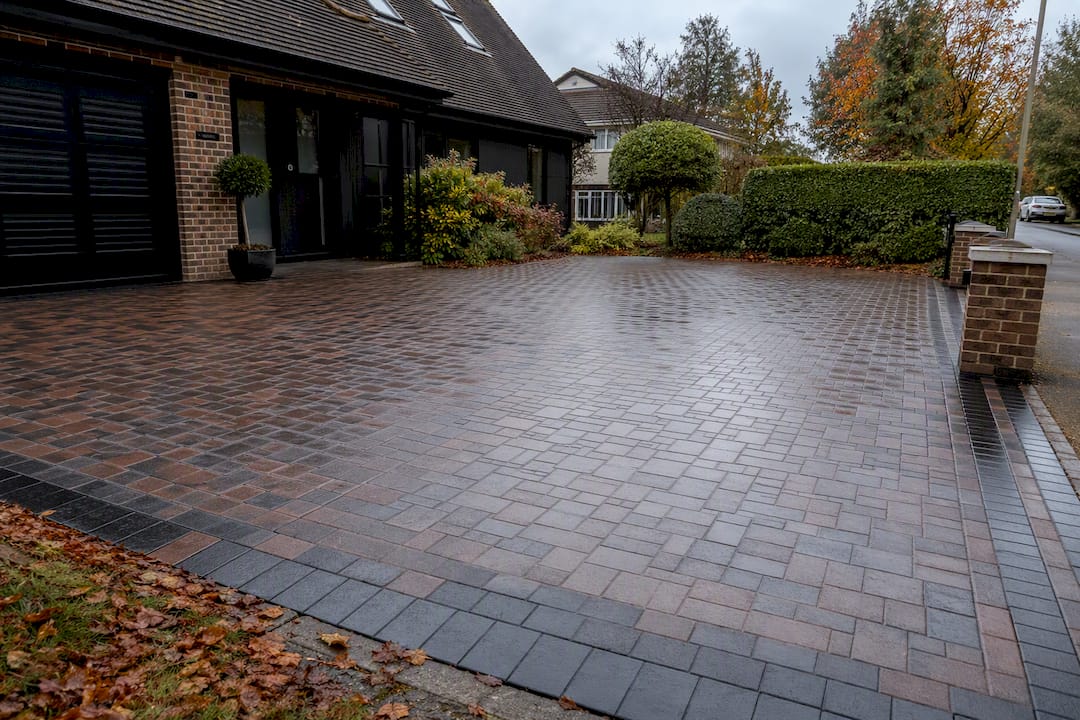
Concrete driveways sit in a similar price bracket, typically £3 to £7 per m² for sealing, though plain concrete usually needs fewer coats than textured or exposed-aggregate finishes. Sealing concrete mainly guards against frost damage and salt staining, both common problems on UK driveways through winter.
Tarmac is usually the cheapest surface to seal, often £2.50 to £5 per m², because tarmac sealant (sometimes called a tarmac rejuvenator) is a simpler single-coat product designed to restore colour and fill hairline surface cracks rather than penetrate deep into the material.
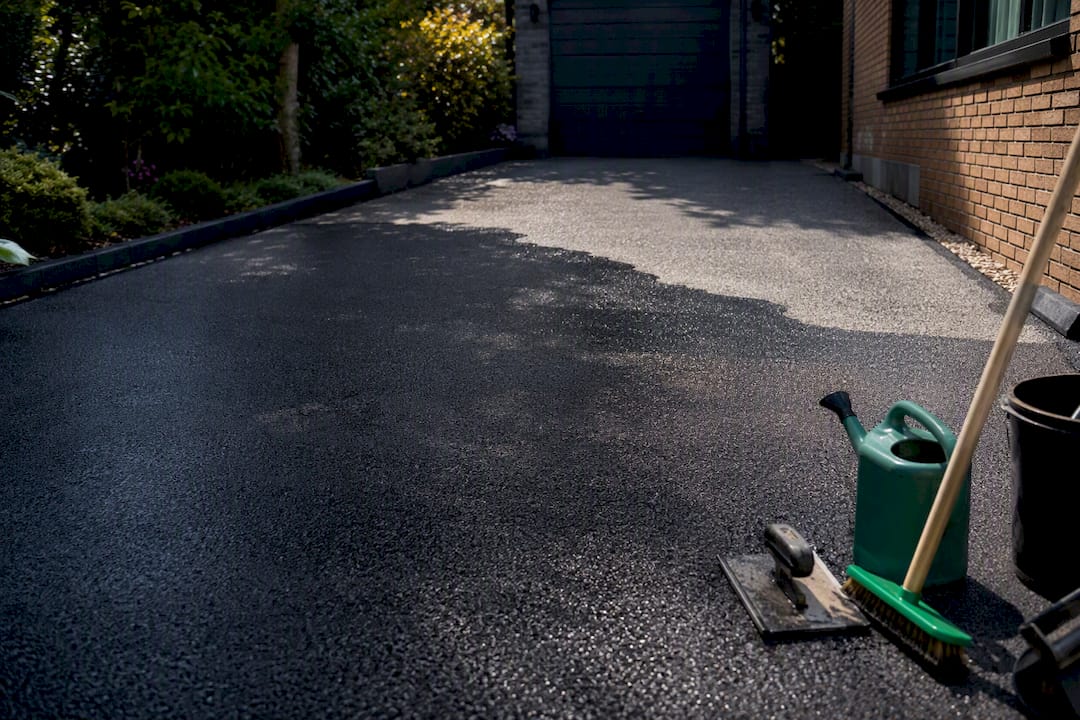
Resin-bound driveways rarely need traditional sealing at all, since the resin binder itself is largely non-porous. Where sealing is offered, it's more of a UV-protective top coat and tends to cost £4 to £9 per m², reserved for older installations losing their sheen.
Natural stone is the surface to approach with the most caution. Sealing costs £4 to £10 per m² depending on the stone type, but porous stones such as certain Indian sandstones can trap moisture beneath the sealed surface. That trapped moisture expands when it freezes, a process that accelerates spelling, where the stone's surface flakes and crumbles. A reputable tradesperson should test a small patch first or recommend a breathable, vapour-permeable sealer rather than a fully sealing wet-look product.
Finish choice also affects price slightly. Matt finishes tend to be the cheapest and most forgiving, wet-look sealers cost a little more but darken and enhance colour dramatically, and colour-enhancing sealers sit at the premium end because they're formulated to bring out pigment in ageing block paving.
Pro Tip: Always ask what sealer brand is being used and whether it's rated for your specific surface. A sealer designed for concrete applied to natural stone can do more harm than leaving the driveway unsealed.
What makes a driveway sealing quote go up?
Quotes rarely land at the bare per-m² rate you see in a price guide. Several common factors push the final figure higher, and knowing them in advance means fewer surprises when the invoice arrives.
- Oil and fuel stains. These sit deep in porous surfaces like block paving and concrete, and removing them typically needs a degreasing pre-treatment before pressure washing even starts. Expect this to add £20 to £60 depending on stain severity and coverage area.
- Joint re-sanding. Block paving loses jointing sand over time to weather and weed growth. Re-sanding (sometimes called joint stabilisation) before sealing typically adds £2 to £4 per m², but it's one of the most valuable add-ons because it locks the whole surface together.
- Crack filling and repointing. Hairline cracks in concrete or tarmac, and loose or damaged pointing between block paving, should be repaired before any sealer goes on, since sealing over a crack simply traps the problem underneath. Minor repairs add £30 to £100; more extensive patching costs more.
- Number of coats. A single coat suits light protection or budget jobs, but two coats is the standard recommendation for durability, and each additional coat adds roughly 20 to 30% to the sealing portion of your quote.
- Access and parking. Driveways behind locked gates, up steep inclines, or requiring the tradesperson to park some distance away can add a modest access surcharge, usually £10 to £30.
- Waste and water disposal. Cleaning generates dirty run-off water and debris that needs proper disposal. A licensed waste carrier handles this compliantly, and it's worth confirming this is included rather than added as a surprise line item.
Ask for an itemised breakdown covering each of these points before agreeing to any quote. A trustworthy tradesperson will happily separate cleaning, repairs, re-sanding, and sealing into distinct costs rather than quoting one vague lump sum.
Is DIY driveway sealing cheaper than hiring a professional?
On paper, yes. A DIY sealing job on a 40m² block paving driveway typically costs £80 to £150 in materials, covering the sealant itself (roughly £2 to £4 per litre, with most driveways needing 15 to 25 litres for two coats), plus a pressure washer hire at £30 to £50 for a weekend if you don't already own one, and basic kit like a stiff broom, squeegee applicator, and protective gloves.
What that figure doesn't include is your own time, which realistically runs to a full weekend for cleaning, drying, and applying two coats with the correct recoat interval. It also doesn't include the risk of getting it wrong.
Professional quotes, typically £240 to £560 for the same 40m² job, include several things a DIY budget doesn't:
- Correct surface preparation, including degreasing and weed treatment before any sealant touches the ground
- Public liability insurance, so damage to your property during the job is covered
- Compliant disposal of waste water and debris through a licensed waste carrier
- A sealer matched to your specific surface material rather than a generic multi-surface product
- Usually some form of workmanship guarantee on the finish
The real risk with DIY sealing isn't the cost, it's the outcome. Sealing a driveway that hasn't fully dried, or applying sealant too thickly, traps moisture underneath the surface. That moisture then has nowhere to go, and on a UK driveway through a wet winter, that's a recipe for cloudy patches, peeling, or in worse cases, frost damage beneath the seal.
Pro Tip: If your driveway has heavy oil contamination, natural stone, or covers more than 50m², hiring a professional is almost always worth the extra cost. The margin for error on large or sensitive surfaces is small, and a failed DIY seal often costs more to strip and redo than the original professional quote would have been.
How long does driveway sealing last before you need to reseal?
Manufacturer-stated lifespans give the clearest benchmark here. Brands such as Resiblock quote up to five years under ideal conditions, though most UK driveways realistically sit at the three to five year mark before a reseal is genuinely needed.
Turn that into a simple annualised cost and sealing looks like better value than it first appears. Take a 40m² block paving driveway sealed at a mid-range combined price with a four-year lifespan: that works out to a moderate annual cost per m². Compare that against the cost of replacing damaged block paving outright, often £50 to £100 per m², and sealing looks like a cheap insurance policy against far bigger bills.
Reseal frequency does vary by surface and use:
- Block paving driveways with regular vehicle traffic: reseal every 3 years
- Concrete driveways in moderate use: reseal every 4 to 5 years
- Tarmac driveways: reseal every 2 to 3 years, since tarmac sealant wears faster under UV exposure
- Resin-bound surfaces: often 5 years or longer before a top coat is needed
There's an important exception to all of this. Porous natural stone, particularly certain sandstones, doesn't follow the same "seal and forget" logic. Sealing can trap moisture rather than let the stone breathe, and in UK freeze-thaw cycles that can accelerate cracking rather than prevent it. If your driveway is natural stone, ask specifically whether a breathable sealer is being used, or whether sealing is recommended at all for your stone type.
What does a trustworthy driveway sealing quote actually include?
At Lookdevisservices, we work across Greater London and the surrounding areas as a fully insured property services provider, and driveway cleaning and sealing sits alongside our wider pressure washing and landscaping work. Waste generated during cleaning and repairs is handled through licensed waste carrier arrangements rather than informal disposal, which matters more than most homeowners realise until they ask the wrong tradesperson.
A quote worth accepting should be itemised, not a single vague total. Look for these elements broken out separately:
- Cleaning cost, including any degreasing for oil or fuel stains
- Repair work, such as crack filling, repointing, or joint re-sanding
- Sealing cost, stating the sealer brand and number of coats
- Estimated timescale, including drying time between coats
- Waste and water disposal, confirming it's handled through a licensed carrier
Before booking, it's worth asking a few direct questions: how many coats are included, what sealer brand will be used, how long the surface needs to cure before it can take vehicle weight, and whether any workmanship guarantee applies. A tradesperson confident in their work will answer all of these without hesitation.
If you're weighing up whether your driveway needs new paving as well as sealing, our driveway installation page covers the materials and base options that affect long-term sealing suitability. For a straightforward quote on cleaning and sealing alone, we offer free, no-obligation assessments across our Greater London coverage area, with same-day availability where team schedules allow.
| What to check | Why it matters |
|---|---|
| Itemised pricing | Confirms you're not paying a flat guess covering unknown scope |
| Named sealer brand | Lets you verify it's suited to your surface material |
| Licensed waste handling | Confirms compliant disposal of dirty water and debris |
| Insurance confirmation | Covers you if anything goes wrong during the job |
What warranty or guarantee should you expect on driveway sealing?
Most professional sealing jobs in the UK come with some form of workmanship guarantee, though the terms vary considerably between tradespeople, so it's worth reading the small print rather than assuming they're all equal.
A typical guarantee covers workmanship, meaning if the sealer peels, flakes, or fails to bond within a set period (commonly 12 to 24 months), the provider will return and rectify it at no extra charge. This is different from a product warranty, which covers the sealant itself and is issued by the manufacturer rather than the tradesperson applying it. Premium sealer brands sometimes offer longer product warranties, occasionally matching their stated lifespan of several years, but this only holds if the product is applied correctly and to a properly prepared surface.
Guarantees generally exclude damage caused by factors outside the tradesperson's control, such as heavy oil spills after the job, vehicle damage, or extreme weather events. They also typically require the surface to have been prepared correctly beforehand, which is one more reason a full clean and repair before sealing matters so much.
Before agreeing to any quote, ask specifically what the guarantee covers, how long it lasts, and whether it's written down rather than a verbal assurance. A provider who hesitates to put a guarantee in writing is one to think twice about.
Does the season affect the price or timing of driveway sealing?
Weather has more influence on driveway sealing than most homeowners expect, both on price and on whether the job can happen at all. Most sealants need dry conditions and a minimum surface temperature, typically above 10°C, to cure properly, which effectively rules out large parts of the UK winter for reliable results.
Spring and summer are the busiest booking periods for this reason, and demand during these months can push prices toward the higher end of the typical range, alongside longer lead times before a tradesperson can fit you in. Autumn, particularly early autumn before the wetter months set in, often offers a practical middle ground: temperatures are usually still mild enough for proper curing, and demand tends to ease off compared to peak summer.
Winter bookings are possible but riskier. Rain can wash away a sealer before it cures, and low temperatures slow drying time significantly, sometimes doubling the recommended wait before the driveway can take vehicle weight again. Some tradespeople factor this into winter pricing with a small weather-contingency allowance, or simply decline bookings during prolonged wet spells.
If your driveway has just been newly laid, timing matters for a different reason: some manufacturers recommend waiting around 12 weeks after installation before sealing, to allow efflorescence, a natural salt residue, to work its way out rather than getting trapped under the seal.
The real cost question people forget to ask
Most driveway sealing guides fixate on the per-m² number and stop there, but that figure only tells half the story. The bigger question is whether sealing is even the right call for your specific surface, and too many homeowners get a one-size-fits-all quote without anyone checking.
Block paving and concrete driveways genuinely benefit from sealing, both in appearance and in preventing weed growth and frost damage. But porous natural stone is a different case entirely, and a tradesperson who quotes the same sealer and process across every surface type isn't giving you proper advice, just a generic price list.
The other gap in conventional advice is treating cleaning and sealing as a single transaction rather than two decisions. Cleaning alone, done annually, often extends the life of an existing seal far more cheaply than a full reseal. If your driveway looks tired but isn't actually failing, a proper clean might be the £120 answer rather than the £320 one.
Get a written, itemised quote before anything else. It's the single best filter for separating a tradesperson who understands your surface from one reciting a standard price list.
Get a free driveway cleaning and sealing quote
Lookdevisservices gives you one point of contact for the whole job, cleaning, repairs, and sealing, rather than juggling separate tradespeople and separate invoices for what is really one project. Every visit is carried out by fully insured teams, with waste and dirty run-off handled through licensed waste carrier arrangements rather than left for you to sort out afterwards.

Our quotes are itemised from the outset, covering cleaning, any repair work your surface needs, the sealer being used, and the number of coats, so you know exactly what you're paying for before work starts. We cover Greater London and the surrounding areas, with same-day availability for selected jobs where scheduling allows.
If your driveway needs more than sealing, perhaps new paving, drainage work, or a full pressure washing service across your patio and paths too, we can scope that into the same visit rather than a separate call-out. Request a free, no-obligation quote today by phone on 07348 758581 or through our driveway cleaning and sealing page, and get a real, itemised price for your specific driveway.
Sources
- Driveway cleaning cost guide | Checkatrade cost guides
- How much does it cost to clean and seal a driveway in the UK? | PureSeal Services
- Driveway cleaning cost guide (UK prices 2026) | myjobquote
FAQ
How much does it cost to seal a driveway in the UK?
Sealing alone typically costs £3 to £8 per m², while a combined clean-and-seal service runs £6 to £14 per m², putting a standard 40m² driveway at roughly £240 to £560.
Is pressure washing a driveway illegal in the UK?
No, pressure washing your own driveway is legal, but waste water containing detergent or contaminants must not be allowed to run into public drains or watercourses. Licensed providers like Lookdevisservices manage run-off and waste disposal compliantly as part of the service.
What is the new driveway rule in the UK?
Planning permission rules require homeowners to use permeable materials, or direct run-off to a permeable area, when replacing more than 5 square metres of front driveway with a non-permeable surface. This applies to new or replacement paving, not to cleaning or sealing an existing driveway.
How often should you jet wash a driveway?
Most UK driveways benefit from a jet wash once a year to prevent moss and algae build-up, though heavily shaded or tree-covered driveways may need it twice yearly. Regular cleaning also extends the life of any existing sealant, often delaying the need for a full reseal.