
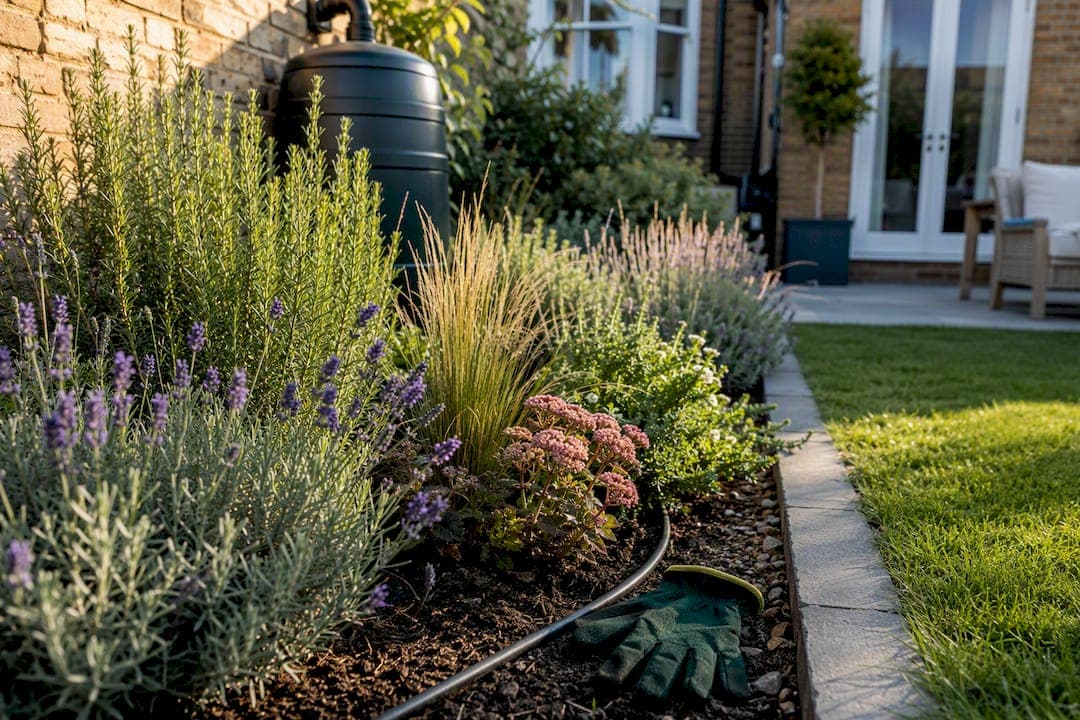
Start with peat-free compost, a water butt and a rain garden, native hedging over fences, and less hard paving. These four eco-friendly landscaping ideas save water, cut carbon and boost wildlife more than almost any other garden change, and most cost little to nothing to begin. The RHS and Wildlife Trusts both point to the same handful of swaps as the highest-impact starting point for any UK garden.
TL;DR:
- A 200-litre water butt can capture thousands of liters of rainwater annually in a small garden, reducing mains water use within two to three years.
- Native hedging, wildflower patches, and small ponds can significantly boost wildlife and are achievable with modest budgets and minimal planning.
- Permeable paving and rain gardens help manage surface runoff and can often avoid planning permission, but local regulations should always be checked first.
- Drought-tolerant plants like lavender, sedum, and native species like hawthorn or dogwood require less watering and support local wildlife once established.
- Simple behavioral changes, such as mowing less, composting, and harvesting rainwater, deliver high environmental returns at minimal cost.
Table of Contents
- Eco-friendly landscaping ideas: quick wins, low-cost installs and structural upgrades
- How do you plan and phase an eco-friendly garden project?
- Sourcing materials and UK rules worth checking first
- Efficient irrigation: drip lines, timing and reducing waste
- Choosing drought-resistant and climate-appropriate plants
- Growing food: edible landscaping that still looks good
- Energy-efficient outdoor lighting for gardens
- What London gardens actually teach you about going green
- Ready to bring these ideas to your garden?
- Sources
- FAQ
Eco-friendly landscaping ideas: quick wins, low-cost installs and structural upgrades
Not every sustainable garden change needs a skip and a weekend of digging. Some of the biggest gains come from things you can do this Saturday afternoon.
Quick wins cost little and take an hour or two:
- Switch to peat-free compost. Performance now matches peat-based mixes for most bedding plants, and it protects UK peatlands, according to RHS guidance.
- Fit a 200 litre water butt to a downpipe. A single butt this size can capture a large volume of rainwater annually in an average garden, according to Axiom Eco Homes.
- Try No Mow May or simply mow less through spring and summer.
- Leave seed heads standing over winter and stack a small log pile in a shaded corner.
- Drop chemical weedkillers and pesticides in favour of hand weeding and mulch.
Low-cost installs need a weekend and a modest budget:
- A wildflower patch in place of a section of lawn, sown with UK native mixes such as ox-eye daisy, knapweed and yarrow.
- Native hedging (hawthorn, hazel or field maple) instead of a fence panel, which does far more for wildlife corridors than solid boundaries, per the Wildlife Trusts.
- A three-bay compost system built from pallets.
- A small pond or an upcycled water feature made from an old sink or trough.
- Bird boxes and bat boxes fixed under eaves or on a mature tree.
Structural upgrades need planning, a bigger budget and sometimes a professional:
- Rain gardens and swales that intercept roof runoff before it reaches the drain, sized using guidance from Weatherwise Gardens.
- Permeable paving in place of solid concrete or tarmac drives.
- A green roof on a garden studio or shed.
- Larger native tree planting, such as rowan, birch or crab apple, where space allows.
Pro Tip: If you're only doing one thing this month, make it the water butt. It's cheap, fits most downpipes without tools, and the payback in reduced mains water use typically lands within two to three years.
Simple behavioural changes such as mowing less, composting and harvesting rainwater consistently deliver the best return for the lowest cost, according to the Woodland Trust, which is exactly why they sit at the top of most garden priority lists.
How do you plan and phase an eco-friendly garden project?
Before spending a penny, walk the garden and note four things: which areas get full sun, partial shade or deep shade; where water pools after rain; what the soil feels like (sandy, clay, or somewhere between); and which existing features are worth keeping, such as a mature tree or established hedge. This ten-minute survey shapes everything that follows.
A sensible phasing plan looks like this:
- Weeks 1 to 4: weekend swaps. Peat-free compost, water butt, reduced mowing, log pile.
- The following planting season: native hedging, wildflower patch, bare-root trees planted between November and March while dormant.
- Within 6 to 18 months: structural works such as rain gardens, permeable paving or a pond, once budget and planning checks are sorted.
Budget-wise, a water butt and compost switch cost very little. A native hedge or wildflower patch sits in the low-to-medium band. Rain gardens, permeable driveways and ponds fall into medium-to-high, depending on size and ground conditions.
Call in a professional for anything involving deep drainage runs, retaining walls, tree removal near buildings, or a permeable driveway that touches a public pavement. Ask any contractor about their insurance, their waste carrier licence, and whether they can show examples of similar work, before booking. A professional garden design consultation is worth the cost on anything beyond a simple bed swap.
Sourcing materials and UK rules worth checking first
Buy peat-free compost as standard, and where possible choose UK-grown or bare-root stock bought in season. Bare-root trees and hedging, planted between November and March, establish well in British soil and typically cost less than pot-grown equivalents, according to Crafting Her Blooms.
A few things to check before you commit:
- Permeable paving often avoids the planning permission trigger that applies to impermeable front-garden surfaces over 5 square metres, but local rules vary, so check with your council before you dig.
- Electrical work for garden lighting or pond pumps needs a Part P registered electrician; anything structural, like a retaining wall, may need building control sign-off.
- Waste from a garden clearance or landscaping job should go through a licensed waste carrier, not a van of unknown provenance.
- Reclaimed stone, brick and FSC-certified timber reduce embodied carbon compared with new-quarried or unverified imported materials.
Efficient irrigation: drip lines, timing and reducing waste
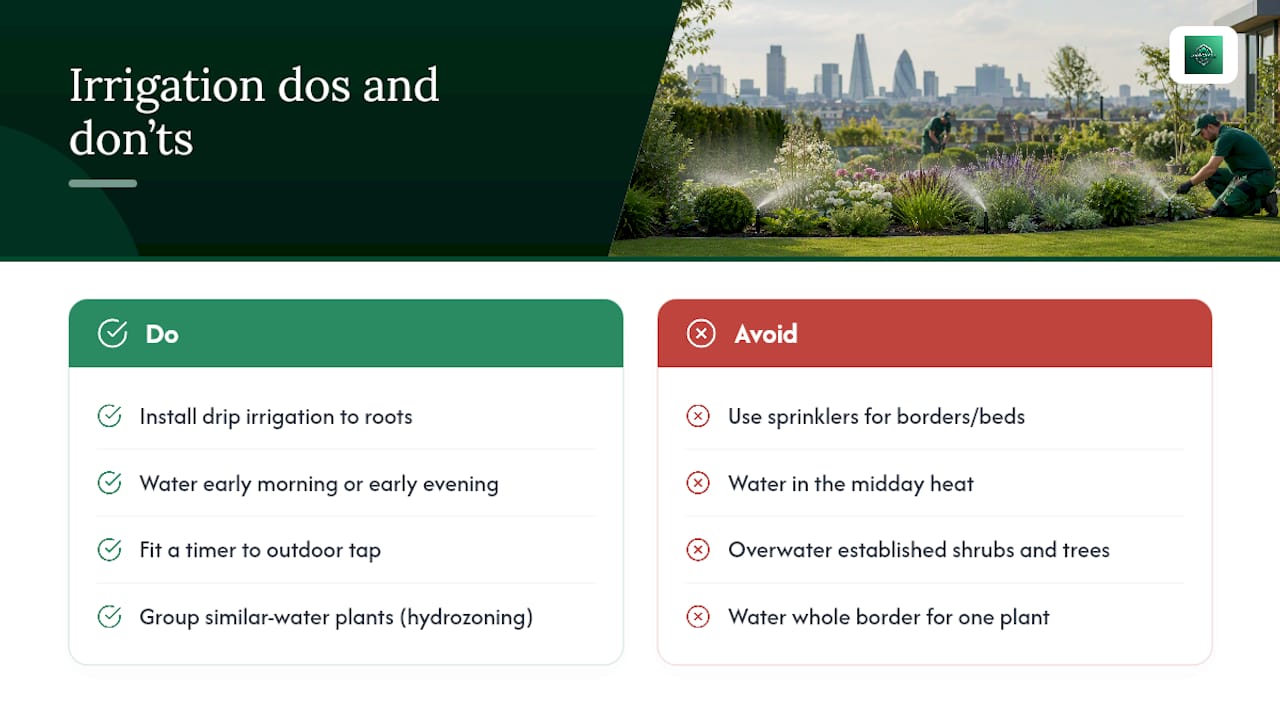
Drip irrigation beats a sprinkler on almost every count for a UK garden. Water goes straight to the root zone through a network of thin tubing and emitters, so far less is lost to evaporation or overspray onto paving. A basic drip kit for a border or vegetable bed is inexpensive and connects directly to a water butt with a simple gravity-fed or low-pressure pump.
Timing matters as much as the method. Water early morning or early evening, never in the midday heat, when most of what you apply simply evaporates before it reaches the roots. Established shrubs, hedges and trees need far less frequent watering than bedding plants and containers, since deeper roots find their own moisture once settled.
A cheap timer on an outdoor tap automates the schedule and stops overwatering, one of the most common reasons gardens use more water than they need. Grouping plants with similar watering needs together, a technique sometimes called hydrozoning, also cuts waste by avoiding the temptation to water an entire border to satisfy the one thirsty plant in it.
Choosing drought-resistant and climate-appropriate plants
London summers are trending hotter and drier, which makes plant choice as important as irrigation. Mediterranean and prairie-style species such as lavender, rosemary, sedum, achillea and ornamental grasses like stipa cope with dry spells far better than thirsty bedding plants, and most thrive in the free-draining soil common across many London boroughs.
Native British plants earn a place too, not just for drought tolerance but for the wildlife they support. Hawthorn, field maple and holly all handle dry periods once established and give more back to pollinators and birds than many imported ornamentals. Grouping drought-tolerant species together, then reserving irrigation for a smaller, thirstier zone, is a far more efficient layout than spreading watering needs evenly across the whole plot.
Growing food: edible landscaping that still looks good
Edible landscaping folds fruit, herbs and vegetables into a garden's ordinary design, rather than banishing them to a separate allotment-style patch. A trained apple or pear tree against a south-facing fence takes up little ground space and produces fruit for years. Herbs like thyme, chives and rosemary work equally well as low border edging or tucked between ornamental plants.
Raised beds suit smaller London gardens particularly well, since they warm up faster in spring and drain better than heavy clay soil straight in the ground. Growing your own reduces food miles and, according to the Woodland Trust, sits among the most practical everyday changes a household can make. Even a handful of pots on a patio growing salad leaves and tomatoes counts.
Energy-efficient outdoor lighting for gardens
Solar-powered LED lighting has become the sensible default for most garden lighting needs. It needs no wiring, costs nothing to run once installed, and modern fittings hold charge well through a British summer, though performance drops in deep winter shade.
Where mains lighting is genuinely needed, low-voltage LED systems installed by a Part P registered electrician use a fraction of the electricity older halogen fittings drew. Motion sensors and timers cut running hours further, useful for security lighting that only needs to fire when someone actually walks up the path. Warmer colour temperatures and shielded fittings also reduce light spill into hedges and trees, which matters if bats or hedgehogs are using the garden after dark. For layout ideas suited to smaller plots, our garden lighting guide covers placement and fixture choices in more detail.
What London gardens actually teach you about going green
Small urban plots don't behave like the show gardens in the guides. A 4-metre square courtyard in Acton has different sun, shade and drainage problems than a semi's back garden in Barnet, and the eco-friendly landscaping ideas that work best are usually the least dramatic ones.
A modest water butt tucked behind a bin store, a log pile under a fence line, and a single native shrub like a viburnum or dogwood in a tight border do more for a small garden's wildlife value than an ambitious redesign that never gets finished. Insured teams, a licensed waste carrier, and a free quote before any work starts matter just as much on a tiny courtyard as on a half-acre plot.
Pro Tip: In a small London garden, plant one native shrub in the darkest, most awkward corner first. It's usually the spot nothing else will grow, and it's exactly where wildlife needs the cover most.
— Roman
Ready to bring these ideas to your garden?
Reading the list is the easy part. Fitting a rain garden correctly, laying permeable paving that actually drains, or planting a native hedge that survives its first London summer takes hands that have done it before. A practical route to getting these eco-friendly landscaping ideas built properly rather than left as a Pinterest board is to work with professional teams covering planting, landscaping, permeable paving, rain-garden installs, tree surgery and the waste removal that follows a clearance.

Every project starts with a free, no-obligation quote, so you know the cost band before anything is booked. Garden waste and old materials are cleared through a licensed waste carrier, which matters if you're removing an old patio or a run of dying conifer hedge. Whether you need a single native hedge planted or a full rain garden and permeable driveway installed, get in touch for a quote and a realistic timeline for your garden, and take the first step towards a lower-water, higher-wildlife outdoor space this season.
Sources
- Wildlife Trusts — climate-friendly gardening
- Weather Wise Gardens — Essex surface-water guidance
- Woodland Trust — 10 top environmentally friendly gardening tips (2024)
- RHS — increasing environmental resilience of gardens
- Axiom Eco Homes — eco garden ideas UK (2026)
FAQ
Is peat-free compost as good as peat-based compost?
Yes, for most bedding plants and general garden use, peat-free compost now performs comparably to peat-based mixes, according to the RHS.
What size water butt do I need for a small garden?
A 200 litre butt suits most small to medium London gardens and can capture thousands of litres a year from an average roof, per Axiom Eco Homes.
Do I need planning permission for permeable paving?
Permeable paving often avoids the planning trigger that applies to impermeable front-garden surfaces, but rules vary by council, so always check locally before work begins.
What are the best low-maintenance native plants for a small London garden?
Hawthorn, field maple, viburnum and dogwood all tolerate typical London soil, need little upkeep once established, and support far more wildlife than most non-native ornamentals.
Can Lookdevisservices help design and install a rain garden or permeable driveway?
Professional services are available for landscaping, planting and permeable paving installs across Greater London, often starting with a free quote and a site assessment.
Recommended
- Small London garden ideas that actually work in tight urban plots
- Professional Garden Design London - Transform Your Garden | Free Consultation
- Garden Planting Services Acton | Professional Plant Installation W3 W12
- Professional Gardening Services London - Hedge Trimming, Lawn Care, Garden Maintenance
Prices, timescales and information provided in this article are for general guidance and may vary depending on the property, site conditions, materials and scope of work. Please contact LookDeVis Services for an individual assessment and quotation. Where regulatory, planning or legal requirements apply, appropriate professional advice should be obtained.