

A professional end of tenancy clean has done its job only when three things are true: the kitchen and bathrooms pass an inspection‑grade check (oven, extractor and limescale included), the contractor hands over dated proof of the work, and the scope was agreed clearly enough that nobody argues about what "clean" meant. Miss any one of those and you risk a stalled relet or a deposit dispute that drags on for weeks.
More than half of all adjudicated deposit disputes in England and Wales involve cleanliness, according to Tenancy Deposit Scheme reporting, which makes this the single biggest avoidable cost in the whole void period. Before you brief a cleaner or a letting agent walks a tenant out, get these three deliverables written into the job:
- Inspection‑grade deep clean covering oven interior, extractor filters, hob, and bathroom limescale on screens, tiles and fittings.
- Documentary evidence: timestamped before and after photos, an itemised invoice, and a short written completion note.
- Agreed scope and timing, including any add‑ons (carpets, pressure washing) and a re‑clean guarantee if the property fails inspection.
Key Takeaways
A professional end of tenancy cleaning checklist succeeds only when inspection‑grade cleaning, documented evidence and a clear agreed scope are all present together.
| Point | Details |
|---|---|
| Deep clean the trouble spots | Oven, extractor, bathroom limescale, window tracks and skirting boards cause most deposit deductions. |
| Demand documented evidence | Timestamped before/after photos, an itemised invoice and a completion note protect against disputes. |
| Itemise every add‑on | List carpets, pressure washing and waste removal separately for comparable quotes. |
| Know the legal limits | Landlords cannot force tenants to pay for cleaning, but can deduct proven, evidenced costs from the deposit. |
| Book with a verified team | Lookdevisservices provides insured, licensed‑waste‑carrier teams across Greater London with full completion evidence. |
Table of Contents
- What should a room-by-room end of tenancy cleaning checklist cover?
- How do you write a cleaning job spec that gets you comparable quotes?
- What UK law actually allows on cleaning and deposit deductions
- How do you check a cleaning contractor is actually qualified?
- Why the checklist matters more than the contractor's reputation
- Book a professional end of tenancy clean across Greater London
- Sources
- FAQ
What should a room-by-room end of tenancy cleaning checklist cover?
Most disputes trace back to a handful of predictable spots. Letting agents consistently flag the same areas at checkout, and prioritising oven, extractor, bathroom limescale, window tracks and skirting boards will resolve the bulk of deductions before they happen. Here is the practical order to work through, room by room.
- Kitchen. Degrease the oven interior fully, including racks and the glass door. Clean the hob, extractor filter and any visible ductwork grille. Wipe splashbacks to a streak‑free finish, and clear the fridge and freezer interior if the tenancy agreement includes appliance cleaning. Cupboard interiors only need attention where the job spec says so, and always check behind and under free‑standing appliances, since crumbs and grease collect exactly where inspections look last.
- Bathrooms. Descale shower screens, taps and shower heads until there's no visible mineral build‑up. Grout lines need scrubbing, not just surface wiping, and sanitary ware (toilet, basin, bath) should be polished, not merely rinsed. Extractor vents collect dust fast and are an easy fail point if skipped.
- Living rooms and bedrooms. Skirting boards are the most commonly missed surface in a standard clean, so treat them as non‑negotiable. Sockets and switches need wiping (with power isolated where relevant), and dusting should run high to low, meaning light fittings and picture rails before skirting and floors. Curtains and blinds only need dusting or laundering if that's explicitly in scope, since not every tenancy includes soft furnishings.
- Carpets and upholstery. A quick vacuum is fine for lightly used rooms, but professional steam cleaning is worth requiring wherever there are visible stains, pet use, or a tenancy longer than 12 months. Spot cleaning suits fresh, isolated marks; steam cleaning suits general wear across a whole room. Ask for a short note on any stain treatment applied, since that becomes useful evidence if a tenant disputes the charge.
- Windows and tracks. Internal glass needs cleaning to a streak‑free standard, and window tracks should be free of accumulated grit and dead insects, a detail agents check routinely because tenants rarely clean it themselves. Sills and frames get a wipe‑down as standard.
- External surfaces. Where the property has a patio, balcony or drainage points, a pressure wash restores kerb appeal fast and clears moss or algae that builds up between tenancies. Garden tidying and any licensed waste removal should be scoped separately, particularly for properties with outdoor storage or a shed that's been left full.
Pro Tip: Ask the outgoing contractor to photograph the oven and extractor before they start, not just after. A "before" shot of genuine grime is often what settles a dispute in the landlord's favour, because it proves the deep clean was actually necessary rather than cosmetic.
For HMOs and other high‑traffic lets, routine professional cleans between tenancies do more than pass one inspection. They stop small issues such as limescale build‑up or bathroom mould turning into structural condition problems over successive tenancies, a pattern flagged in guidance on how professional cleaning services deliver superior results.
How do you write a cleaning job spec that gets you comparable quotes?

Vague briefs produce vague quotes, and vague quotes produce arguments later. Write the scope room by room, using the same structure as the checklist above, and itemise every add‑on separately rather than folding it into a generic "full clean" line. Oven degreasing, extractor cleaning, carpet steam cleaning, pressure washing, waste removal and any small repairs or painting touch‑ups should each appear as their own line with their own price.
Typical London pricing runs from around £100–£150 for a studio, £120–£200 for a one‑bed, £150–£250 for a two‑bed and £250–£400 for a three‑bed, with higher figures for larger properties or extra services, according to guidance on end of tenancy cleaning costs. Weigh that against the cost of an extended void: a two‑week gap on a property renting at roughly £1,800 a month costs around £900 in lost rent, against a clean that might run £260–£340 for the same property, per reporting on cleaning disputes and agent practice. The clean is rarely the expensive part; the delay is.
- State acceptance criteria in the booking, such as a two‑hour re‑clean window if an agent flags a fail at checkout.
- Ask the contractor to confirm methods and products for any fragile finishes, natural stone, or specialist flooring before work starts.
- Keep add‑ons itemised rather than bundled, so you can compare quotes on a like‑for‑like basis.
What UK law actually allows on cleaning and deposit deductions
Landlords cannot contractually force tenants to pay for a professional clean under the Tenant Fees Act rules on end of tenancy cleaning, which ban most fees outside rent and deposit. What landlords can do is deduct reasonable cleaning costs from the deposit, but only where evidence shows the property came back in a worse state than the check‑in inventory recorded. That evidential bar is where most disputes are won or lost.
- Keep a detailed, photographed inventory at check‑in, since "professional standard" at move‑in sets the benchmark for move‑out.
- Timestamp every photo taken during the clean and at final inspection.
- Distinguish clearly between fair wear and tear (not deductible) and genuine cleaning shortfalls (deductible with proof).
- Retain invoices and completion notes for the length of any potential adjudication, typically several months after the tenancy ends.
Agents who build realistic cleaning cost guidance into move‑out packs, and run a pre‑checkout walkthrough two to three weeks before the tenant leaves, see fewer disputes and shorter voids, a pattern confirmed in reporting on what agents can do about cleaning disputes.
How do you check a cleaning contractor is actually qualified?
Before booking anyone, confirm three things in writing: public liability insurance, licensed waste carrier status if any rubbish removal is involved, and a written quote broken down room by room rather than as one lump figure. If the property is a shared house or HMO with vulnerable occupants, ask whether staff hold a DBS check too.
- Two to three weeks before checkout, walk the property with the outgoing tenant or agent to flag problem areas early.
- Book the clean for the day before checkout wherever possible, so there's a buffer for a re‑clean if something fails inspection.
- Collect completion evidence on the day: timestamped before and after photos, an itemised invoice, and a short completion note describing what was done.
- Store that evidence for as long as a deposit dispute could realistically run, generally a few months past the tenancy end date.
Sharing check‑in photos and a list of non‑negotiables with the cleaning team before they start helps them hit inspection standard on the first attempt rather than needing a return visit, a point borne out in guidance on how professional cleaning teams deliver repeatable results. LookDeVis Services works to exactly this model across Greater London: fully insured teams, licensed waste carrier status for any clearance work, and coordinated scheduling that includes same‑day or urgent slots where a void is costing real money.
Pro Tip: Never accept "clean" as a one‑word sign‑off from a contractor. Ask for the completion note to name each room and each task, so you have something specific to check against if a tenant challenges a deduction later.
Why the checklist matters more than the contractor's reputation
Most advice on this topic focuses on finding a "trusted" cleaner, as if trust alone prevents disputes. It doesn't. What actually prevents disputes is a written scope precise enough that nobody has to rely on trust in the first place, backed by photographic evidence that would satisfy a deposit adjudicator who has never seen the property.
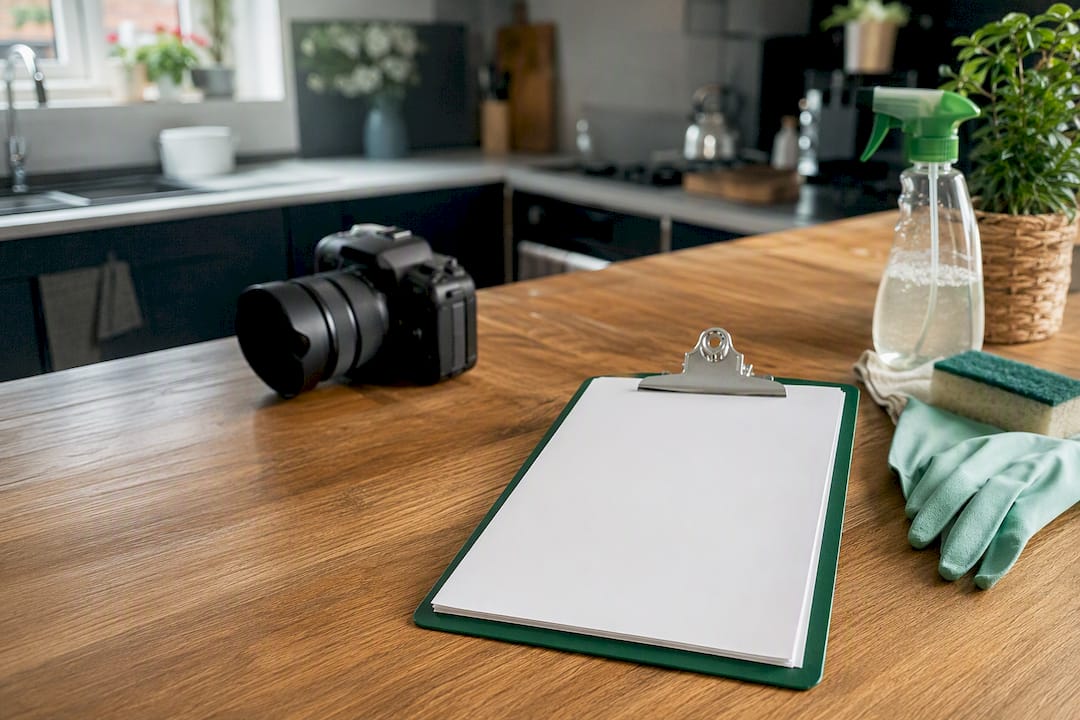
The conventional wisdom also underrates timing. A brilliant clean delivered with no buffer for a re‑clean is a gamble, because inspections do fail, even with good contractors, when a tenant has left more mess than expected. Building a day's slack before checkout is not extra caution; it's the difference between a two‑minute fix and a week‑long void argument.
If I had to prioritise one thing for a Greater London landlord or agent, it would be the evidence trail, not the clean itself. A merely good clean with timestamped photos and an itemised invoice beats a superb clean with nothing to show for it, because disputes are decided on paper, not on memory.
— Roman
Book a professional end of tenancy clean across Greater London
Lookdevisservices is the practical alternative to juggling separate contractors for cleaning, waste removal and minor repairs between tenancies. One team covers the end‑of‑tenancy clean, licensed waste disposal, pressure washing for patios or balconies, and small property‑prep jobs like painting touch‑ups or garden tidying, all delivered by fully insured teams operating across Greater London, including areas such as Edgware.
![cta_image]
Every job comes with the completion evidence landlords and agents actually need: an itemised invoice, before and after photos, licensed waste disposal receipts where clearance is involved, and a re‑clean policy agreed upfront rather than negotiated after a failed inspection. For HMOs and managed portfolios, the same team can coordinate recurring commercial property services between tenancies rather than starting from scratch each time.
If you've got a checkout date approaching, request a quote or ask about same‑day availability by phone on 07348 758581 or by email at lookdeviscompanylegal@gmail.com. You can also start with a quote request through the end‑of‑tenancy services page and get a room‑by‑room price before you commit.
Sources
- Cleaning disputes still top the charts — here's what agents can do…
- How professional cleaning services deliver superior results
- Guide to end of tenancy cleaning laws and rules for landlords
FAQ
What should be included in an end of tenancy cleaning checklist?
It should cover kitchen deep cleaning (oven, extractor, hob), bathroom descaling and grout, skirting boards, window tracks, and carpet treatment, plus documented before and after photos and an itemised invoice.
Can landlords deduct cleaning costs from a tenant's deposit?
Yes, but only where evidence shows the property was returned in a worse condition than recorded at check‑in; the Tenant Fees Act prevents landlords charging tenants directly for a mandatory professional clean.
How much does professional end of tenancy cleaning cost in London?
Prices typically range from around £100–£150 for a studio up to £250–£400 for a three‑bed property, with London often at the upper end of national ranges, according to industry cost guidance.
When should landlords book the clean during move-out week?
Book the clean for the day before checkout wherever possible, and carry out a pre‑checkout walkthrough two to three weeks earlier to flag problem areas before they become disputes.
Does Lookdevisservices offer end of tenancy cleaning in Greater London?
Yes, Lookdevisservices provides insured, licensed‑waste‑carrier teams for end‑of‑tenancy cleaning, waste removal and pressure washing across Greater London, with itemised invoices and photographic completion evidence.