
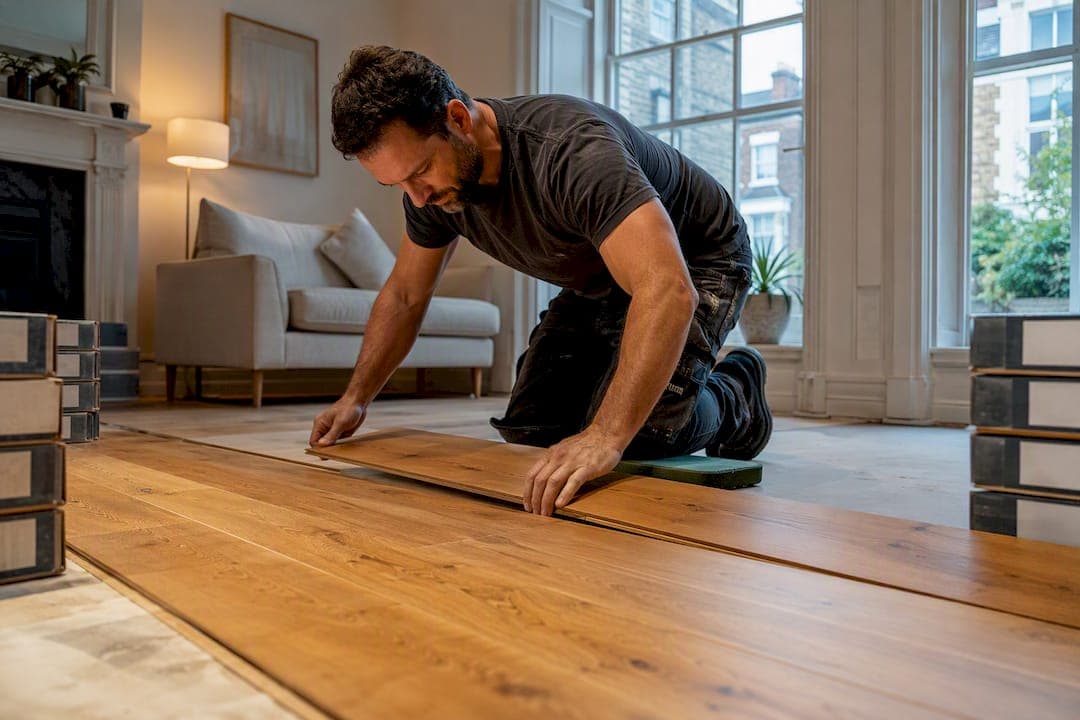
Material choice sets the starting point, but subfloor preparation and pattern complexity, herringbone or parquet especially, are what push a job from the low end to the high end. Before booking anyone, get a site survey and a written, itemised quotation.
TL;DR:
- Subfloor condition and pattern complexity, such as herringbone or chevron, are the main factors that significantly increase installation costs beyond material price differences.
- London installation premiums add about 35% to UK averages due to higher labour rates, parking, and ULEZ charges, especially in central boroughs.
- Labour costs range from £150 to £300 per day, with pattern work like herringbone requiring more time and waste, thus raising overall expenses.
- Subfloor preparation, including removal, levelling, and damp-proofing, can double project costs and is crucial to avoid future floor failures.
- A comprehensive site survey, including moisture testing and exact measurements, is essential before getting a fixed quote, as material and subfloor variables drive final costs.
Table of Contents
- How much does flooring installation cost per material in London?
- What do London flooring fitters charge for labour?
- What extras and subfloor prep should you budget for?
- What should a proper flooring quote include?
- What does a typical London flooring job actually cost?
- Why local coordination reduces flooring cost surprises
- Editorial take: what actually moves the number
- Book a site visit for your London flooring project
- Sources
- FAQ
How much does flooring installation cost per material in London?
Material is the single biggest lever on your total bill, and the gap between options is wider than most homeowners expect. A basic laminate job and a bespoke herringbone parquet floor in the same size room can differ by hundreds of pounds, not because the fitting takes wildly different skill in every case, but because the boards themselves carry such different price tags.
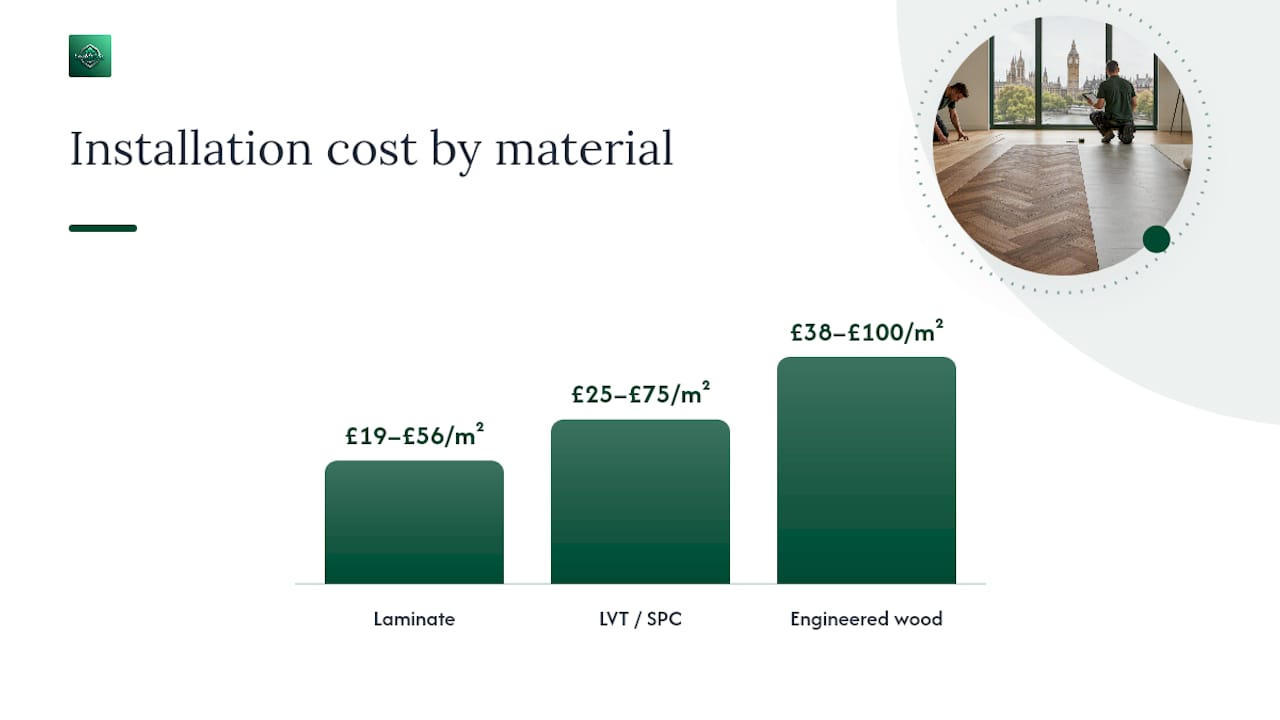
Laminate remains the budget entry point, typically £19–£56 per m² supplied and fitted. The lower end covers straightforward click-lock boards over a decent subfloor; the higher end reflects thicker, more realistic wood-effect ranges and trickier room shapes.
LVT and SPC (luxury vinyl tile and stone-plastic composite) sit a notch above, usually £25–£75/m². These rigid-core products handle London's older housing stock well because they tolerate minor subfloor imperfections better than solid wood, though a genuinely uneven floor still needs levelling first.
Standard sheet vinyl is often the cheapest true floor covering for kitchens and bathrooms, generally landing near the bottom of the LVT range once fitting is included, particularly for simple rectangular rooms with minimal cutting.
Engineered wood typically costs £38–£100/m², with board quality doing most of the work. A specialist wood-flooring pricing guide from Howard Naish notes that boards alone can range from around £30/m² for everyday oak up to £150/m² for premium solid options, while fitting labour varies far less. Supply choice, not the fitter's day rate, is usually what decides your final number.
Solid wood commands the top of the range and needs the most careful subfloor preparation, since it moves more with humidity than engineered alternatives.
Carpet remains one of the most affordable whole-house options, especially across bedrooms and landings, though underlay quality and stair-fitting complexity affect the final figure.
A few things push any of these upward:
- Herringbone or chevron patterns always go down as a glue-down installation, and both material and labour components rise, typically adding £40–£70/m² to the labour portion alone
- Underfloor heating compatibility rules out some solid wood products and requires specific engineered boards or LVT rated for heat transfer
- Glue-down versus floating installation changes drying and curing time, which affects when the room is usable again
London premium: Installation across the capital runs around 35% above the UK average, driven by higher day rates, parking and ULEZ costs for tradespeople, and van insurance. Central boroughs tend to sit at the top of the £35–£110/m² band, while outer London often tracks closer to the national figure.
What do London flooring fitters charge for labour?
Fitters typically charge £150–£300 per day, or roughly £25–£40 an hour, which converts to about £30–£50/m² for straightforward plank flooring laid in a standard room. Patterned work costs more because it takes longer and wastes more material through cutting.
- Straight-lay laminate or LVT: fastest, cheapest labour per m²
- Herringbone or chevron: significantly slower, always glue-down, higher waste factor
- Stairs, thresholds and door undercutting: charged separately and can add £20–£40 per step or transition
Pro Tip: Ask for the day rate AND the per-m² rate before booking. A fitter quoting only one figure without explaining the room size assumptions is harder to compare fairly against another quote.
Most tradespeople also apply a minimum job charge, often starting around £500, which matters if you're only flooring a small hallway or box room.
What extras and subfloor prep should you budget for?
Subfloor condition is often the real cost driver, and skipping it causes failures like lifting or bubbling months later. Budget for these before you fix a total:
- Old flooring removal: typically £3–£10/m²
- Subfloor levelling: from around £15/m² for a self-levelling compound skim
- Damp-proof membrane (DPM): needed on solid concrete floors showing moisture, priced per job depending on area
- Skirting refit or beading: roughly £300 per job, or about £8 per linear metre
- Waste disposal: often folded into a minimum charge, but confirm this isn't billed twice
A proper preparation sequence, damp-proofing, priming, levelling, then curing, needs to happen in order with time between steps. Rushing it is the single most common cause of expensive floor failures.
What should a proper flooring quote include?
An accurate quote starts with a physical visit, not a phone estimate. Follow this checklist when arranging a survey:
- Confirm moisture readings are taken on any solid subfloor before quoting
- Get exact measurements from the fitter rather than relying on your own room dimensions
- Check door and threshold clearances, especially if new flooring adds thickness
- Ask about acclimatisation time for timber or engineered boards, since reputable fitters build this into the schedule
- Request the exact product spec, brand, thickness, wear layer, and confirm it matches the sample you approved
- Ask about access charges, insurance cover and any workmanship guarantee offered
Pro Tip: Compare quotes line by line, not just the bottom figure. A £600 quote that excludes strip-out and skirting can end up costlier than an £750 quote that includes everything.
What does a typical London flooring job actually cost?
Turning per-m² ranges into real totals makes budgeting far less abstract. These use mid-range LVT or engineered wood pricing as a working example.
- Small room (~12m², box room or hallway): materials and fitting around £600–£900, but the £500 minimum job charge often means small rooms cost proportionally more per m² than larger ones
- Lounge or open-plan area (20–25m²): typically £1,000–£2,000 once prep, skirting and waste are included
- Whole ground floor (50–70m²): often £2,500–£5,500, though TradeMatch's London data shows specialist jobs commonly totalling £300–£1,200 for smaller single-room projects, rising sharply with scale and material grade
The line items that shift these totals most are subfloor prep, which can be invisible until the old covering comes up, and board quality, which swings the material cost more than labour ever does. This is exactly why a site survey matters more than a phone quote. If you're renovating more broadly, our house refurbishment budget guide covers how minimum charges and scope creep affect wider projects too.
Why local coordination reduces flooring cost surprises
Flooring rarely happens in isolation. Old carpet needs removing, skips or waste collection need booking, and skirting or finishing work often follows. Lookdevisservices coordinates clearance, waste removal and preparatory trades so a flooring fitter's written quote can actually be executed without waiting on someone else. As an insured, licensed waste carrier working across Greater London, we keep every stage on one itemised document, which is where most budget surprises hide.
Editorial take: what actually moves the number
Most flooring cost guides fixate on per-m² material prices and treat labour as an afterthought. That's backwards for London. The evidence points to subfloor condition and pattern choice as the variables homeowners consistently underestimate, not the flooring itself.
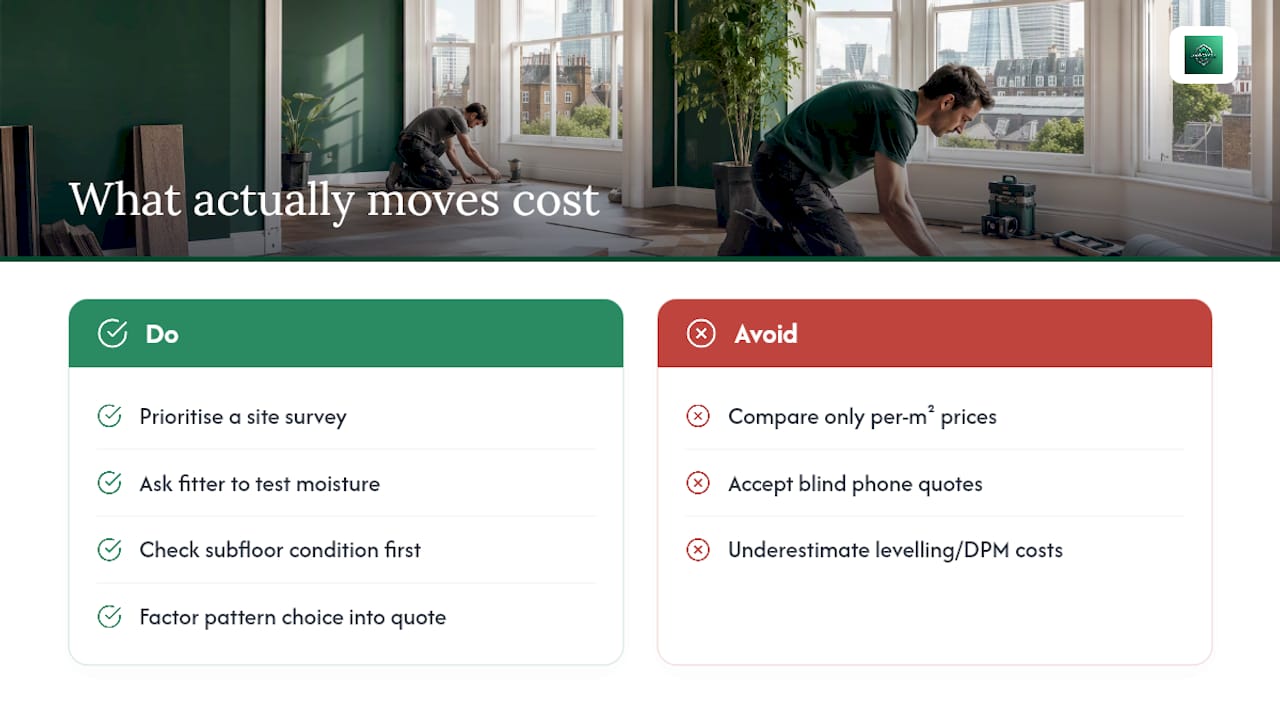
A £40/m² laminate on a badly uneven concrete slab can end up pricier overall than £70/m² engineered wood on a clean, dry subfloor, once levelling and DPM work are added. The conventional advice, "just compare per-m² prices", skips this entirely.
If you take one thing from this guide, prioritise the site survey over the headline quote. A fitter who wants to test moisture and check your subfloor before naming a firm price is being honest about what actually drives cost. One who quotes blind over the phone is guessing, and you'll likely pay for that guess later.
— Roman
Book a site visit for your London flooring project
Preparing a room properly, stripping old flooring, levelling a subfloor, disposing of waste, is often the part homeowners underestimate, and it's exactly where Lookdevisservices fits in. We coordinate the groundwork your flooring fitter needs: old floor removal, licensed waste disposal, and finishing touches like skirting, so the trade quote you've agreed can actually go ahead without delays or hidden extras.

Our building refurbishment services cover exactly this kind of preparatory and finishing work across Greater London, alongside waste removal for old flooring and site debris. If you're planning a flooring project this year, book a site visit or request an itemised quotation through our landing page, and we'll help you scope the groundwork before your flooring fitter ever arrives.
Sources
Figures throughout this guide draw from established UK trade pricing resources:
- How Much Is Flooring Installation in London? £35–£110 (2026)
- What's the cost of installing laminate flooring in 2026?
- Flooring installation cost guide
- Wood floor installation cost London | Howard Naish
Always confirm current figures with an itemised written quote, as prices shift with material availability and demand.
FAQ
What is a fair price to install flooring?
A fair supply-and-fit price across London typically falls within £35–£110 per m², depending on material and subfloor condition, with straightforward laminate at the lower end and patterned wood at the top.
What is the average cost of flooring a two-bedroom house in London?
A typical two-bedroom property covering 50–70m² of usable floor space usually costs between £2,500 and £5,500 for mid-range materials, though a site survey is needed to confirm subfloor prep costs.
How much does it cost to have laminate flooring fitted?
Laminate installation, including materials, typically runs £19–£56 per m², with most standard rooms landing in the middle of that range once minor prep is included.
Is LVT more expensive to fit than laminate?
Yes, LVT and SPC typically cost more, around £25–£75/m² against laminate's £19–£56/m², reflecting the higher material cost of rigid-core vinyl products rather than significantly harder fitting work.
Recommended
- House extension cost London: your 2026 budget guide
- Loft conversion cost London: your 2026 budget guide
Prices, timescales and information provided in this article are for general guidance and may vary depending on the property, site conditions, materials and scope of work. Please contact LookDeVis Services for an individual assessment and quotation. Where regulatory, planning or legal requirements apply, appropriate professional advice should be obtained.