
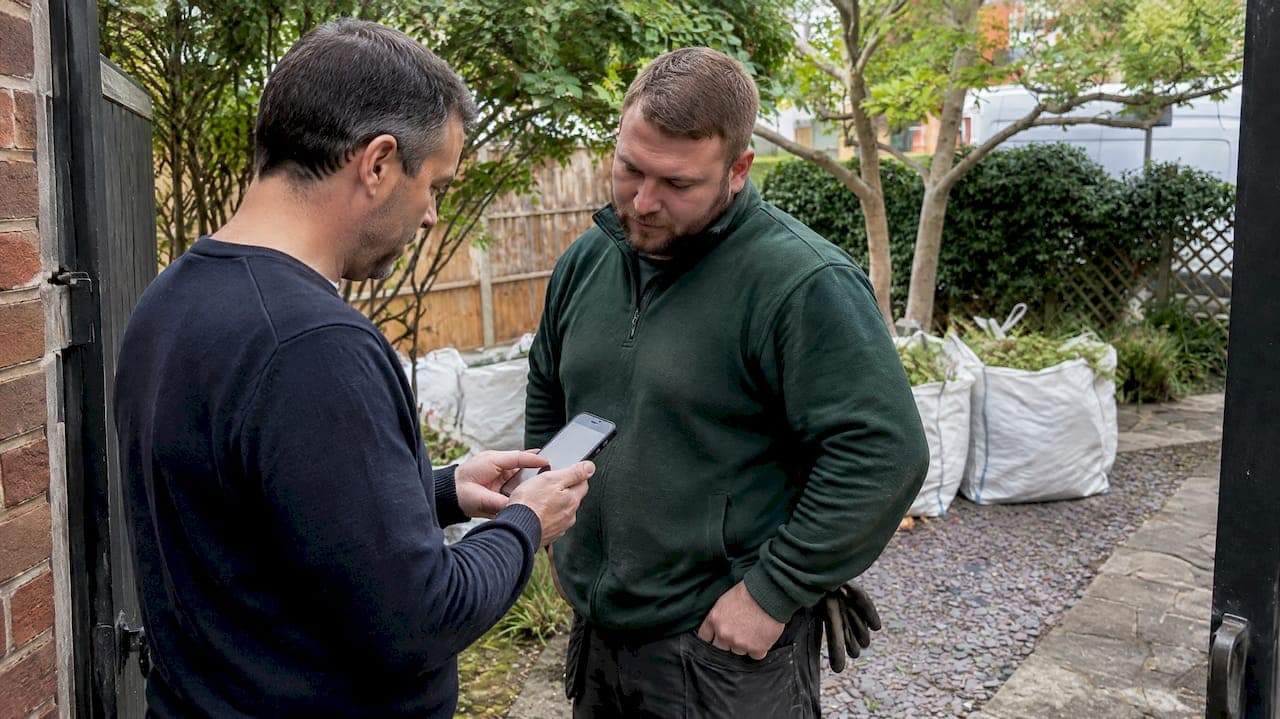
If you need garden clearance near you, the quickest route is to book a licensed waste carrier with a written quote and same-day options where available. A professional team can clear overgrowth, shrubs, branches and general debris in a single visit, and checking for an upper-tier Waste Carrier Licence protects you from liability for how that waste is handled afterwards. Request a written quote or call a provider's booking line before you agree to anything.
TL;DR:
- Separating green waste from mixed rubbish can lower disposal costs, while soil, turf cuttings, and invasive plants may need a separate route.
- Check that the carrier has an active upper tier licence beginning with CBDU and insurance, then request a waste transfer note confirming lawful disposal.
- Request a written quote that separates labor from disposal and identifies waste types; narrow gates, long carries, mixed rubbish, and urgent booking can raise costs.
- Most straightforward residential clearances finish in one visit, but extensive plots or heavy mixed loads may require a second; book spring and autumn dates early.
Table of Contents
- What garden clearance usually covers and why separating green waste matters
- Typical costs and the main things that change a quote
- How to choose and check a nearby garden-clearance provider
- What happens on the day: arrival, the work process and how disposal is handled
- Why choose a licensed, insured local team
- Estimated timeline for garden clearance projects
- Post-clearance site restoration or preparation options
- Details on permits or regulations related to garden clearance
- Roman's view: quick practical fixes and when to call a pro
- How to book LookDeVis for garden clearance and what we offer
- FAQ
- Sources
What garden clearance usually covers and why separating green waste matters
Garden clearance typically covers cutting back overgrown vegetation, removing shrubs and small bushes, clearing fallen branches and leaves, and loading general garden debris for removal. Many providers will also take away old garden furniture or unwanted items left outside, though this depends on the scope agreed beforehand.
A proper quote should state clearly what counts as green waste and what counts as mixed or general waste, because the distinction affects both cost and disposal route. Green waste, such as grass cuttings, hedge trimmings and leaves, is usually compostable and cheaper to process. Mixed waste, which includes things like old fencing, rubble or non-garden rubbish, often needs separate handling and raises the overall disposal cost.
Typical inclusions and exclusions look like this:
- Cutting back overgrown plants, weeds and long grass
- Removing shrubs, small bushes and fallen branches
- Clearing leaves and general garden debris
- Hazardous materials, certain soils and some invasive species are usually excluded from standard garden waste
The Separation of Waste (England) Regulations 2024 set out what legally counts as garden waste, and the definition excludes items such as soil, turf cuttings and certain invasive plants like Japanese knotweed. If your garden includes any of these, say so when requesting a quote, since they may need a different disposal route altogether. Always confirm the scope in writing before work starts so there's no confusion about what's included and what isn't.
Typical costs and the main things that change a quote
Pricing for garden clearance usually follows one of three models: a from-price for the whole job, an hourly labour rate, or a charge based on van loads or the area being cleared. Treat any figure quoted to you as an indicative starting point rather than a fixed guarantee until you've confirmed the scope.
Several factors push a quote up or down:
- Access and site difficulty, such as narrow gates or a long carry to the nearest road
- The mix of waste involved, since mixed loads cost more to process than pure green waste
- The overall volume of material and how many vehicle loads it takes
- Urgent or same-day booking, which can carry a premium over a scheduled visit
- Whether the job needs hand-loading only or machinery for cutting and clearing
Separating green waste at source usually reduces your disposal cost, because composting and authorised green-waste processors generally accept it at lower rates than mixed rubbish. That's one of the simplest ways to keep a quote down if you're clearing a garden yourself before a professional visit.
Access also has a direct effect on labour time. Narrow side gates, steep slopes or a long carry from the garden to the collection vehicle all add minutes to a job, and sometimes force a smaller vehicle or extra trips. Always ask for a written quote that breaks disposal costs out separately from labour, so you can see exactly what you're paying for and compare offers properly.
How to choose and check a nearby garden-clearance provider
Before you book anyone, run through a short checklist to confirm they can legally and safely do the work.
- Ask for their upper-tier Waste Carrier Licence number, which should start with the letters CBDU.
- Check that number against the Environment Agency waste carrier register to confirm it's active and matches the business name.
- Request proof of public liability insurance before work begins.
- Get a written quote that itemises labour, waste type and disposal cost separately.
- Ask how they separate green waste from mixed waste, and where each stream is taken.
- Confirm crew size, equipment and whether they can meet your preferred date.
The waste duty of care code of practice explains that you keep a duty of care over your waste until it's lawfully disposed of, so verifying the carrier's licence and keeping a record of their registration number protects you if anything is later queried.
When you call for a quote, mention access constraints straight away: whether there's a locked side gate, steps, or no direct vehicle access to the garden. This lets the provider price the job accurately the first time rather than adjusting it on arrival.
Pro Tip: Photograph the garden before you call, and send the photos with your enquiry. It speeds up accurate quoting and avoids surprises on the day.
What happens on the day: arrival, the work process and how disposal is handled
A typical clearance visit follows a predictable sequence. The crew arrives, carries out a quick safety check of the site, then works through the agreed scope: cutting back vegetation, loading shrubs and branches, and sweeping up leaves and debris. Waste is loaded directly into the collection vehicle, with access arrangements agreed in advance to keep things moving.
A few simple steps on your part save time and, often, money:
- Move any cars blocking access to the garden or driveway
- Unlock side gates or back entrances before the crew arrives
- Point out any hazards, such as uneven paving, glass or buried obstacles
Once the work is done, most teams carry out a final site sweep and ask you to confirm the job matches what was agreed before they leave. Disposal is normally handled through the carrier's own licensed route, and it's reasonable to ask for confirmation of where the waste went, such as a waste transfer note, as evidence it was disposed of lawfully.
Why choose a licensed, insured local team
We provide licensed garden waste removal with insured teams, and same-day or urgent options may be available depending on crew availability and location. Because we also handle landscaping, pressure washing and wider property refurbishment, you can coordinate a clearance followed by turfing, planting or a general tidy-up through a single point of contact rather than multiple providers.
Working with a licensed carrier matters because it keeps the duty of care compliant from the moment waste leaves your garden to the point it's processed. Having one organiser for a multi-stage job, such as clearance followed by new turf or planting, also removes the coordination problems that come from booking separate trades for each stage.
A licensed carrier and a written quote are the two things that protect you most when hiring for garden clearance.
Estimated timeline for garden clearance projects
Most straightforward garden clearance jobs run from initial enquiry to completion within a few days to around two weeks, depending on how quickly you book and how much work the garden needs. A phone or online enquiry typically leads to a quote within a day or two, often based on photos or a brief site visit for larger or more complicated gardens.
Once a quote is accepted, scheduling depends on team availability and the season. Same-day or next-day slots can sometimes be arranged for smaller, straightforward jobs, particularly outside the busiest months. Larger clearances, especially ones involving significant overgrowth, tree branches or multiple vehicle loads, may need a slightly longer lead time to allocate the right crew and equipment.
The clearance work itself is usually completed in a single visit for most residential gardens, though extensive jobs covering a large plot or heavy mixed waste might require a second visit to finish loading and sweeping. If the clearance is the first stage of a larger project, such as preparing for new turf, planting or hard landscaping, it's worth booking the follow-on work early so the stages run back to back rather than leaving the garden bare for longer than necessary.
Booking ahead during spring and autumn, when demand is naturally higher, tends to secure a better choice of dates than trying to arrange something at short notice in peak season.

Post-clearance site restoration or preparation options
Once a garden has been cleared, the bare ground underneath is often the ideal starting point for restoration work rather than the finished result. Many gardens benefit from some form of preparation before they're left to grow back naturally or get used again.
Common next steps after a clearance include levelling and preparing the soil, laying fresh turf where the old lawn was patchy or overgrown, and introducing new borders or planting schemes to replace cleared vegetation. For gardens that were heavily overgrown, this stage is often where the real transformation happens, since the clearance simply removes what was unusable.
Where the ground needs structural work first, such as uneven levels or old features left behind, hard landscaping like paths, patios or retaining walls can be planned in before any soft landscaping goes in. This is also a practical point to prepare the garden for autumn conditions if the clearance happens later in the year, with seasonal tidying and soil preparation helping new planting establish before winter, a theme covered in more detail in this seasonal garden preparation guide.
Deciding on restoration at the same time as booking the clearance, rather than afterwards, usually means less disruption overall, since the same team can move from clearing to preparing the ground without a second mobilisation.
Details on permits or regulations related to garden clearance
For most residential gardens, clearing overgrowth, cutting back shrubs and removing general green waste doesn't require a specific permit. What does matter legally is how the waste is handled once it leaves your property, which is governed by the waste duty of care code of practice. As the person arranging the clearance, you retain responsibility for that waste until it's lawfully disposed of, which is why checking a carrier's licence before hiring them matters more than any permit application.
Certain materials fall outside normal garden waste rules and need separate handling. Invasive species such as Japanese knotweed are excluded from standard garden waste streams under the Separation of Waste (England) Regulations 2024, and controlling or disposing of them incorrectly can create legal problems later. If you suspect an invasive plant is present, flag it when requesting your quote so it can be assessed and dealt with through the right channel.
Tree work carried out as part of a clearance can also be subject to legal restrictions, particularly where a Tree Preservation Order or conservation area status applies. It's worth checking with your local council before any significant tree removal forms part of the job, since this sits outside standard garden clearance rules entirely.
Roman's view: quick practical fixes and when to call a pro
A quick tidy works for light overgrowth, but once brambles, fallen branches or a season's worth of leaves take over, a professional visit saves far more time than it costs. I'd call it in for urgent tenant handovers, heavy autumn leaf fall, or any garden left unattended for a year or more. If in doubt, get a written quote first.
— Roman
How to book LookDeVis for garden clearance and what we offer
We handle garden clearance with licensed waste removal, insured teams, and same-day or urgent availability in selected areas depending on location and crew capacity. Because clearance, waste removal, landscaping and planting all sit under one team, you can go straight from a cleared garden to fresh turf or new borders without bringing in a second contractor.

Getting started is straightforward:
- Request a written quote through our garden clearance page for your London postcode
- Call or message us directly to discuss access, waste type and timing
- Ask us for our carrier licence number and insurance details as part of the quote, which we're happy to provide
If your garden is in the Watford or St Albans areas, our local garden clearance and garden waste removal pages cover availability and indicative pricing for those postcodes specifically. For ongoing upkeep after your garden is cleared, our Garden Club membership offers regular maintenance so it doesn't slide back into overgrowth. Get in touch today and we'll confirm scope, price and the earliest slot we have available.
FAQ
How much would a garden clearance cost?
Costs vary depending on garden size, access, waste type and how much labour the job needs, so providers typically quote a from-price once they know the scope. Always ask for a written quote that separates labour from disposal costs so you can compare offers fairly.
What does garden clearance include?
Garden clearance generally covers cutting back overgrown plants, removing shrubs and branches, clearing leaves and loading general garden debris for removal. Items like old furniture may be included depending on the agreed scope, while hazardous materials and some soils are usually excluded.
How much does it cost to fix an overgrown garden?
The cost depends heavily on how overgrown the garden is, how difficult access is, and whether the waste is mostly green or mixed with other rubbish. A written quote after describing or photographing the garden gives the most accurate answer for your specific case.
How much should I pay my gardener per hour?
Hourly rates vary by provider, task and location, so there's no single fixed figure across the market. Requesting a written quote that states the hourly rate or total job price lets you compare it against other local providers before booking.
Sources
- Waste duty of care: code of practice (PDF) - GOV.UK
- The Separation of Waste (England) Regulations 2024
- Gov
Recommended
- Garden Clearance in London | Overgrown Garden Specialists
- From £150: London garden clearance costs, legal checks and what to send
- Garden Waste Removal London | From £50/Bag | Licensed Green Waste Collection
- Garden Waste Removal in London | Licensed Green Waste Disposal
Prices, timescales and information provided in this article are for general guidance and may vary depending on the property, site conditions, materials and scope of work. Please contact LookDeVis Services for an individual assessment and quotation. Where regulatory, planning or legal requirements apply, appropriate professional advice should be obtained.