
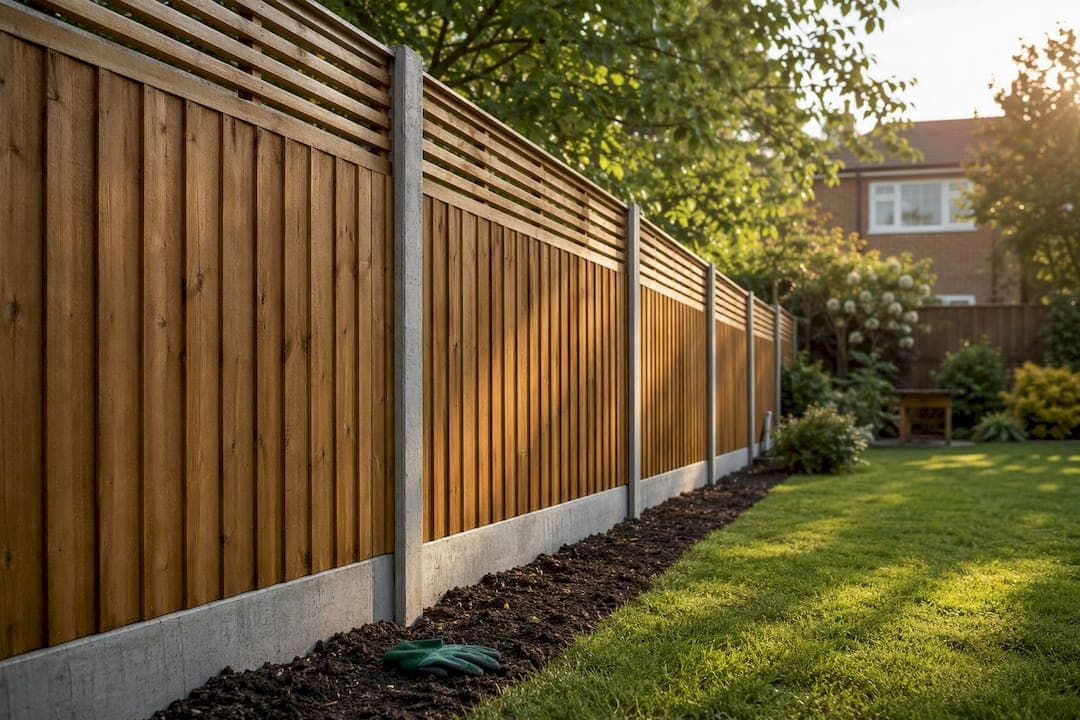
Expect to pay roughly £90 to £180 per metre for a fully installed timber fence in London, with the South East labour premium pushing many jobs to the higher end of that band. A typical 15-metre run can cost several thousand pounds, and a 20-metre run generally costs more, depending on the fence type, ground conditions and access. Material choice, groundwork and post specification move the price more than anything else, so the ranges below are a starting point, not a quote.
TL;DR:
- Most fully installed timber fences in London cost between £90 and £180 per metre, with higher prices for composite or hardwood options.
- A 15-metre fence typically ranges from £1,800 to £2,500, and a 20-metre fence from £2,400 to £3,300, depending on ground conditions and access.
- Quotes vary mainly due to site-specific factors such as obstructions, ground conditions, and accessibility, often adding hundreds to thousands of pounds.
- Using concrete posts and proper foundations can significantly extend a fence’s lifespan, justifying higher initial costs for properties meant to last for years.
- Obtaining detailed, itemized quotes and involving a local professional with site inspections reduces the risk of unexpected charges and ensures accurate pricing.
Table of Contents
- How much does garden fencing cost in London?
- Cost by fence type: installed ranges, best use and maintenance
- What factors actually change your final fencing quote?
- Worked examples: budget builds for 15m, 20m and 30m runs
- How to get accurate quotes and what to ask
- Why choose a local professional installer?
- Practical trade viewpoint: when it pays to spend more now
- Get a free, itemised fencing quote from LookDeVis
- Sources
- FAQ
How much does garden fencing cost in London?
London homeowners pay more than the national average for fencing, almost entirely because of labour. A budget/mid/premium breakdown gives a clearer picture than a single average figure, since a lap panel job and a hardwood closeboard job sit in completely different price brackets.
Budget tier: around £60 to £90 per metre, typically overlap or lap panels on timber posts with basic gravel boards.
Mid tier: roughly £90 to £150 per metre, covering closeboard fencing, better-specified panels, or composite on concrete posts.
Premium tier: £150 to £250+ per metre for hardwood timber, tall privacy screening, or bespoke slatted designs with concrete foundations throughout.
Nationally, installed timber fencing tends to fall between £60 and £150 per metre, but London and the South East regularly add £20 to £50 per metre on top of that because day rates for fencing teams run higher in the capital than in most other UK regions. If you're pricing by panel rather than by metre, which is common for lap and overlap fencing, installed costs across London generally sit between £125 and £275 per panel, with most jobs landing close to £185 per panel once posts, concrete and labour are included.
Statistic snapshot: most standard timber fence installations in London fall between £90 and £180 per metre fully installed, with the London and South East uplift adding £20 to £50 per metre on top of the national baseline. For a mid-specification 20-metre garden boundary, that typically means a total somewhere between £1,800 and £3,600 before extras such as gates or waste removal.
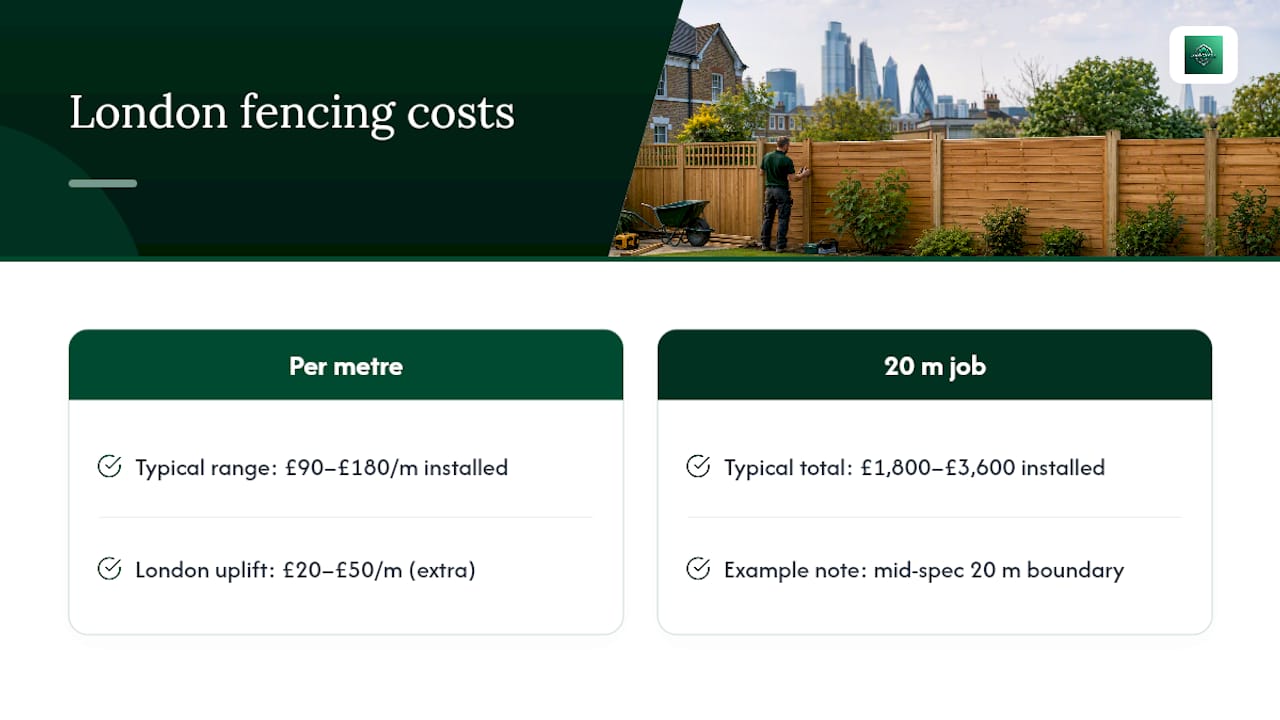
Day rates for a two-person fencing team in London commonly run higher than in the regions, which is the single biggest reason quotes vary so much between a London postcode and a job an hour outside the M25.
Cost by fence type: installed ranges, best use and maintenance
Every fence type carries its own installed price band, and the differences come down to material cost, how much cutting and fitting it needs, and how long it lasts before repairs are due. The list below groups the main options London homeowners ask about, from budget-friendly to premium hardwood.
- Overlap panel fencing: roughly £60–£90/m installed. Cheapest option, decent for temporary or budget boundaries, but panels typically need replacing within 8–10 years.
- Panel fencing (lap panel): around £70–£110/m installed. Good general-purpose privacy fencing for most gardens; lifespan improves noticeably with concrete posts rather than timber ones.
- Closeboard fencing (feather edge): roughly £100–£160/m installed. Stronger and more wind-resistant than panels because boards overlap vertically on horizontal rails, making it the standard choice for exposed or boundary-facing gardens.
- Picket / palisade fencing: around £80–£140/m installed, though heights and spacing vary the price considerably. Suits front gardens and low-level boundaries where kerb appeal matters more than total privacy.
- Slatted / horizontal fencing: roughly £120–£200/m installed. Popular for contemporary garden design; the wider boards and precise spacing push labour time up compared with vertical panel styles.
- Trellis fencing: around £40–£80/m installed as a standalone screen, more when combined with climbing plants or fitted atop an existing fence line. Best used as a screening extension rather than a full boundary solution.
- Composite fencing: roughly £130–£220/m installed. Higher upfront cost than timber, but composite panels typically offer better long-term value for rental or commercial portfolios because they don't need annual staining or painting.
- PVC / vinyl fencing: around £110–£190/m installed. Very low maintenance and resistant to rot, though colour and style options are more limited than timber.
- Hardwood timber fencing (Western Red Cedar, Siberian Larch, Iroko, Thermo-ayous): roughly £150–£280/m installed. Naturally rot-resistant, ages well, and suits period or high-spec properties where appearance matters as much as function.
Posts and gravel boards affect every one of these ranges more than most homeowners expect. Concrete posts add cost upfront but cut down on future repairs, while timber posts are cheaper initially and more prone to rot at ground level within 10 to 15 years. Gravel boards, fitted along the base of the fence, protect panels from ground moisture and typically add a modest amount per metre, but skipping them is a false saving if the fence line sits on damp or sloped ground.
What factors actually change your final fencing quote?
Two quotes for what looks like the same job can differ by hundreds of pounds, and the reason almost always traces back to a handful of variables that don't show up in a simple per-metre price.
Access and waste removal. A garden with rear-only access, no parking, or a narrow side passage adds time and sometimes a permit requirement for street parking or scaffolding. Removing an old fence line and disposing of the waste responsibly also adds cost, particularly for larger runs or heavy panels.
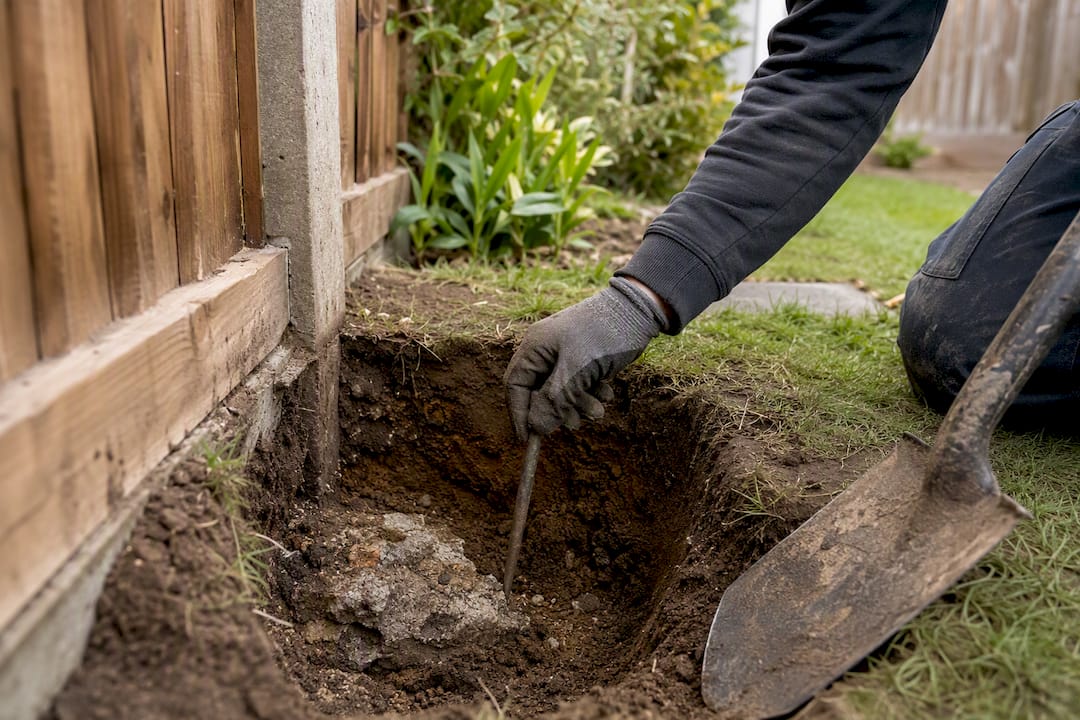
Ground conditions and hidden obstructions. Older London gardens frequently hide old concrete footings, buried rubble, or established tree roots exactly where a new post needs to go. A single obstruction in a post hole can add an extra day's labour or a small excavation subcontract to the job, which is one reason quotes sometimes come in higher than the initial estimate once digging starts.
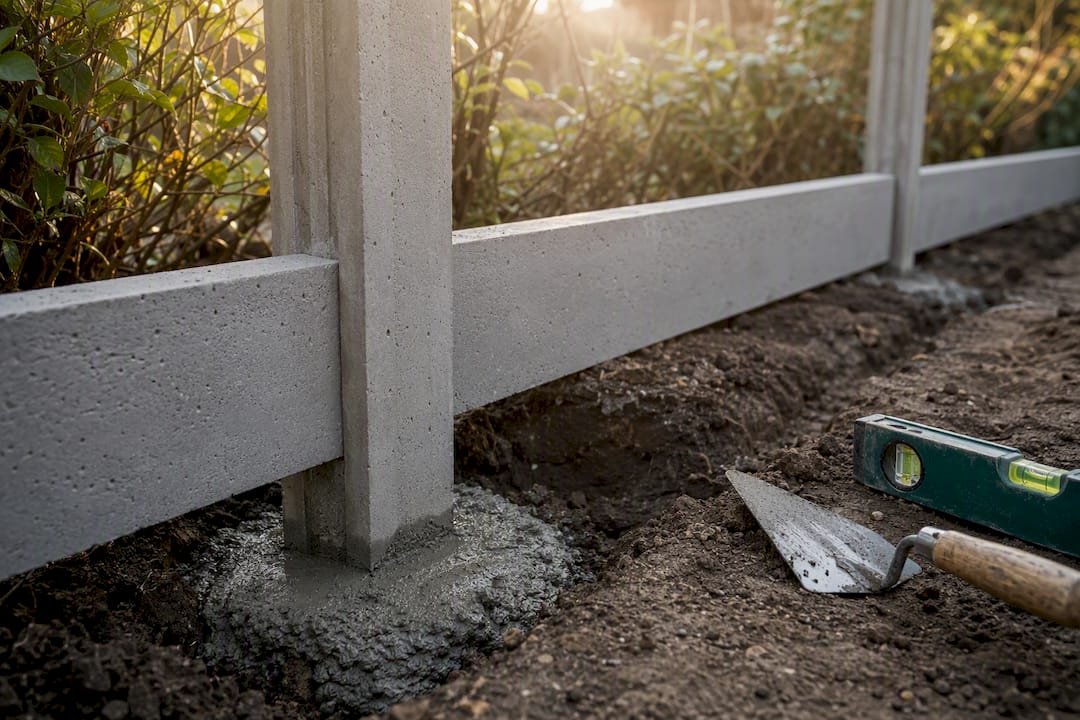
Post type and foundations. Concrete posts cost more than timber posts to supply and fit, but trade sources consistently recommend concrete over timber where the fence needs to last. Properly cast concrete footings with gravel boards can roughly double the working life of a fence line compared with a timber-posted equivalent in damp soil.
Height, gates and finishes. A standard 1.8m boundary fence costs less than a 2.4m acoustic or privacy screen. Gates, whether a simple side gate or a wider double gate, are priced separately, and any staining or painting adds further cost on top of installation.
Seasonality and labour rates. Spring and early summer are the busiest months for London fencing teams, and prices can firm up slightly during peak demand.
Pro Tip: Ask your installer to check for old footings or hardcore before quoting a fixed price. A five-minute probe with a spike often reveals problems that would otherwise turn into an on-the-day surcharge.
Worked examples: budget builds for 15m, 20m and 30m runs
Seeing the maths laid out for a specific run length makes budgeting far easier than working from a per-metre range alone. Here's how a typical mid-specification closeboard fence with concrete posts and gravel boards breaks down for three common garden lengths.
- 15-metre run (mid-spec closeboard, concrete posts): materials and panels around £700–£900, posts and concrete around £250–£350, labour around £600–£900, waste removal of the old fence around £100–£150, plus a 10% contingency for unforeseen ground issues. Total: roughly £1,800–£2,500, broadly matching the £900 to £2,000 national band for a 15m run once the London labour premium is added.
- 20-metre run (mid-spec closeboard, concrete posts): materials around £950–£1,200, posts and concrete around £330–£450, labour around £850–£1,200, waste removal around £150–£200, plus contingency. Total: roughly £2,400–£3,300, sitting toward the upper end of the £1,300 to £4,000 national range for a 20m run.
- 30-metre run (mid-spec closeboard, concrete posts): materials around £1,400–£1,800, posts and concrete around £500–£650, labour around £1,300–£1,800, waste removal around £200–£300, plus contingency. Total: roughly £3,600–£4,900, reflecting the London uplift across a longer, more labour-intensive line.
A single difficult post hole or a sloped garden that needs stepped panels can add a few hundred pounds to any of these totals, which is why the contingency line matters more than it might seem. VAT typically applies once a contractor's turnover crosses the registration threshold; ask directly whether a quoted price is VAT-inclusive before comparing it against another supplier's figure.
How to get accurate quotes and what to ask
A proper written fencing quote should never be a single lump sum with no breakdown. Ask for the following as standard practice before agreeing to any work.
- Materials specified by type and grade (e.g. tanalised timber, which panel style, post material).
- Post specification: concrete-set, size, and depth.
- Groundwork included: levelling, obstruction removal, and how hidden issues (old footings, roots) are priced if found.
- Waste removal and disposal of the old fence, confirmed as included or charged separately.
- Timescale for completion and expected start date.
- Guarantee terms on workmanship and materials.
- Confirmation the contractor holds public liability insurance.
Red flags worth walking away from include a quote with no mention of concrete for posts, a vague one-line scope with no material names, or a price that seems well below every other quote you've received with no explanation for the gap. Getting three quotes is generally enough to spot outliers and compare like-for-like scope, and the wide dispersion in panel pricing across London makes comparing itemised elements far more useful than comparing headline totals alone.
The gap almost always lives in one of those three lines.*
Why choose a local professional installer?
A site visit changes a fencing estimate from a guess into an accurate figure, because older London gardens often hide buried footings, tree roots or services that only become obvious once digging starts. A proper survey catches these before they turn into an on-the-day surcharge.
Professional installation from an insured local team typically covers:
- A site survey to check ground conditions, access and existing boundary lines.
- Correct post setting with concrete foundations at the right depth for the soil type.
- Drainage consideration where a fence line runs along a low point in the garden.
- Removal and disposal of the old fence through a licensed waste carrier, rather than leaving it for the homeowner to deal with.
Lookdevisservices operates as an insured property services business across Greater London, working across gardening, landscaping and fencing installation for both residential and commercial customers, with waste removal handled through appropriate licensed disposal arrangements. That multi-service setup matters for fencing specifically, because old panels, posts and rubble need clearing as part of the job, not as a separate call to another contractor.
Practical trade viewpoint: when it pays to spend more now
Concrete posts and proper foundations cost more on day one, but they cut down on the repeat callouts that eat into any savings from a cheaper timber-posted fence. For a property you plan to hold for years, that extra spend on posts is close to money in the bank.
Composite panels follow the same logic for landlords and busy property managers: no annual staining, no repainting, and fewer maintenance visits between tenancies. Budget panels still make sense for short-term situations, a rental turnover, a boundary you expect to remove within a few years, or a tight-margin project where the fence isn't the main event. The mistake is applying a short-term mindset to a fence you intend to keep for a decade.
— Roman
Get a free, itemised fencing quote from LookDeVis
A professional property services company can offer a practical alternative to coordinating separate tradespeople for fencing, groundwork and waste removal by providing a single team to handle the survey, posts, panels and old-fence disposal under one fixed quotation.

A site visit lets our team check access, ground conditions and any hidden obstructions before confirming a price, so the figure you agree matches what you pay on completion day. We work across residential gardens and managed or rental properties, with same-day and urgent availability offered for selected services and locations where our team can accommodate it.
If your project extends beyond fencing, our landscaping services cover patios, decking and retaining walls where ground levels affect your fence line, and our planting services can help if you're screening a new boundary with hedging or borders. Old fence panels, posts and rubble are cleared as part of the job through our licensed waste removal service.
Ready to see a real figure for your garden? Get in touch for a free fencing installation quote and our team will arrange a site visit to confirm your itemised price.
Sources
- Bookabuilderuk
- Howmuchshoulditcost
- Fence installation cost UK 2026 | £60 to £150 a metre | Less
- What type of fence lasts the longest? | Trade Fencing Online
FAQ
How much does garden fencing cost in London?
Most fully installed timber fencing in London costs between £90 and £180 per metre, with composite, hardwood or premium styles pushing towards £200 to £280 per metre.
How much would a 30-metre fence cost?
A mid-specification closeboard fence with concrete posts across 30 metres typically costs several thousand pounds in London, depending on ground conditions and access.
What is the 2-metre fence rule?
Under UK planning rules, most garden fences can be up to 2 metres high without planning permission, but boundaries facing a highway are usually restricted to 1 metre unless permission is granted; always check with your local planning authority for site-specific rules.
How much will it cost to fence a garden?
A typical 15-metre garden boundary costs several thousand pounds in London, while a 20-metre run generally costs more, depending on fence type and ground conditions.
Is it cheaper to install fencing myself?
DIY fencing saves on labour but rarely on materials, since trade accounts often get better rates than retail, and mistakes with post depth or concrete can shorten the fence's lifespan significantly, costing more in repairs later.
Recommended
Prices, timescales and information provided in this article are for general guidance and may vary depending on the property, site conditions, materials and scope of work. Please contact LookDeVis Services for an individual assessment and quotation. Where regulatory, planning or legal requirements apply, appropriate professional advice should be obtained.