
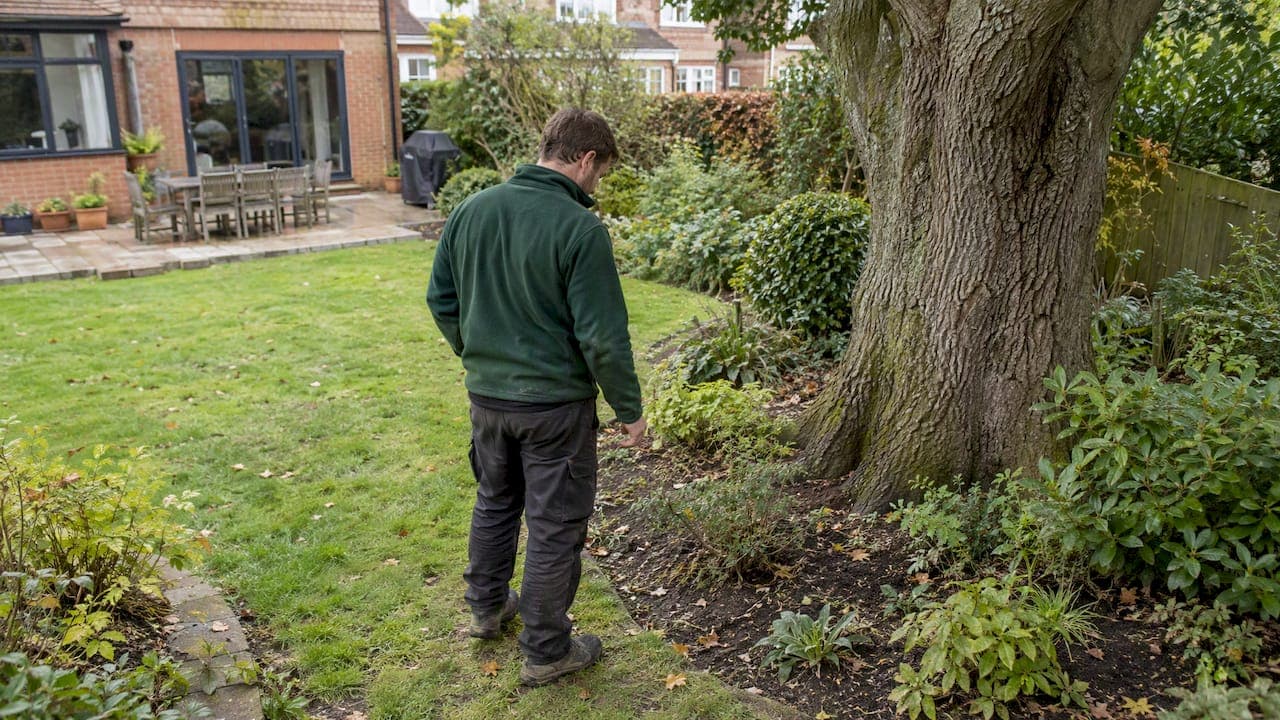
For a full garden project, hire a local, insured landscaper rather than taking on large groundworks yourself. We can coordinate design, permissions checks and waste removal under one team, so you deal with one point of contact. Your simplest next step is to request a site visit and a written quote, and we will take it from there.
TL;DR:
- For drives over 5 square metres, nonpermeable surfacing without drainage to a lawn or border typically needs planning permission; permeable paving may avoid it.
- Before pruning or felling, check whether a tree has a Tree Preservation Order; work without formal council consent can lead to prosecution.
- Plan major drainage and earthmoving from late summer to early winter, and schedule planting for autumn or spring; wet soil can compact and weaken foundations.
- Compare itemized quotes against the same written scope, checking drainage, waste removal, materials, provisional sums, and staged payments rather than choosing the lowest headline price.
Table of Contents
- Why hire a local, insured landscaper for your garden?
- What landscaping services can you book?
- Which planning, drainage and tree checks apply to your project?
- When is the best time to start, and how does a project run?
- How are landscaping quotes put together?
- What should you ask a landscaper before you hire?
- What do typical Hertfordshire landscaping projects look like?
- How should you build sustainability into your garden?
- What do customers say about our landscaping work?
- What matters most when hiring for a garden project?
- How can we help with your Hertfordshire garden?
- FAQ
- Sources
Why hire a local, insured landscaper for your garden?
A garden project is rarely one job. Someone has to plan the layout, prepare the ground, deal with drainage, build the hard surfaces, plant, and take away what is left. When you split that between separate trades, the gaps between them become your problem. Digging starts before the drainage is agreed, or a skip arrives a week late.
With one insured contractor, you get a single schedule and a single party responsible for the finished result. Here is what that looks like in practice:
- Joined-up delivery: design, groundworks, drainage, hard and soft landscaping, tree work and waste removal are planned in order.
- Fewer clashes: one team means fewer delays, less damage to lawns and boundaries, and no argument about who fixes a problem.
- Protection for you: ask to see public liability insurance and waste carrier details before work starts, and keep copies.
You also gain a team that can consider soil, access issues and council requirements.
What landscaping services can you book?
Before you call anyone, it helps to know which jobs belong in your project. Most gardens need a mix of the following.
- Hard landscaping: patios, paths, paving, decking, retaining walls, drainage and sub-base works. These are the permanent structures, and they depend on solid ground preparation. Our hard landscaping and groundworks team covers this work.
- Soft landscaping: turfing, planting schemes, hedges, borders and small tree work. See our soft landscaping and turfing service for the living side of a garden.
- Complementary services: garden clearance, waste removal, pressure washing and ongoing maintenance plans. These tidy up before the build and keep the result looking good afterwards.
- Artificial grass: we remove the existing lawn, excavate, lay and compact a base, level it, fit the grass and finish the edges. It suits shaded, heavily used or awkward lawns where you want a low-maintenance surface, as long as the ground beneath is prepared properly.
If you are unsure which of these you need, a site visit can help clarify things.
Which planning, drainage and tree checks apply to your project?
A few rules catch homeowners out more than any others, and checking them early saves delays.
- Front drives: planning permission is typically required if a new or replacement driveway exceeds 5 square metres and uses non-permeable materials that do not direct rainwater to a lawn or border. The RHS advice on permeable paving says permeable materials, or directing runoff into soft landscaping, generally avoid the need for permission, and an application fee is often around £150.
- Protected trees: works to a tree under a Tree Preservation Order need formal consent from the local planning authority. Unauthorised removal can lead to prosecution, so check before any pruning or felling.
- Local ecology: Hertfordshire's Local Nature Recovery Strategy maps priority areas for habitat action, and larger projects should take it into account.
- Protected species: the county council's ecology advisory service points to bats, badgers and great crested newts as species homeowners must not harm.
Pro Tip: Take dated photos of the site and complete the county biodiversity checklist before you speak to the council. Early, complete information is the fastest route through pre-application checks.
When is the best time to start, and how does a project run?
Timing affects quality as much as price. For large projects, the RHS recommends doing major groundworks such as drainage and earth moving from late summer to early winter, and planting in autumn or spring. Working on wet ground risks soil compaction and weak foundations, so a good contractor will sometimes delay a start rather than rush it.
A typical project follows this order:
- Site visit: we inspect soil, drains, access and boundaries.
- Design and quote: you receive a written scope and itemised price.
- Groundworks: clearance, excavation, drainage and sub-base.
- Hard landscaping: patios, paths, walls, decking and fencing.
- Planting and turfing: borders, hedges, lawns and finishing touches.
- Aftercare: watering guidance, a final tidy and removal of waste.
Smaller jobs follow the same sequence in a shorter space of time.
How are landscaping quotes put together?
Two quotes for the same garden can look very different, and the difference usually sits in the detail. These are the factors that move a price:
- Materials: natural stone, porcelain, composite decking and artificial grass all price differently.
- Ground preparation and drainage: the less level or well-drained the site, the more work sits beneath the surface.
- Access: a narrow side passage with no machine access means more hand labour.
- Skilled labour and waste disposal: removing soil, turf and old structures properly is part of the job.
- Extras: permits, specialist reports or ecology surveys can add to the total.
Ask for an itemised quote, with any provisional sums for unknowns clearly marked and staged payments tied to progress. Our prices are indicative until we have seen the site, and we aim to give fixed quotations once the scope is clear.
Pro Tip: Compare the same scope line by line across quotes. A lower headline figure often leaves out waste removal or drainage.
What should you ask a landscaper before you hire?
A good landscaper is comfortable with detailed questions. Use this checklist at the quotation stage:
- Insurance: ask for proof of public liability cover and confirm that the company can show its waste carrier arrangements.
- Written specification: the quote should state materials, depths, finishes and what is included.
- Relevant experience: ask how they handle your chosen material, how they approach drainage, and how they deal with protected trees or planning questions.
- Local examples: request references or photos of similar projects nearby.
- Subcontracting: find out who manages any subcontracted trades.
- Written contract: it should set out scope, timescales, payment schedule and how defects will be put right.
If any answer is vague, treat that as information about how the job would run.
What do typical Hertfordshire landscaping projects look like?
These short briefs show how the pieces fit together. Use them as a starting point for a conversation at a site visit.
- Small suburban garden: low-maintenance planting, turf or artificial grass, and a compact patio or deck. A possible approach is to lay out the seating area first, then work outwards.
- Complete overhaul: garden clearance, then drainage, then hard landscaping, then planting, with waste removed at each stage.
- Driveway project: choose permeable surfacing, or drain the surface into a border. The Uttlesford District Council guide explains that this often avoids a planning application, and our own guide to permeable paving options covers the types.
- Tree-related work: pruning or removal needs a TPO check first and may need formal consent. The official application form asks for a specification, sketch plan and reasons for the work.
Decking and surface choices matter too. This guide to designing outdoor spaces is a useful read on materials before you commit.
How should you build sustainability into your garden?
A landscaped garden can reduce flood risk, support wildlife and cut waste, and the choices are mostly made at the design stage. The RHS advises permeable hardscaping, noting that non-porous surfaces can increase runoff by as much as 50%. It also recommends resilient gardens with trees, less hard surfacing, composting and climate-resilient planting, and lower-embodied-carbon materials where practical.
Design out waste, build in drainage that works with the natural water cycle, and plant for the weather your garden will actually get.
On larger sites, check the local nature recovery mapping and speak to an ecologist early. It keeps approvals moving and avoids stop-work surprises.
What do customers say about our landscaping work?
We do not publish testimonials here that we cannot verify, so we will not quote reviews on this page. What we can offer is a conversation about your own garden.
When you read reviews of any landscaper in Hertfordshire, look for patterns rather than star ratings alone. Good signs include comments about punctuality, tidy sites, clear communication when plans changed, and how the contractor handled any snags after completion. Be wary of reviews that mention nothing about the actual work.
You can also judge us on what we put in writing. Ask for the specification, the itemised quote, our insurance details and our waste carrier arrangements. Those documents tell you more about how a project will run than any testimonial. Our Hertfordshire gardeners page shows where we work, and our planting teams in St Albans and Watford are good examples of the soft landscaping we deliver locally. If a past client's experience matters to you, tell us.
What matters most when hiring for a garden project?
Most advice on this topic tells you to start with a mood board and a budget. We think the order should be different. Start with the ground and the rules, because they decide what is possible. A beautiful design built on poor drainage, or on a tree you were never allowed to touch, becomes an expensive correction.

The part of conventional advice that falls short is treating permissions as someone else's job. Permeable paving, protected trees and local ecology all shape the design, so they belong in the first conversation, not the last. A contractor who raises them early is saving you money.
What deserves less attention is the cheapest line on a quote. Compare scope, not price. Put your first effort into a site visit where someone looks at soil, drains and access, then ask for a written specification you can check against every other quote.
— Roman
How can we help with your Hertfordshire garden?
If you want one team to look after the whole job, we can do that. Our landscaping work covers both hard and soft elements, with the clearance and waste removal handled alongside.
- Landscaping: hard landscaping and groundworks and soft landscaping and turfing, including patios, decking, artificial grass and planting.
- Tree work and waste: tree pruning, removal and licensed waste removal in one visit.
- Trust points: we are fully insured, we carry a waste carrier licence, and we use professional equipment.
Request a site visit, ask for an itemised quote, and check whether same-day availability suits an urgent job. Contact us today to get started.
FAQ
Do I need planning permission for a new driveway?
It depends on the surface. Permission is typically needed when a new or replacement drive exceeds 5 square metres and uses non-permeable materials without draining to a lawn or border, according to the RHS. Permeable materials generally avoid it.
Can I remove a tree in my garden?
Check first whether it is protected. A tree under a Tree Preservation Order needs formal consent before work, and removing it without permission can lead to prosecution. Your council can confirm the status.
When is the best time for groundworks and planting?
Groundworks suit late summer to early winter, while planting works best in autumn and spring. Wet ground risks compaction, so good contractors will wait for suitable conditions.
What should a landscaping quote include?
It should list materials, ground preparation, drainage, labour, waste disposal and any provisional sums. Ask for staged payments and, where possible, a fixed price once the scope is clear.
Sources
- Front Gardens and Permeable Paving | RHS Advice
- Gov
- LNRS guidance for planners, developers and ecologists | Hertfordshire County Council
Recommended
- Landscaping Services in Watford WD17-WD25 | Garden Design
- Professional Gardeners in Hertfordshire | LookDeVis
- Planting Services St Albans | Professional Garden Planting AL1 AL2 AL3 AL4
Prices, timescales and information provided in this article are for general guidance and may vary depending on the property, site conditions, materials and scope of work. Please contact LookDeVis Services for an individual assessment and quotation. Where regulatory, planning or legal requirements apply, appropriate professional advice should be obtained.