
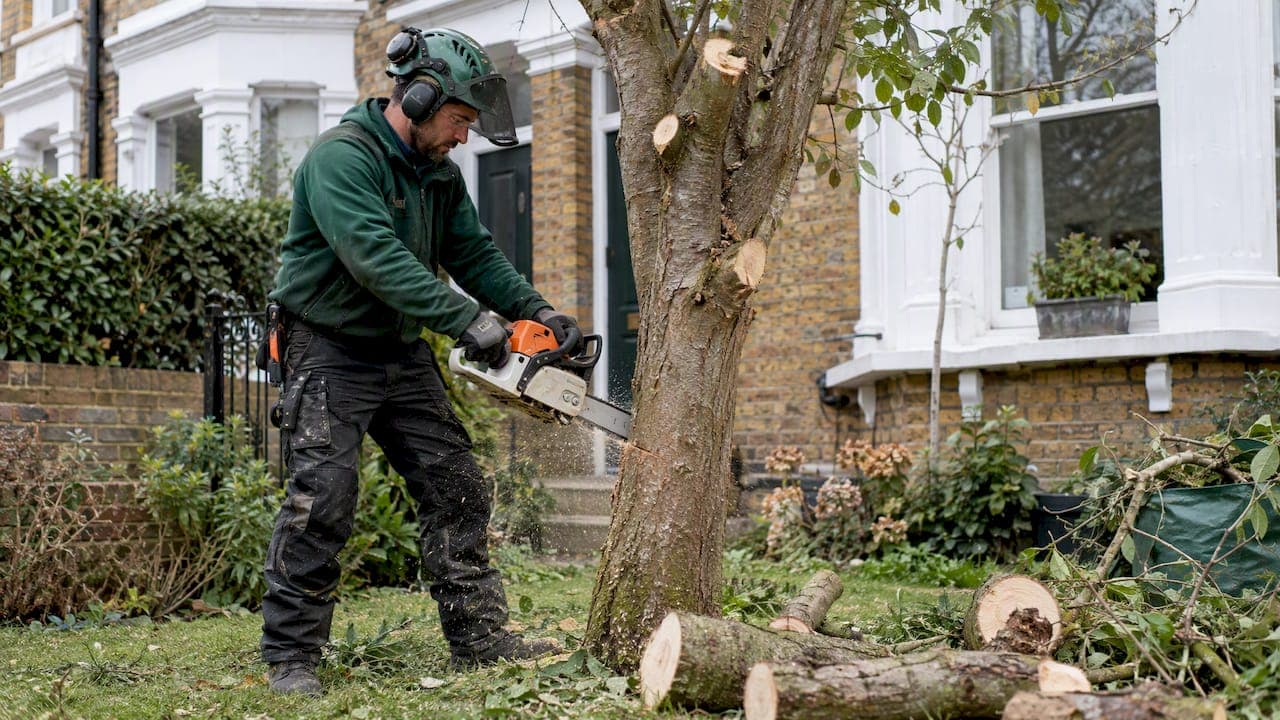
Tree surgery in London typically starts from a few hundred pounds for small tree removal, rises for medium and large removals, varies for pruning work, and is similarly priced for stump grinding depending on diameter. Access, permissions and the condition of the tree cause most of the variation between quotes. Because these factors change the price so much, the sensible next step is to book a site survey with an insured contractor rather than rely on a phone estimate.
TL;DR:
- Check for a Tree Preservation Order before work; conservation area trees generally require six weeks’ notice, and protected emergency work should be documented.
- Require an on site survey and written scope covering waste removal, exclusions, insurance, timing, permit costs, and whether VAT is included.
- Emergency callouts cost more than standard work, and crews may first secure the area before separately quoting full removal or repairs.
- Schedule structural pruning in winter when branches are easier to assess; avoid disturbing active bird nests during spring and summer.
Table of Contents
- Typical costs: removal, pruning and stump grinding
- Why prices are higher in the capital: access, logistics and waste disposal
- Permissions and protected trees: TPOs, conservation areas and felling licences
- How contractors quote: site visit, what to ask and what a quote should include
- Emergency tree work: what to expect on response and cost
- Why choose LookDeVis Services: proof points and what we offer
- How to choose a tree surgeon and get the best value
- Seasonal considerations and timing for tree surgery
- Post-surgery tree care and follow-up maintenance
- A note from our team on quoting mistakes
- Get a free quote for tree surgery from our team
- FAQ
- Sources
Typical costs: removal, pruning and stump grinding
A small front garden tree, the kind many terraced properties have near the pavement, typically costs a few hundred pounds to remove. That price usually covers felling, cutting the trunk into manageable sections and clearing the debris from site.
Medium and large tree removals rise sharply once height, canopy spread or proximity to a house, garage or power line come into play. A mature tree close to a structure often needs rigging, careful lowering of limbs and more time on site, which pushes costs up significantly for the largest or most awkward jobs.
Pruning work is priced differently because it's assessed by task rather than by tree size alone:
- Crown reduction, which lowers the overall height and spread, typically runs from a moderate to a high price depending on the tree's size and condition.
- Crown lifting, removing lower branches to raise clearance, often costs from a moderate to a higher price range.
- Deadwood removal, taking out dead or dying branches for safety, usually starts at a lower to moderate price level.
Stump grinding is almost always quoted as a separate service from removal, because it needs different machinery and a second visit in many cases. Diameter is the main driver: a small stump might be ground out for a modest price, while a large stump of substantial diameter can be considerably more expensive. Backfilling the resulting hole isn't always included, so it's worth asking the contractor to confirm this before work starts.
Most reputable contractors quote prices exclusive of VAT where the business is VAT registered, though many smaller tree surgery operations fall below the VAT threshold and quote inclusive figures as standard. Always check which basis a quote uses before comparing two contractors, since a seemingly cheaper quote can end up costing more once VAT is added.
Why prices are higher in the capital: access, logistics and waste disposal
Tree surgery in London tends to cost more than in less built-up areas, and the reasons are mostly practical rather than arbitrary.
- Narrow streets, shared driveways and communal courtyards often limit where a crew can park or set up equipment.
- Parking permits or temporary suspensions sometimes need arranging with the local council before work begins, adding time and cost to even a modest job.
- Crew mobilisation and labour costs reflect London's wider cost of operating, while tip and disposal charges for green waste are higher than in many other regions.
Even a small pruning job can carry disproportionate costs once a crew has to navigate congested roads, find legal parking for a chipper or dropside van, and factor in disposal fees for the waste produced.
Pro Tip: Ask any contractor upfront how they account for parking restrictions and permit costs in their quote, so there are no surprises on the invoice.
Permissions and protected trees: TPOs, conservation areas and felling licences
Before any tree work goes ahead, it's worth checking whether legal protections apply. A Tree Preservation Order means a tree can't be felled, topped, lopped or uprooted without the local authority's consent, and trees within a conservation area generally need six weeks' notice under section 211 before work can start, unless a specific exception applies.
Separately, a felling licence from the Forestry Commission is normally required to fell growing trees in England, though routine maintenance such as lopping, topping and pruning is usually exempt from this requirement. Updated Forestry Commission guidance explains that licensing decisions depend on timber volume assessments, and it sets out exceptions covering certain garden trees and some inner-London situations, while advising that records should be kept where volumes approach the relevant thresholds.
Practical steps before booking work:
- Check with your local planning authority whether a TPO applies to the tree in question.
- Confirm whether the property sits within a conservation area, which changes the notice period required.
- Ask your contractor to confirm in writing which permissions apply and to retain copies of any applications or notices.
Getting this wrong can mean delays or complications, so it's far simpler to sort permissions before work starts than to discover an issue afterwards.
How contractors quote: site visit, what to ask and what a quote should include
A genuine site visit matters because an experienced tree surgeon needs to assess access routes, the tree's condition and proximity to overhead cables or underground services before giving an accurate figure. Quoting sight unseen tends to miss these details, which is why many quotes change once a surveyor actually sees the job.
A proper written quote should include:
- The exact scope of work, including which branches or sections will be removed.
- Confirmation of waste removal and how debris will be disposed of.
- Evidence of public liability insurance and relevant certifications.
- Whether the price includes or excludes VAT.
- An estimated timescale for the job, including any weather-dependent flexibility.
- A clear list of what's excluded, such as stump grinding or permit costs.
Asking these questions before accepting a quote makes it far easier to compare contractors fairly and avoid unexpected additions once work is under way.
Emergency tree work: what to expect on response and cost
Emergency tree surgery covers situations where a tree poses immediate danger to people or property, typically after storm damage, a split trunk or a branch blocking access to a building.
- The first priority in an emergency is almost always to make the area safe, which might mean removing a hanging limb or cordoning off the space rather than completing full removal straight away.
- Full removal or repair work is usually quoted and scheduled separately once the immediate danger has passed.
- Call-out rates for emergency response tend to run higher than standard day-rate pricing, reflecting the need for rapid attendance outside normal scheduling.
If the tree in question is protected by a TPO or sits in a conservation area, it's worth documenting the emergency and notifying the council promptly, since even urgent works on protected trees can attract scrutiny after the fact.
Why choose LookDeVis Services: proof points and what we offer
We operate with insurance coverage and handle green waste from tree work through proper disposal channels rather than leaving it for the customer to manage. Our teams offer same-day or urgent availability for selected tree services where location and scheduling allow.
Our tree surgery services include pruning, felling, stump grinding and emergency call-outs, with free quotes available before any work is agreed. We assess permissions, waste handling and on-site safety as part of every quotation, so there's no uncertainty over what's included once a job is confirmed.
How to choose a tree surgeon and get the best value
Choosing well starts with five checks, including consulting a homeowner's checklist for hiring contractors in London:
- Insist on a site survey rather than accepting a sight-unseen estimate.
- Ask for proof of insurance and any relevant licences before confirming a booking.
- Get the scope of work written down clearly, including what's excluded.
- Confirm the contractor is a licensed waste carrier for any debris removal.
- Check whether VAT and disposal fees are included in the headline price.
Watch for red flags such as a quote given with no inspection at all, a reluctance to provide paperwork, or pressure to pay the full amount before work has started.
Pro Tip: Negotiate a start date and confirm access arrangements, such as parking or gate codes, in writing before the day of the job.
Seasonal considerations and timing for tree surgery
Winter, when most trees are dormant and bare of leaves, is generally the preferred season for structural pruning and crown reduction, since branch structure is easier to see and the tree experiences less stress from the work. Deadwood removal can happen at any time of year, since dead branches pose a safety risk regardless of season.
Some species have specific restrictions worth noting. Certain trees are best avoided during active growth in spring and early summer, when they're more vulnerable to disease entering fresh cuts. Nesting bird season, broadly spring into summer, also affects timing, since disturbing an active nest is a legal issue separate from any tree protection order.
Stump grinding isn't particularly season-sensitive and can usually be scheduled whenever ground conditions allow machinery access, though waterlogged winter ground can sometimes complicate access for heavier equipment.
For anyone planning routine maintenance rather than urgent work, booking in late autumn or winter tends to offer more scheduling flexibility, since demand for emergency storm-damage work typically rises during stormier months.

Post-surgery tree care and follow-up maintenance
After pruning or crown reduction, a tree benefits from a period of reduced stress: avoiding further cuts to the same tree for at least a season allows wounds to begin healing naturally. Watering during dry spells in the following months helps support recovery, particularly for younger trees.
Where a stump has been ground rather than fully removed, the remaining root system will usually begin to decay naturally over time, though some species can produce regrowth shoots, which may need occasional follow-up trimming.
Routine inspection every few years helps catch early signs of disease, structural weakness or dieback before they become safety concerns. For managed gardens or commercial grounds, scheduling a periodic maintenance visit alongside other seasonal garden work can keep trees in good condition without needing a separate call-out each time.
A note from our team on quoting mistakes
Working across London gardens and commercial grounds, the most common mistake we see is accepting a price before anyone has actually looked at the tree. Access problems, hidden decay or a branch overhanging a neighbour's boundary can all change a job significantly once a surveyor is on site.
The simplest way to avoid a nasty surprise on the invoice is to ask for a proper site visit before agreeing anything in writing. If you're weighing up a removal, a prune or a stump grind, we're happy to arrange a free survey and talk through what the job actually involves.
— Roman
Get a free quote for tree surgery from our team
Whatever the job, from a single overgrown tree to a full removal with stump grinding, we quote after seeing the site, not before. A written scope, confirmation of waste handling and a clear price are standard parts of every quote we provide.

Our tree surgery service in Harrow covers pruning, felling, stump grinding and emergency attendance, with free quotes arranged around your schedule. Call us on 07348 758581 or email lookdeviscompanylegal@gmail.com to book a site survey and get a written price before any work begins.
FAQ
What does a tree surgeon cost?
Tree surgery costs vary by task: small removals typically start from a few hundred pounds, while pruning work such as crown reduction generally runs from a moderate to a high price depending on the tree's size and condition. The exact figure depends on tree size, access and condition, which is why a site visit gives a far more accurate price than a phone estimate.
What trees are most common in London gardens?
London's gardens and streets feature a wide mix of species, with London plane, silver birch and various fruit trees among the most familiar sights across the city's parks and private plots. The right pruning approach depends on the specific species and its growth habit.
Can I remove a large tree from my garden?
It depends on whether the tree is protected. If it's subject to a Tree Preservation Order or sits within a conservation area, you'll need consent or to give notice before any work, while unprotected garden trees can generally be removed without a felling licence under common exemptions.
Do tree surgeons do hedges?
Many tree surgery providers also handle hedge trimming and reduction alongside tree work, since the equipment and access considerations often overlap. We offer hedge trimming as part of our wider gardening services alongside tree surgery.
Sources
Checking official guidance before arranging tree work helps avoid breaching protections that carry legal consequences, including prosecution for unauthorised felling of a protected tree.
Recommended
- Tree removal cost London 2026: what homeowners need to budget
- Tree Pruning Harrow | Small Garden Tree Pruning HA1–HA3
- Hedge trimming law UK: when you can and can't cut
Prices, timescales and information provided in this article are for general guidance and may vary depending on the property, site conditions, materials and scope of work. Please contact LookDeVis Services for an individual assessment and quotation. Where regulatory, planning or legal requirements apply, appropriate professional advice should be obtained.