
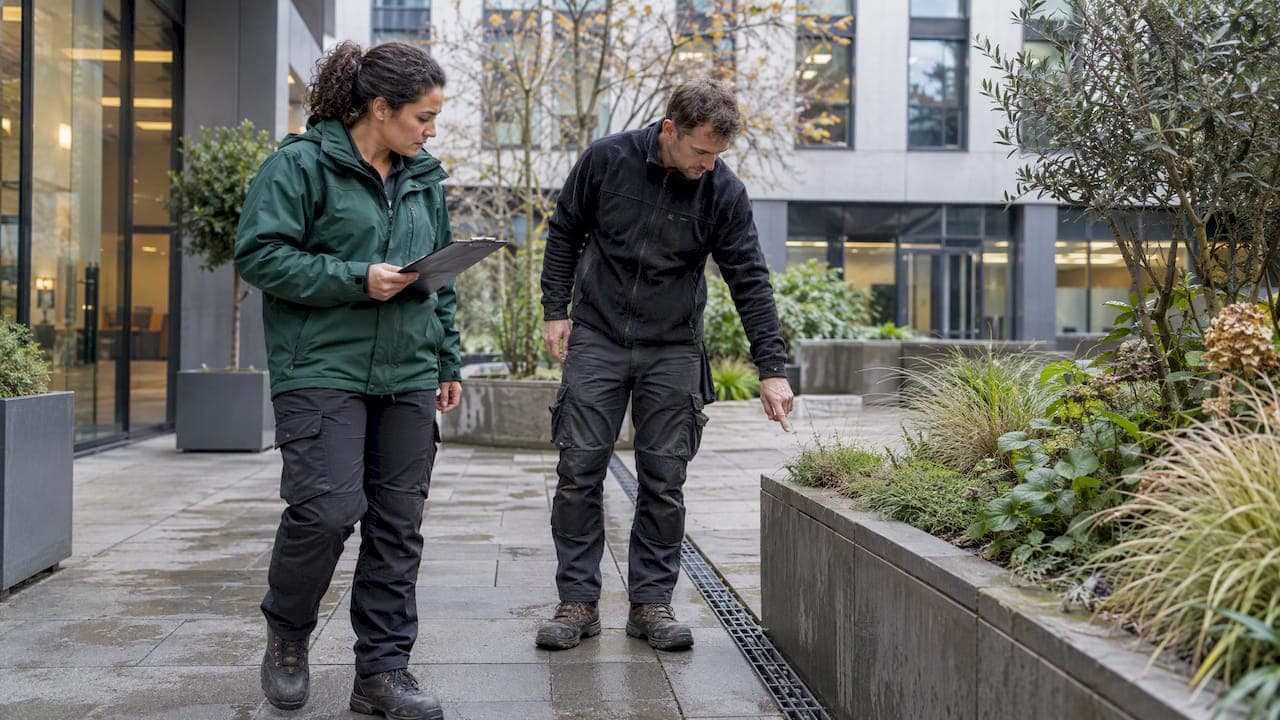
For most London offices, the highest value landscaping combines green roofs or planters, small-scale SuDS such as rain planters or rain gardens, green walls or screens, and comfortable, weather-protected seating. A narrow terrace suits modular planters and foldaway furniture, a courtyard suits rain gardens and shade structures, and a larger site can carry a full green roof or planted grounds. Together these choices improve amenity, support biodiversity and help manage surface water on site.
TL;DR:
- Green roofs suitable for flat roofs are low-maintenance sedum or wildflower types, while intensive gardens require structural checks for heavier loads.
- Rain gardens, rain planters, and permeable paving effectively manage surface water runoff and reduce flooding risks in courtyards and paved areas.
- Ongoing maintenance varies from weekly attention for containers and intensive planting to monthly or seasonal checks for green roofs and SuDS features.
- Achieving the best results depends on combining features suited to your site's constraints, such as rain planters on narrow terraces or layered planting in courtyards.
- Planning permission is necessary for intensive roof gardens, and the Urban Greening Factor guides projects toward environmentally beneficial surface types, especially in large developments.
Table of Contents
- Shortlist: office landscaping ideas with quick suitability notes
- Site brief checklist: what to record before you get quotes
- Choosing features by constraint: small terraces, courtyards, rooftops and larger grounds
- Sustainable drainage and biodiversity: SuDS, UGF and what London guidance means for offices
- Maintenance, lifecycle costs and realistic expectations
- Author perspective: our practical approach to office landscaping in London
- Editorial take: what actually makes office landscaping work in London
- How we can help with your office landscaping project
- FAQ
- Sources
Shortlist: office landscaping ideas with quick suitability notes
London office sites vary enormously, from a fifth-floor roof terrace to a shared ground-floor courtyard, so the right mix depends on space, budget and how much upkeep your facilities team can commit to.
- Green roofs: extensive roofs (shallow substrate, low-maintenance sedum or wildflower mixes) suit most flat roofs; intensive roof gardens need deeper substrate and a structural check before planning anything heavier than planters.
- Green walls and planting screens: a practical way to add privacy around a terrace or soften a blank wall without using floor space.
- Rain gardens, rain planters and small SuDS: shallow planted basins that capture and slowly release rainwater, well suited to courtyards and paved areas with existing puddling problems.
- Permeable paving and depaving: replacing solid paving with permeable surfaces reduces runoff and lowers surface temperatures on sunny days.
- Container planting: the lowest-cost, most flexible option for balconies and terraces, easy to rearrange as staff needs change.
- Seating, shade and weather protection: pergolas, awnings and umbrellas turn an outdoor area into something usable through most of the year, not just a few warm afternoons.
- Employee engagement features: herb planters or small vegetable beds give staff a reason to use the space and a stake in keeping it maintained.
Most successful projects combine two or three of these rather than relying on one feature alone.
Site brief checklist: what to record before you get quotes
A clear brief saves time at quotation stage and helps contractors price accurately rather than guessing.
- Measure the usable area and sketch where sun and shade fall through the day.
- Note existing drainage, downpipes and any spots where water already pools after rain.
- Record roof load-bearing information if the project involves a rooftop, along with lift or stair access for materials.
- Check your lease or landlord agreement for restrictions on structural changes, planting or roof access.
- Decide the main use: quiet breaks, informal meetings, client entertaining or occasional events.
- Note security requirements and how much ongoing maintenance your team can realistically manage.
- Ask for separate pricing on hard landscaping, planting, drainage work, furniture and ongoing maintenance.
- Check your borough's planning rules and Urban Greening Factor expectations where the works are substantial.
Pro Tip: Take dated photos of the space in different weather before your site visit. It gives contractors a faster read on drainage problems than a description alone.
Choosing features by constraint: small terraces, courtyards, rooftops and larger grounds
The same budget stretches further when the features match the constraints of the site rather than fighting them.
- Narrow terraces: modular planters, wind-tolerant planting and foldaway seating let you reclaim the space for other uses when needed.
- Courtyards: rain planters, shade structures and layered planting (low beds in front, taller screening behind) deliver privacy and drainage function together.
- Rooftops: an extensive green roof suits sites focused on biodiversity and low upkeep, while an intensive roof garden suits sites prioritising staff amenity, provided structural and access checks are done first.
- Larger grounds: a mix of trees, meadow patches and swales linked by paths and seating creates a habitat mosaic rather than one large lawn.
A simple combination to put to a contractor might be rain planters plus a shaded seating corner for a courtyard, or an extensive green roof with a small intensive section near the lift head for a rooftop site.
Sustainable drainage and biodiversity: SuDS, UGF and what London guidance means for offices
Sustainable drainage systems, known as SuDS, slow and store rainwater close to where it falls rather than sending it straight into the sewer. For London offices, typical SuDS features include rain planters, rain gardens, swales, permeable paving and green or blue roofs, all of which the GLA's office SuDS sector guide sets out practical options that reduce runoff while adding amenity and biodiversity value.
The Urban Greening Factor framework scores different surface types rather than simply measuring green area, and commercial developments are generally advised to work towards an interim target score of 0.3. An intensive green roof scores considerably higher than ordinary turf, which is why a small, well-designed rain garden often beats a large, low-value planted strip.
- Involve planners or an ecologist early for major works, listed buildings or sites near protected habitats.
- Borough guidance, including Hackney's SuDS policy, treats SuDS as a requirement for major developments, though smaller retrofits still carry real benefit.
- SuDS features often cost less to run than traditional drainage over the long term and can usually be folded into standard landscape maintenance rather than needing a separate specialist contract.
These features also reduce local flood risk and help cool hard surfaces in summer, though they do add specific maintenance tasks that your facilities plan needs to cover.
Maintenance, lifecycle costs and realistic expectations
Landscaping only pays off if it gets maintained, and the maintenance load varies a great deal between feature types.
- Intensive planting and container displays typically need weekly attention: watering, deadheading and seasonal replanting.
- Extensive green roofs and wildflower areas usually need only monthly or seasonal visits, mainly weeding and checking drainage outlets.
- SuDS features need periodic sediment and inlet checks so silt does not block the system over time.
- Hedges, screens and structural planting need seasonal pruning to keep them tidy and within bounds.
- Build maintenance into the contractor quote or a separate service agreement from the outset, rather than treating it as an afterthought once the build is finished.
Capital costs cover construction and planting, while ongoing costs cover the labour above. Securing a modest annual maintenance budget alongside the capital spend is usually what decides whether a new courtyard or roof garden still looks good after two years, rather than becoming overgrown and quietly abandoned.
Author perspective: our practical approach to office landscaping in London
As part of a professional property services team, I work alongside gardening and landscaping crews on commercial projects across Greater London, including SuDS-friendly installs and the maintenance plans that keep them running. Most projects follow the same pattern: a site survey to check access, drainage and structure, phased works so your office keeps functioning, then a handover with a clear maintenance schedule.
A few logistical points come up repeatedly: confirm lift or stair access for materials early, agree waste removal arrangements before work starts, and set working hours that suit your building's other tenants. The work is carried out by insured teams, waste is handled through licensed arrangements, and same-day availability can sometimes be arranged for urgent jobs such as storm clearance or safety issues.

Editorial take: what actually makes office landscaping work in London

The conventional advice on this topic focuses too heavily on the feature itself, the green roof, the living wall, the rain garden, and not nearly enough on whether anyone will actually use the space or keep it maintained. A beautifully specified courtyard with no shade and no seating gets looked at through a window rather than sat in, and a green roof with no budget line for weeding becomes a liability within two seasons.
What the research behind this guide actually supports is a simpler priority order: get the drainage and structural checks right first, then design for how staff will use the space day to day, and only then choose the decorative planting. Shade, privacy and proximity to the building do more for daily use than plant variety ever will. If you can only afford one upgrade this year, a shaded seating corner with a single rain planter will likely see more use, and cause fewer problems, than an ambitious scheme that outstrips what your facilities team can look after.
— Roman
How we can help with your office landscaping project
We cover the full range of work this kind of project needs: landscaping, garden clearance, waste removal, ongoing maintenance, and SuDS-friendly installs such as rain planters and permeable paving, for courtyards, terraces and rooftops across Greater London.
To get an accurate quote, send us:
- Your site dimensions and a rough sun and shade sketch.
- Any known drainage issues or roof access restrictions.
- How you intend to use the space and your realistic maintenance capacity.
We can also arrange a site visit to check structural and access details before pricing the work. For practical guidance on preparing your brief and comparing quotations, this guide to preparing an outdoor space brief is worth a read alongside our checklist above. When you are ready, request a free quote through LookDeVis Services and we will talk you through the next steps.
FAQ
What is the best low-cost office landscaping idea for a small terrace?
Container planting combined with foldaway seating is usually the most affordable option for a small terrace, since it needs no structural work and can be rearranged as staff needs change. Adding a simple shade umbrella extends how much of the year the space gets used.
Do I need planning permission for a green roof or roof garden in London?
Requirements vary by borough and by the scale of the works, so it is worth checking your local planning department before committing to a roof project, particularly for intensive roof gardens that add structural load. The GLA's biodiversity and urban greening design guide is a useful starting point for understanding what councils look for.
What is the Urban Greening Factor and does it apply to my office?
The Urban Greening Factor scores different types of surface cover, such as green roofs, rain gardens and paving, to measure the quality rather than just the area of greening on a site. It mainly applies to new developments and major works, but it is a useful benchmark when planning any significant landscaping project.
How much maintenance does office landscaping actually need?
Maintenance needs depend heavily on the feature: intensive planting and containers often need weekly attention, while extensive green roofs and SuDS features typically need only monthly or seasonal checks. Building a maintenance plan into your contract from the start is the main factor in whether a project still looks good after a year or two.
Can we maintain a SuDS feature once it's installed?
Yes, SuDS maintenance such as sediment checks and inlet clearance can usually be folded into a standard landscape maintenance visit rather than needing a separate specialist contract. Get in touch to discuss a maintenance plan alongside your installation quote.
Sources
- Reimagining rainwater in the office sector (GLA)
- Urban Greening Factor (GLA)
- Sustainable drainage systems (SuDS) - Hackney Council
- Urban greening for biodiversity net gain: design guide (GLA)
Prices, timescales and information provided in this article are for general guidance and may vary depending on the property, site conditions, materials and scope of work. Please contact LookDeVis Services for an individual assessment and quotation. Where regulatory, planning or legal requirements apply, appropriate professional advice should be obtained.