
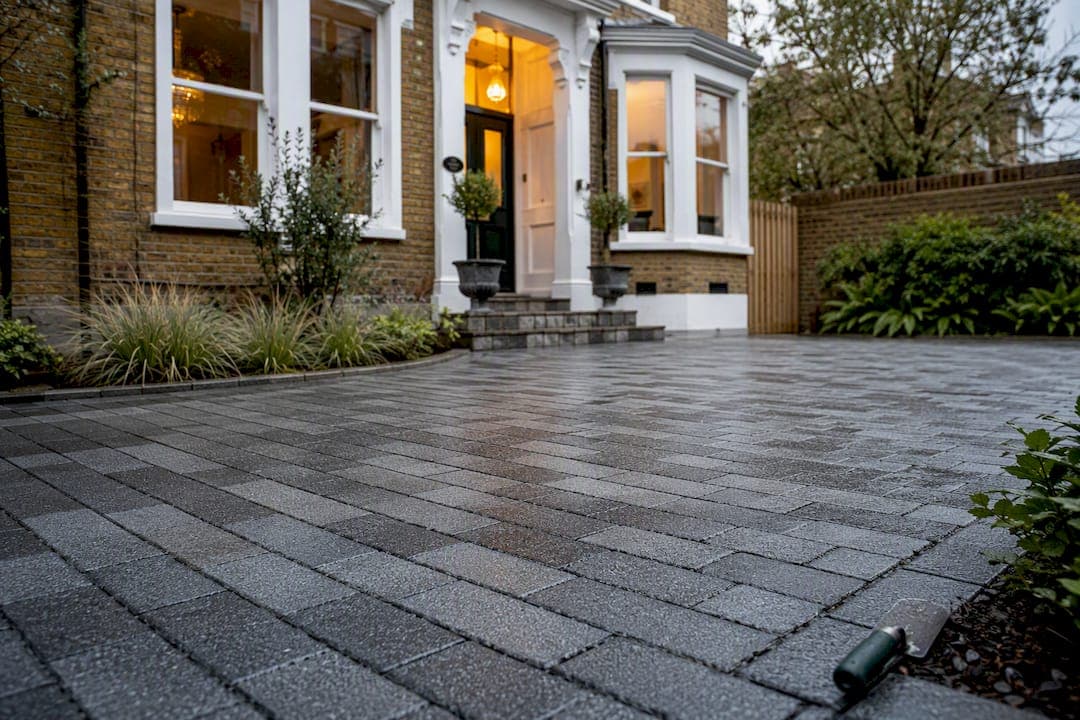
For most UK homes, one of five surface types will suit a permeable driveway or patio: concrete block permeable paving, porous asphalt or pervious concrete, resin-bound aggregate, or gravel with grid systems and grass pavers. The right choice comes down to soil infiltration and expected loading, not appearance alone. Get those two factors right and a compliant permeable surface can also help you sidestep planning permission on a front driveway.
TL;DR:
- Concrete block permeable paving is ideal for high-traffic driveways due to its load-bearing capabilities and proven durability.
- Porous asphalt suits heavily trafficked areas where continuous drainage and low maintenance are essential.
- System A offers full infiltration on permeable surfaces but requires soil testing and proper site conditions, while Systems B and C manage water with controlled outlets.
- Installation costs depend more on sub-base depth and drainage requirements than surface type, making detailed quotes vital.
- Regular maintenance like joint cleaning, weed removal, and top-up of aggregate extends lifespan and prevents clogging, with careful site assessment critical before starting.
Table of Contents
- What are the main permeable paving options in the UK?
- What are System A, B and C, and which one applies to your site?
- How is a permeable driveway actually built?
- What maintenance and costs should you plan for?
- What does a proper site check actually look for?
- How LookDeVis Services can help with your permeable driveway
- Sources
- FAQ
What are the main permeable paving options in the UK?
Permeable driveways in the UK fall into five broad families, and each one earns its place for a different reason. Choosing badly usually shows up within a couple of winters as pooling water or a sunken edge, so it pays to match the surface to the job before ordering materials.
Concrete block permeable paving (CBPP) works through small gaps between blocks that let water pass straight through into an open-graded sub-base. Marshalls Priora is the system most UK installers reach for when they need a robust, load-bearing product with a proven design guide behind it. It handles regular car traffic well and comes in enough finishes to suit most driveway aesthetics.
Porous asphalt and pervious concrete suit heavier or more frequently trafficked areas, including shared driveways and light commercial yards. They drain across the whole surface rather than through individual joints, which makes them efficient hydraulically, but they need periodic suction sweeping to stop fines clogging the pore structure.
Resin-bound permeable aggregates give a smooth, pedestrian-friendly finish that's popular for front paths and patios. The trade-off is that fine debris and moss can clog the surface faster than block paving, so they suit lower-traffic areas better than main driveways.
Gravel with plastic grid reinforcement, and grass pavers, are the cheapest route into permeable surfacing. They're well suited to occasional-use parking bays or overflow parking, less so to daily heavy vehicle use, and need regular top-ups of loose aggregate.
- Choose CBPP for daily-use driveways where durability matters most.
- Choose porous asphalt where you need a continuous, low-maintenance trafficked surface.
- Choose resin-bound for paths and patios where finish quality is the priority.
- Choose gravel/grid or grass pavers for budget-conscious or occasional-use areas.
Pro Tip: If you're torn between two finishes, think about how the space is actually used day to day rather than how it looks in a brochure photo. A driveway that gets two cars in and out every morning needs a different answer to a side path used once a week.
What are System A, B and C, and which one applies to your site?
UK sustainable drainage practice recognises three system types, and knowing which one your site needs shapes almost every other decision on the project. Get this wrong at the design stage and you're either overspending on unnecessary drainage or building something that won't cope with a wet November.
System A is full infiltration: water passes through the surface and sub-base straight into the ground beneath, with no pipework needed. It's the simplest and most economical option, but only works where the subsoil actually drains.
System B is partial infiltration. Some water soaks away, but a controlled outlet pipe manages the rest, useful where ground conditions are only moderately permeable.
System C is lined storage. An impermeable membrane holds water within the sub-base until it's released at a controlled rate, typically to a soakaway, watercourse or surface water sewer. This is the fallback for clay-heavy or waterlogged sites where infiltration isn't realistic.
National SuDS standards set out the technical thresholds behind these choices, including infiltration testing and proximity rules.
Where ground infiltration exceeds 1×10⁻⁶ m/s and the system is unlined, national SuDS guidance allows up to five times the permeable surface area to be treated as contributing catchment, a figure that changes how much runoff from roofs or hard standing a single permeable driveway can legitimately absorb.
Practical consequences follow directly from this:
- Keep infiltration systems at least 3 metres from building foundations to avoid undermining them.
- Add an overflow route (soakaway or drain connection) whenever infiltration alone might not cope in heavy rain.
- Apply an urban-creep uplift factor when sizing for future paving of adjoining green space.
- Get a soil percolation test done before committing to System A on anything beyond a small path.
How is a permeable driveway actually built?
The sub-base is where the real engineering happens, even though it's invisible once the surface goes down. An open-graded aggregate sub-base, or a geocellular crate system on tighter sites, does two jobs at once: it carries vehicle loading and stores rainwater until it can infiltrate or discharge.
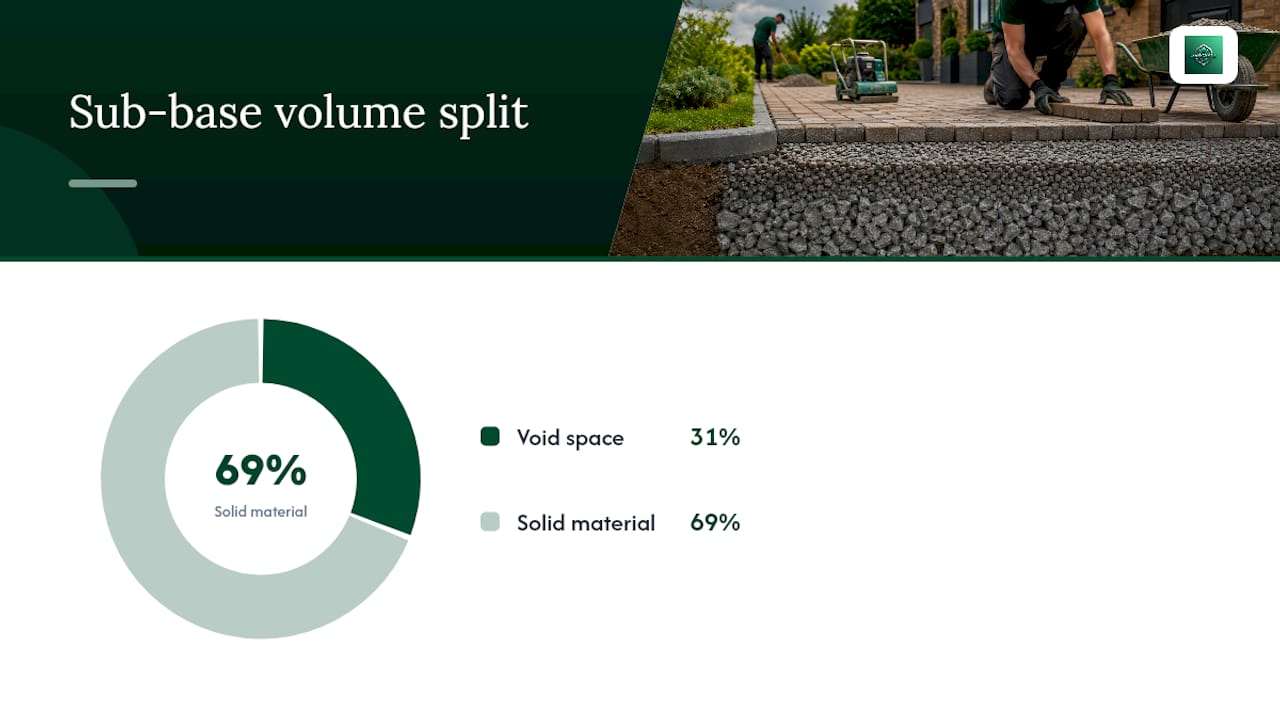
Marshalls' Priora design guide recommends a void ratio around 30 to 32%, meaning roughly a third of the sub-base volume is empty space available to hold water between rainfall events. That figure drives depth calculations, so a contractor quoting without reference to void ratio and expected storm volume is skipping a step.
- Excavate to the depth specified for your soil type and expected loading, then compact the formation layer.
- Lay a geotextile separation membrane to stop fines migrating from subgrade into the sub-base.
- Install the open-graded sub-base in compacted layers, checking depth against the design specification.
- Bed and lay the surface course, then joint with open-graded 6mm aggregate rather than standard kiln-dried sand.
- Fit edge restraints on every open edge to stop lateral spread under traffic loading.
For larger areas, clay-heavy soil, or where heavy axle loads are expected, PavingExpert's guidance is clear that a competent engineer should produce the design rather than relying on rule-of-thumb depths.
Pro Tip: Once the surface is down, run a hose over a small area. GOV.UK guidance suggests water should soak away without spreading more than 200 to 300mm from where you're pouring. Ponding beyond that points to a sub-base or drainage problem worth raising with your installer immediately.
What maintenance and costs should you plan for?
Permeable surfaces need more attention than a sealed driveway, but it's light-touch work rather than a burden if you keep to a seasonal routine.
- Clear weeds and moss from joints twice a year, more often near overhanging trees.
- Vacuum sweep or jet-wash jointing aggregate every one to two years to stop silt building up and blocking pores.
- Clean up oil or fuel spills immediately, since they can seal the surface locally and stop water passing through.
- Top up jointing aggregate periodically as it settles or gets displaced by traffic.
Lifespan varies by surface type and how well maintenance is kept up. CBPP systems like Priora typically outlast resin-bound and gravel-based options by a wide margin when jetted regularly, while porous asphalt sits somewhere between the two depending on traffic loading.
Cost is driven less by the surface finish than by what's underneath it: excavation depth, sub-base material and volume, drainage pipework, and access for removing spoil all move the price more than the choice between block paving and resin-bound aggregate.
Get at least three written quotes covering the full specification, not just the finished surface, and ask each contractor to itemise sub-base depth and drainage provision separately. Set aside a small ongoing budget for jetting and joint topping rather than treating maintenance as an afterthought, and check what aftercare or workmanship cover is included before signing anything.
What does a proper site check actually look for?
Every permeable paving job we look at starts the same way: a walk around the site checking fall, low spots where water already collects, proximity to the house, and where existing drainage or service runs sit underground. Missing a buried cable or drain run at survey stage causes far more disruption than getting the surface finish wrong.
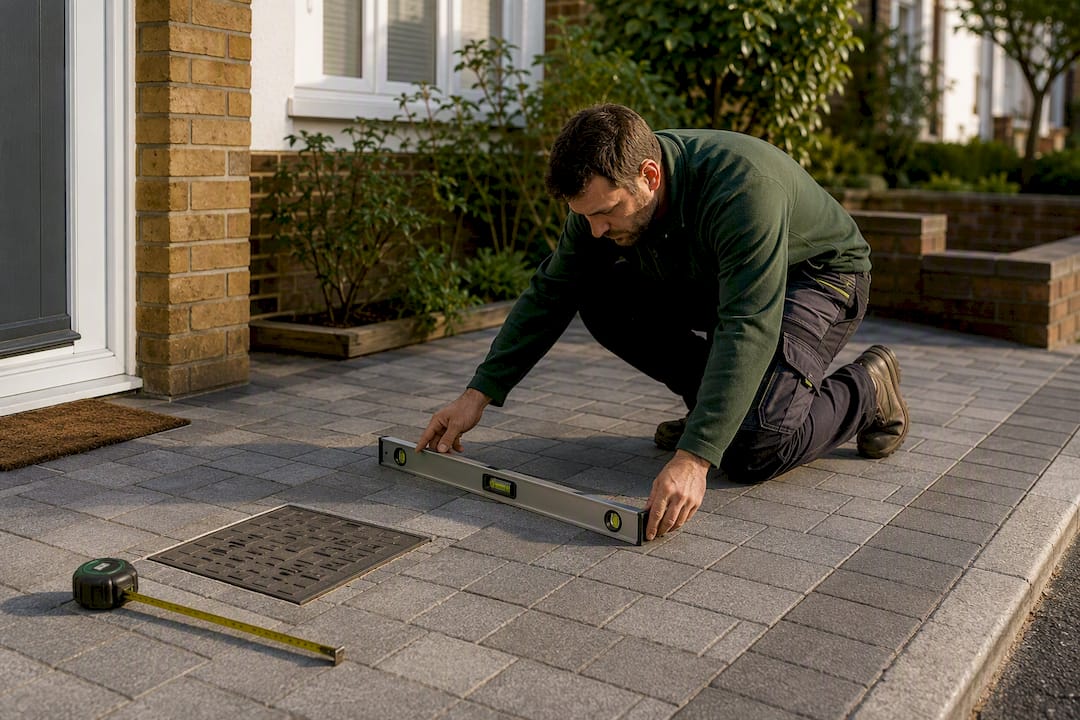
From there, we specify the build-up to balance two things that pull against each other: enough void space in the sub-base to store water, and enough compaction to carry vehicle loading without rutting. Getting that balance right is largely why some driveways still look sharp after years of daily use while others sink at the edges within a season.
We also agree a maintenance plan with the client before work starts, covering jetting frequency and who's responsible for it, because a permeable surface left unmaintained behaves like a much cheaper one within a few years. LookDeVis Services is fully insured for this work across Greater London.
How LookDeVis Services can help with your permeable driveway
Permeable paving only performs as well as its installation, which is exactly where a local, insured contractor earns their fee. LookDeVis Services covers the full scope, from driveway installation and sub-base preparation through to spoil and waste removal, so you're not coordinating three separate trades to get one driveway finished.

The process usually starts with a site survey to check fall, soil conditions and access, followed by a written quote that sets out the specification in plain terms, including sub-base depth and drainage provision rather than just a finished-surface price. Once you approve the quote, the works are scheduled and waste removal is handled as part of the job, typically by a licensed waste carrier. Whether you're planning a full driveway rebuild or a smaller patio area, our hard landscaping and groundworks service covers the groundwork stage that most driveway problems actually come from.
If you're ready to move from research to a firm plan, get in touch on 07348 758581 or email lookdeviscompanylegal@gmail.com to book your free survey and receive a written quote for your project.
Sources
FAQ
Do I need planning permission for a permeable driveway?
Generally no. Since October 2008, GOV.UK guidance confirms householders don't need planning permission for a new or replacement driveway of any size if it uses permeable surfacing or drains rainwater to a lawn or border. Impermeable surfaces over 5 m² do require an application.
Which permeable paving is best for a UK driveway?
Concrete block permeable paving, such as the Marshalls Priora system, tends to suit daily-use driveways best because it combines durability with proven hydraulic performance. Lighter-use areas may suit resin-bound or gravel-based options instead.
What is the difference between System A, B and C SuDS?
System A is full infiltration with no pipework, System B is partial infiltration with a controlled outlet, and System C is lined storage that discharges at a controlled rate. Your choice depends on how well your subsoil drains.
How much does permeable paving cost compared with standard paving?
Costs vary mainly with excavation depth, sub-base material and drainage requirements rather than the surface finish itself, so getting three written quotes with a full specification is the only reliable way to compare projects.
How do I know if my soil is suitable for infiltration?
A simple hose test can give an early indication: GOV.UK suggests water should soak away without spreading beyond 200 to 300mm. For larger schemes, a formal percolation test is worth commissioning before finalising the design.
Recommended
- Driveway Installation London | Block Paving & Bases
- Paving London - Professional Paving Installation
- Driveway Design London
- Driveway sealing cost UK: 2026 prices and what affects them
Prices, timescales and information provided in this article are for general guidance and may vary depending on the property, site conditions, materials and scope of work. Please contact LookDeVis Services for an individual assessment and quotation. Where regulatory, planning or legal requirements apply, appropriate professional advice should be obtained.