
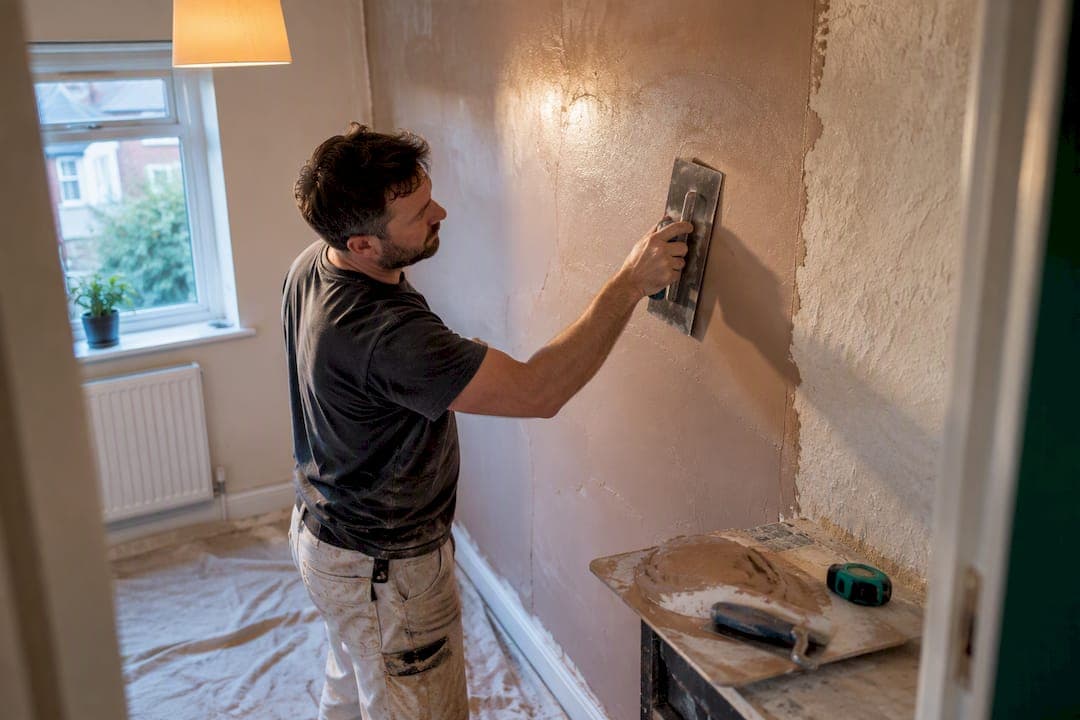
Plastering in London typically costs between about £11 and £25 per square metre for a skim and £25 to £45 per square metre for full plastering on bare brick, with small rooms generally running from several hundred to a few thousand pounds and larger rooms costing more in line with national price bands. These figures usually cover labour and materials but exclude VAT, skip hire and scaffolding. London prices generally sit above the national average, so budget towards the upper end of any national guide you read.
TL;DR:
- London plastering costs are higher than the national average, with prices ranging from about £11 to £25 per square metre for skimming and £25 to £45 for full plastering on bare walls.
- Larger rooms in London typically cost between £750 and £4,400, with extra charges for factors like wall condition, room complexity, access issues, and finish quality.
- Quotes should always itemize costs for access, waste removal, and preparation, and a site visit is essential for an accurate estimate.
- London day rates for plasterers are usually between £250 and £450, and job durations can span from a day for a single wall to over a week for full properties.
- Budget an additional 10% to 20% for contingencies, extra costs like scaffolding or parking, and ensure project timelines include drying and curing periods.
Table of Contents
- Detailed cost summary: per m² bands and example job totals
- What affects price: the main cost drivers you should check on quotes
- Types of plastering work and typical price ranges for each
- Timeframes and trades rates: how long jobs take and typical London day rates
- How to get accurate quotes: the single checklist to compare and choose
- Budgeting for London properties: extra costs and sensible contingencies
- How LookDeVis Services handles plastering and refurbishment projects in Greater London
- Impact of COVID-19 or inflation on recent pricing trends in London
- Breakdown of labor vs materials costs
- Average cost examples for different property types (flats, houses, new builds)
- Getting real value from a London plastering quote
- Get a written plastering quote from LookDeVis Services
- Sources
- FAQ
Detailed cost summary: per m² bands and example job totals
Skimming or re-skimming an existing wall typically costs £11 to £25 per square metre, though London jobs tend to skew towards the top of that band because of higher labour costs and site access constraints. Full plastering from bare brick, which involves a base coat and a finishing skim, typically runs £25 to £45 per square metre. Dry lining, where plasterboard is fixed and then skimmed, usually adds another £10 to £20 per square metre on top of board and fixing costs.
For context, Which? Trusted Traders survey data shows typical job totals that help translate per-metre rates into real budgets:
- A small room of around 9 square metres typically costs between about £650 and £2,500.
- A medium room of around 18 square metres typically costs from approximately £750 to £3,200.
- A large room of around 30 square metres generally costs in the range of about £900 to £4,400, with London and the South East frequently near the higher end of this range.
These prices usually include labour and materials. VAT, skip hire, scaffolding and any decorating after the plaster has dried are usually quoted separately, so check what your quote actually includes before comparing it against these ranges.
What affects price: the main cost drivers you should check on quotes
Quotes for what looks like the same job can vary considerably, and the difference almost always comes down to a handful of factors that are worth checking line by line.
- The condition of the existing wall matters: a full replaster costs more than a simple skim or a small patch repair.
- Room complexity, including alcoves, coving, cornices and unusually high ceilings, adds time and therefore cost.
- Access constraints, scaffolding, working at height and London parking or congestion charges can all add to the final bill.
- The finish specification changes price too, since a standard smooth skim costs less than a specialist polished or textured finish.
- Waste removal, making good around sockets and skirting, and whether priming or decorating is included all affect the total.
Pro Tip: Ask every plasterer to itemise access costs and waste removal separately so you can compare like for like across quotes.
Types of plastering work and typical price ranges for each
Matching the right type of work to your wall's condition is the first step towards an accurate budget, and it also determines which price band applies.
- Skimming or re-skimming is a thin top coat applied over sound plasterboard or existing plaster in reasonable condition, typically priced at £11 to £25 per square metre, and it is the right choice when the substrate underneath is stable.
- Full plastering on bare walls involves a base coat followed by a finishing skim, usually costing £25 to £45 per square metre because it takes longer and uses more material.
- Dry lining combines plasterboard fixing with a skim finish, and while the per-metre cost tends to be higher, it can be quicker overall on walls that need levelling rather than wet plastering throughout.
- External rendering is priced per square metre like internal work, but scaffolding often becomes a significant additional cost. Which? notes that scaffolding can add as much to a job as the labour itself, particularly on taller London properties.
- Specialist or fibrous plaster and decorative finishes, such as period cornice work or polished plaster, sit well above standard pricing. Ask for samples of previous work before committing to this category, since quality varies widely between tradespeople.
Timeframes and trades rates: how long jobs take and typical London day rates
A single wall can usually be skimmed within a day, while a full room, including drying time between coats, often takes two to three days. A whole three-bedroom property can take a plasterer a week or more depending on the number of rooms and their condition.
- Plasterer day rates in London typically run £250 to £450 per day, noticeably above national averages.
- Larger teams can finish a job faster but do not always reduce the total cost, since labour is the main expense either way.
- Always allow proper drying time before painting, and apply a mist coat first, since fresh plaster needs several days to dry and painting too early risks poor paint adhesion.
Plasterers in London typically charge £250 to £450 per day, a premium that reflects the capital's higher cost of living and demand for skilled trades.
How to get accurate quotes: the single checklist to compare and choose
A written quote protects both sides and makes it far easier to compare tradespeople fairly. Before accepting any quote, work through this checklist.
- Insist on a site visit rather than a quote given over the phone, since wall condition genuinely changes the price.
- Check the quote lists materials, labour, waste disposal, a realistic timescale, deposit terms and whether VAT is included.
- Ask about insurance cover, examples of previous work and whether the substrate has been checked for damp or movement.
- Watch for red flags: a vague scope of work, no written terms, or requests for a large deposit before any work starts.
- Compare quotes on unit cost, what is actually included, and the proposed schedule, not on the headline figure alone.
Pro Tip: A quote that is unusually low often excludes waste removal or making good, so ask what has been left out before assuming it is the better deal.
Budgeting for London properties: extra costs and sensible contingencies
London budgets need a few extra lines that national guides often gloss over. Inner-borough properties frequently carry a premium on top of standard rates, and parking or congestion charges can add up over a multi-day job.
- Scaffolding and skip hire are two of the biggest additions to a plastering budget, and both should appear as separate line items on your quote.
- A contingency of 10% to 20% is sensible, with the higher end reserved for older properties or jobs where the wall condition is unknown until work starts.
- Staged payments, typically a deposit, a progress payment and a final retention released on sign-off, protect you if issues emerge partway through the job.
Building work that materially alters a property may also need to meet the building regulations that apply to structural or safety-related changes, so check this before major replastering tied to wider refurbishment work.
How LookDeVis Services handles plastering and refurbishment projects in Greater London
Professional plastering services start every job with a site visit and a written quote based on the property's actual condition and access, rather than a generic estimate. This matters most on older London properties, where wall condition often only becomes clear once work begins.
- Plastering can be combined with waste removal and making-good services, reducing the coordination effort of hiring separate contractors.
- Teams are insured, and waste is handled through licensed disposal arrangements rather than informal removal.
- Projects use professional equipment suited to the scale of the job, from single-room patch repairs to full property refurbishment.
- At handover, customers can expect a clean site and clear guidance on aftercare, including drying time before decorating.
Residential and managed properties in London can be booked for one-off plastering work or combined with wider refurbishment through a coordinated team.
Impact of COVID-19 or inflation on recent pricing trends in London
Trade pricing across London has moved upward over recent years, driven largely by rising material costs and general inflation rather than any single event. Plaster, plasterboard and associated building materials have followed the broader cost trends affecting the construction sector, and labour rates have risen alongside the wider cost of living in the capital.
The disruption to supply chains and site working practices that followed 2020 also left a lasting mark on how jobs are scheduled and quoted. Many tradespeople now build more contingency into lead times and material sourcing than they did before, which has fed through into slightly longer waiting lists for popular trades in London. This is one of the reasons a written quote with a firm timescale matters more than ever, since it locks in a schedule against ongoing pressure on both materials and skilled labour.
For budgeting purposes, the practical takeaway is straightforward: treat any cost guide, including this one, as a starting point rather than a fixed number, and get a current site-visit quote before committing to a project timeline. Prices in a fast-moving market can shift between when you first research a job and when you book it, particularly for materials-heavy work like full replastering or rendering.

Breakdown of labor vs materials costs
Labour is the larger share of most plastering quotes, typically because plastering is a skilled, time-intensive trade rather than a materials-heavy one. A plasterer's time, covering preparation, application, and finishing across multiple coats, tends to account for the bulk of the price on a standard skim or full plaster job.
Materials, by comparison, are relatively inexpensive for standard work. Plaster, PVA, scrim tape and basic protective sheeting do not cost a large amount even across a full room, which is why the per-square-metre price is driven mostly by how long the job takes rather than what goes into the wall. This changes for dry lining, where plasterboard adds a materials cost on top of labour, and for specialist decorative finishes, where premium materials and additional skill both push the price up.

When comparing quotes, ask for a rough split between labour and materials. A quote that seems unusually cheap on materials but vague on labour hours is worth questioning, since the labour time is usually where corners get cut on a rushed job.
Average cost examples for different property types (flats, houses, new builds)
A one or two-bedroom flat typically needs plastering across fewer, smaller rooms, so the overall job total tends to sit towards the lower end of the room-size ranges covered earlier, though access to upper-floor flats without a lift can add time. A three-bedroom house involves more rooms and often a hallway and stairwell, both of which have awkward angles and higher ceilings that add to the per-metre cost.
New-build properties are a different case again. Plastering here is usually dry lining rather than wet plaster on bare brick, since new-build walls are typically built with plasterboard already in place, so the work concentrates on skimming and finishing joints rather than a full base coat. This can make new-build plastering quicker per room, though snagging work and finish quality expectations are often higher.
Whatever the property type, the same principle applies: get a fixed quote based on an actual site visit rather than assuming a national average will hold for your specific rooms and access.
Getting real value from a London plastering quote
The cost guides that circulate online are useful for setting expectations, but they flatten a lot of real variation. Two flats with identical square metre age can produce very different quotes once you factor in wall condition, access and how many separate visits a job actually needs. The single biggest mistake readers make is comparing the headline number on a quote rather than what sits underneath it.
What tends to get overlooked is scheduling. A quote that looks slightly more expensive but includes a firm start date and realistic drying time before decoration is often better value than a cheaper one with a vague timeline, because delays and rushed drying cause far more expensive problems later. If there is one thing worth prioritising, it is asking every plasterer the same specific questions about scope, waste and access, then comparing answers rather than totals alone.
— Roman
Get a written plastering quote from LookDeVis Services
Plastering rarely happens in isolation. Many London projects also need waste removal, making good, or wider refurbishment work handled alongside the plastering itself, and coordinating separate contractors for each part adds time and risk you can avoid.

A quote from LookDeVis Services starts with a site visit, followed by a written scope covering materials, labour, disposal and a realistic timescale, so you know exactly what you are paying for before work begins.
- Plastering can be combined with waste removal and general property making-good in one coordinated project.
- Quotes are based on your property's actual condition and access, not a generic estimate.
- Residential and commercial properties across Greater London can request a visit.
Get a free quote at LookDeVis Services and get a clear, written price before you commit.
Sources
The figures and standards referenced in this guide come from the following official and consumer sources.
FAQ
How much does it cost to replaster a three-bedroom house?
A three-bedroom house typically involves several rooms plus a hallway, so costs scale up from the medium and large room totals covered earlier, often reaching several thousand pounds in total depending on how many rooms need full plastering versus a simple skim. Getting a site-visit quote for the whole property is the only reliable way to price it accurately.
Is skimming a wall cheaper than full plastering?
Yes, skimming is generally cheaper than full plastering because it applies a thin finishing coat to an existing, stable surface rather than building up plaster from bare brick. Skimming typically costs £11 to £25 per square metre, while full plastering runs £25 to £45 per square metre.
How many square metres can a plasterer cover in a day?
This varies with wall condition, room complexity and team size, so it is best confirmed directly with your plasterer during the site visit rather than assumed from a general rule. A written quote should include an estimated daily progress so you can judge the overall timescale.
How long does it take to plaster a three-bedroom house?
A full three-bedroom property can take a plasterer around a week or more, factoring in drying time between coats across multiple rooms. Fresh plaster also needs several days to dry before it is ready for a mist coat and decoration, which adds to the overall project timeline beyond the plastering itself.
Prices, timescales and information provided in this article are for general guidance and may vary depending on the property, site conditions, materials and scope of work. Please contact LookDeVis Services for an individual assessment and quotation. Where regulatory, planning or legal requirements apply, appropriate professional advice should be obtained.