
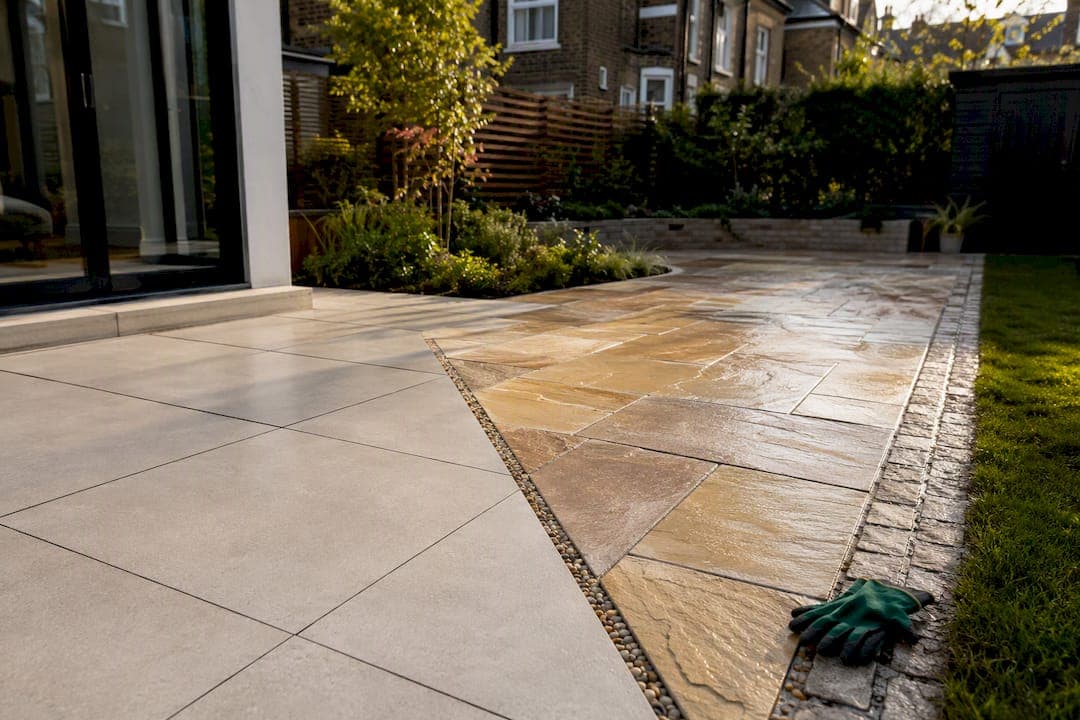
Porcelain suits most homeowners who want a low-maintenance, stain-resistant patio with a consistent modern finish, while sandstone remains the better pick for anyone who values natural colour variation and a softer, traditional look. Both materials can perform well for years when the sub-base, bedding and drainage are done correctly. The right choice usually comes down to priorities rather than one material being universally superior.
TL;DR:
- Porcelain generally requires a slurry primer or bond bridge during installation to prevent slabs from loosening or rocking over time.
- Sealing sandstone slabs periodically helps manage porosity and prevent staining from organic material and oils, unlike porcelain which often does not need sealing.
- Porcelain's low water absorption makes it more frost-resistant, reducing the risk of cracking during freeze-thaw cycles, whereas sandstone's durability varies by grade and source.
- Both materials can be jet-washed effectively using moderate pressure and proper technique, but sealing sandstone enhances stain resistance and maintenance ease.
- Cost, maintenance needs, and performance depend heavily on the specific product range, installation quality, and ground conditions, making site surveys essential.
Table of Contents
- Porcelain vs sandstone at a glance
- What porcelain offers on a patio
- Where sandstone still makes sense
- Durability and weather performance compared
- Cleaning and upkeep without damaging the surface
- Installation, costs and common pitfalls
- Permeability and planning checks before you pave
- Decision checklist before you commit to a quote
- Which patio material should you choose?
- An installer's view on choosing between them
- Get a professional patio survey from LookDeVis Services
- Sources
- FAQ
Porcelain vs sandstone at a glance
Matching your priorities to a material is easier once you see the main trade-offs side by side.
- Cost shape: sandstone is often cheaper per square metre up front, while porcelain pricing varies widely depending on thickness, finish, and brand.
- Maintenance: porcelain rarely needs sealing and copes well with routine jet-washing, while sandstone typically benefits from periodic sealing to manage porosity.
- Slip resistance: both are available in textured, slip-resistant finishes, though honed sandstone can be slicker when wet.
- Durability: porcelain's low water absorption gives it strong frost resistance, while sandstone's performance depends heavily on grade and source.
What porcelain offers on a patio
Porcelain paving is a manufactured, kiln-fired tile with very low water absorption, which is why it resists staining, algae growth and frost damage more consistently than many natural stones. Its manufacturing process also gives it tight dimensional tolerances, so slabs sit flush with narrow, even joints rather than the slight variation you get with quarried stone. Thickness typically runs from around two centimetres for patios, and finishes range from matt textured surfaces to smoother contemporary looks.
That consistency comes with an installation catch. Because the underside of a porcelain slab is smooth and non-porous, it will not bond to mortar the way natural stone does. BALI notes that manufactured materials such as porcelain need a slurry primer or bond bridge applied to the back of each slab before laying, otherwise slabs can debond or rock loose over time. Porcelain tends to suit busy family gardens, areas near kitchens or barbecues, and anyone who wants a crisp, low-fuss surface.
Where sandstone still makes sense
Sandstone brings a natural variation in colour, grain and texture that manufactured materials cannot fully replicate. Indian sandstone paving slabs remain a common choice for UK patios thanks to their wide colour range, and Kandla Grey Sandstone in particular has become popular for its cooler, contemporary grey tones within a natural stone finish. No two slabs are identical, which is exactly the appeal for period properties and informal cottage-style gardens.
The trade-off is porosity. Sandstone's absorption varies by source and grade, so lower-grade stone can be more prone to staining from oil, leaf tannins or algae if left unsealed. Sealing at installation, then periodically afterwards, helps manage this without changing the stone's natural look. Sandstone also has the advantage of familiarity: most landscapers have laid it for years using traditional mortar bedding methods, which can simplify sourcing a competent installer. It remains the preferred option for homeowners prioritising character and warmth over a uniform finish.
Durability and weather performance compared
Porcelain's low water absorption gives it a genuine edge in freeze-thaw conditions, since there is little moisture in the slab to expand and crack when temperatures drop. Sandstone can perform well too, but resistance to frost, chipping and scratching depends heavily on the grade and quarry source, which is why buying from a reputable supplier matters as much as the material itself.

Edge chipping is worth checking on both materials before ordering, particularly for driveways or patios that see furniture being dragged across them. Thicker slabs generally cope better with point loads and vehicle-adjacent traffic. Ask suppliers for the specific grading and thickness used for their patio-rated ranges, since this affects the realistic lifespan far more than the raw material type.
Cleaning and upkeep without damaging the surface
Both materials can be jet-washed, but technique matters more than the tool. Use a fan nozzle at moderate pressure and keep the lance moving to avoid etching joints or stripping sealant unevenly, and always test an inconspicuous area first. Sealing porcelain is largely cosmetic, since its low absorption already limits staining, but sealing sandstone genuinely reduces the risk of oil and organic staining and is worth repeating every few years.

Organic marks such as algae or moss respond well to a stiff brush and a suitable patio cleaner, while oil stains need a poultice or degreaser applied promptly rather than pressure alone. Heading into winter, keep both surfaces free of standing water and debris in the joints, since trapped moisture is what drives most frost-related damage over time.
Installation, costs and common pitfalls
Both materials need a properly compacted sub-base and consistent bedding, but porcelain adds an extra step: the slurry primer or bond bridge that BALI recommends stopping slabs coming loose. This is why porcelain patios often benefit from an installer experienced specifically with manufactured tiles, rather than someone used only to traditional stone.
Cost drivers on any patio project include site preparation and removal of the old surface, drainage provision, the grade and thickness of material chosen, and labour. The BS 7533 series sets out the code of practice for sub-base, bedding and surfacing layers for both natural stone and manufactured units, and asking an installer whether they follow it is a fair, simple question. Common failures on patios usually trace back to poor bedding, a skipped primer step on porcelain, or inadequate fall for water to drain away.
Permeability and planning checks before you pave
If your patio sits in a front garden and covers more than 5 square metres, Gov confirms that the surfacing needs to be permeable, or connected to a sustainable drainage system, to keep its permitted development status. Options include open-jointed paving, resin-bound surfacing or a permeable sub-base with a soakaway, and local council guidance recommends open-graded sub-base materials that will not clog over time. Where drainage routes are unclear, it is worth getting a site survey before ordering material.
Decision checklist before you commit to a quote
A short checklist keeps quoting and sample checks honest, whichever material you lean towards.
- Confirm intended use: high-traffic family patio, occasional-use garden seating area, or driveway-adjacent space.
- Ask for a physical sample laid in situ, not just a photograph, so you can check colour, texture and joint width in your own light.
- Check the slip rating and frost rating the supplier quotes for that specific product line.
- Ask what warranty, if any, applies to the material and to the installation separately.
- Confirm the installation method in writing, including sub-base depth and, for porcelain, the primer or bond bridge product used.
Pro Tip: Insist on a site visit and a written method statement for porcelain, since the correct bedding approach depends on your ground conditions and cannot be judged from a brochure alone.
Which patio material should you choose?
Choose porcelain if low maintenance, stain resistance and a consistent finish top your list, and sandstone if natural character and warmth matter more than uniformity. Either way, order samples, get three written quotes and book a site survey before committing to a full order.
An installer's view on choosing between them
On site, we look at existing sub-base condition, drainage falls and access before recommending a material, since ground conditions often decide the outcome more than personal preference. The installer works fully insured, with licensed waste carrier status and appropriate equipment for patio removal and installation.
— Roman
Get a professional patio survey from LookDeVis Services
Choosing between porcelain and sandstone gets easier once someone has actually looked at your garden, checked the ground and measured the falls for drainage. Patio installation is provided as part of wider landscaping work across Greater London, with a site survey to assess ground condition, drainage and material suitability before committing to a quote.

If you would like a fixed quotation and a site visit for your patio project, get a free quote from the company and the team will talk you through the right material and installation approach for your garden. For readers who want to see how professional landscaping teams plan larger patio and drainage projects, this overview of sustainable patio design and drainage is a useful background read.
Sources
- BS 7533 series (installation of pavements using modular paving units) - BSI Knowledge
- Gov
- Pave the way with a new British Standard - BALI
- Paving front gardens leaflet - Hillingdon Council
FAQ
What are the downsides of porcelain paving?
Porcelain can cost more than sandstone depending on the range chosen, and it needs a specific installation method, including a slurry primer or bond bridge, to bond properly to mortar. Skipping this step is a common cause of loose or rocking slabs.
Can you jet wash porcelain paving?
Yes, porcelain copes well with jet washing thanks to its low water absorption and dense surface. Use a fan nozzle at moderate pressure and keep the lance moving to avoid marking the joints or surrounding pointing.
Is porcelain paving slippery when wet?
It depends on the finish: textured, patio-rated porcelain is designed with slip resistance in mind, while smoother or highly polished finishes can be slicker when wet. Always check the specific slip rating for the product line before ordering.
Is sandstone paving cheaper than porcelain?
Sandstone is often lower cost up front, while porcelain pricing varies widely by thickness, finish and brand, so the two can overlap depending on the range chosen. Comparing like-for-like quotes, including installation, gives the clearest picture for your project.
Prices, timescales and information provided in this article are for general guidance and may vary depending on the property, site conditions, materials and scope of work. Please contact LookDeVis Services for an individual assessment and quotation. Where regulatory, planning or legal requirements apply, appropriate professional advice should be obtained.