
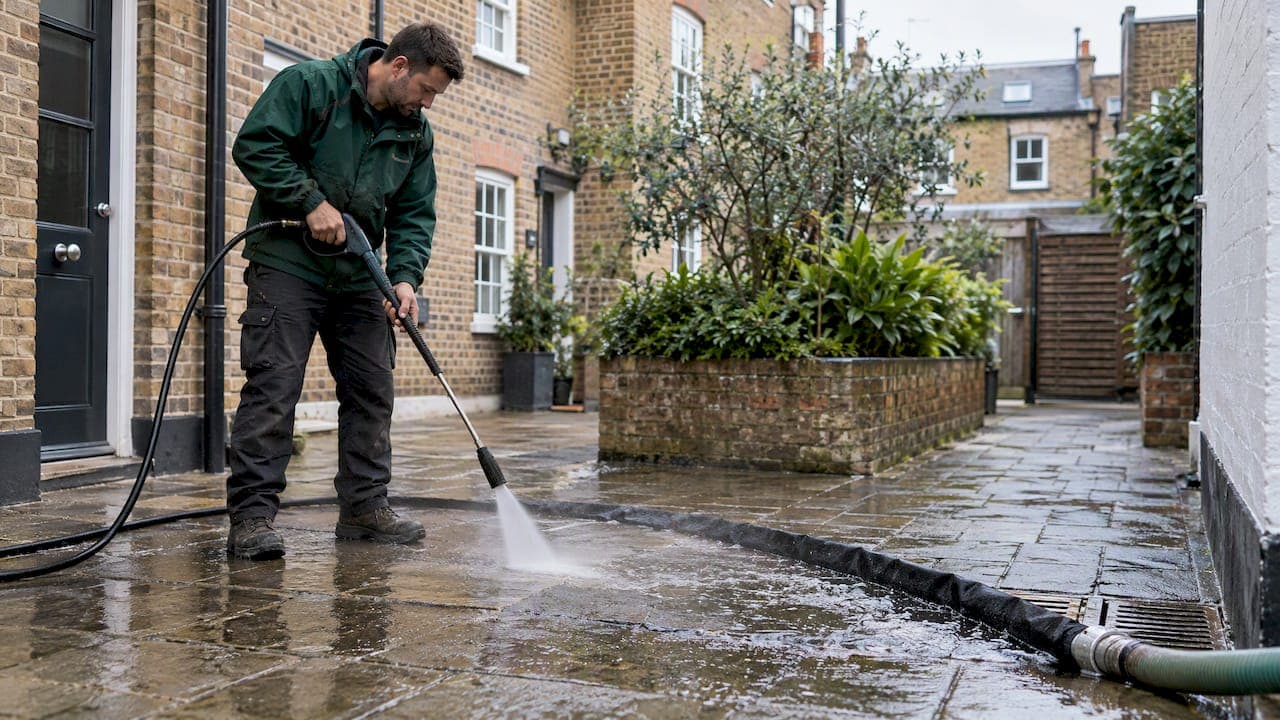
Pressure washing suits most hard outdoor surfaces in good condition, including block paving, concrete and many patios, but it needs a proper site assessment first. Drainage, heritage brickwork and softer stone all carry risk if the wrong method or pressure is used. If your property has any of these factors, start with a site assessment and written quote rather than booking a generic clean.
TL;DR:
- Soft sandstone, aged handmade brick, render, lime plaster, and decorative stone need inspection; request a discreet trial clean before treating heritage or repaired surfaces.
- Contaminated wash water must not enter surface water drains; foul sewer discharge requires water company permission, so require a written containment and disposal plan.
- Do not accept area only pricing; require a site visit that defines surfaces, exclusions, access, wastewater handling, and whether joint resanding is included.
- DIY suits only small, straightforward patches of modern concrete or block paving; hire professionals for larger areas, shared drives, sensitive masonry, or runoff risks.
- Algae and moss return faster where shade, poor drainage, and moisture persist, so drainage improvements or landscaping can last longer than repeated cleaning.
Table of Contents
- What pressure washing removes and which surfaces it suits
- Suitability, risks and heritage or sensitive-material cautions
- Site assessment and wastewater control: the legal and environmental essentials
- How professionals carry out pressure washing: stages and protections to expect
- Quotations, costs and what a reliable quote should include
- Maintenance frequency and what to expect after cleaning
- How to choose a contractor: checklist and questions to ask
- DIY pressure washing versus hiring professionals in London
- Our view on coordinating pressure washing with other property work
- Book a site assessment and quotation with LookDeVis Services
- FAQ
- Sources
What pressure washing removes and which surfaces it suits
Pressure washing lifts away the build-up that accumulates on outdoor surfaces over months of London weather. It typically removes:
- Algae and moss, which thrive in shaded, damp corners of patios and paths
- Lichen growing on older paving and brick
- General grime, oil marks and traffic dirt on driveways
- Loose debris trapped in paving joints
Surfaces that generally respond well include block paving, concrete, most natural stone patios, and standard paving slabs. Softer or older materials need more care. Soft sandstone, aged handmade brick, and certain composite or timber decking can be damaged by high pressure or the wrong nozzle, so these should be inspected carefully before any work begins rather than treated the same way as a modern concrete drive.
Suitability, risks and heritage or sensitive-material cautions
Not every surface tolerates the same treatment, and older or decorative masonry is where most damage happens. Guidance for cleaning historic facades recommends a trial clean before full works, with openings protected and the method carefully controlled rather than applied at maximum pressure across the whole area.
Signs that a surface needs extra caution include:
- Soft, crumbling or powdery mortar joints
- Handmade or weathered brick with an uneven surface
- Render, lime plaster or decorative stonework
- Any facade on a listed building or in a conservation area
Pro Tip: Ask for a small, discreet trial area before committing to a full clean on any period or decorative brickwork.
Where a property sits within a conservation area, or the facade shows signs of previous repair or deterioration, pause the job and involve a conservation officer or heritage specialist before proceeding. Rushing straight to full-pressure cleaning on these surfaces is one of the most common causes of avoidable damage.
Site assessment and wastewater control: the legal and environmental essentials
Wash water from pressure washing is not harmless. Once it has picked up dirt, oils or chemical residue, it is classed as trade effluent, and Gov is clear that this kind of runoff must not enter surface-water drains. Discharging it to the public foul sewer requires the water company's permission.
A proper site assessment should record:
- The location of drains, gullies and any nearby watercourse
- The slope and direction of surface runoff
- Access for equipment and any obstacles
- The likely level of contamination from oil, moss treatment or previous surface coatings
Containment and disposal methods a professional team should be ready to discuss include:
- Collector mats or temporary gullies to capture wash water
- Pump-and-tank systems where water cannot drain safely on site
- Licensed waste carrier removal of collected effluent
- Written consent from the water company where foul-sewer discharge is proposed
High-pressure washers use large volumes of water, so ask any contractor directly how they plan to stop contaminated water reaching surface drains before work starts, not after.
How professionals carry out pressure washing: stages and protections to expect
A well-run job follows a consistent sequence rather than simply pointing a lance at the surface.
- Protection first. Vulnerable points such as air vents, timber fittings, electrical fixtures and planting are sealed or covered before any water is applied.
- Trial area testing. A small section is cleaned first to confirm pressure, nozzle choice and distance are right for that specific surface.
- Controlled cleaning. Pulsed or lower-pressure settings are used on softer materials, with wider fan nozzles reducing the risk of etching or stripping joints.
- Slurry removal and aftercare. Collected wash water is managed on site, and any loosened jointing sand or minor surface damage is noted for repair or re-sanding.
Watching how a contractor handles the first few minutes on site tells you a great deal about how the rest of the job will go.
Quotations, costs and what a reliable quote should include
A credible written quote for pressure washing London work should specify the exact areas to be cleaned, any exclusions, the wastewater management plan, access requirements and whether minor repairs or joint re-sanding are included.
- Clear definition of the surfaces covered and any areas excluded
- A stated plan for managing and disposing of wash water
- Access assumptions, including parking, gates or shared driveways
- Any limitations around heavily stained or damaged sections
Pro Tip: Treat any quote based purely on square metreage with caution; a proper site visit should always shape the final price.
Area-only pricing tends to miss the detail that actually drives cost: drainage access, surface condition and protection needs. A short site visit resolves most of this before work starts, giving a fixed quotation rather than an estimate that changes on the day.
Maintenance frequency and what to expect after cleaning
There is no single rule for how often a patio or driveway needs cleaning. Regrowth of algae and moss depends heavily on shade, drainage and moisture, so a sheltered, tree-lined garden path may need attention more often than an open, sunny driveway. Where growth returns quickly, pairing a clean with drainage improvements or minor landscaping work tends to produce a longer-lasting result than repeated cleaning alone.
How to choose a contractor: checklist and questions to ask
Choosing the right contractor matters more than the equipment they bring. Before booking, check for:
- Public liability insurance covering the work being carried out
- Licensed waste carrier status for any effluent or debris removal
- A written wastewater management plan, not a verbal assurance
- A completed site assessment before a fixed price is given
- Clear exclusions listed in the written quote
At survey stage, ask about water supply arrangements, access for hoses and equipment, the estimated time on site, and what protection will be used around plants, windows and timber features. A contractor who works comfortably alongside other trades, such as a repointing specialist for masonry repairs flagged during cleaning, saves landlords and property managers the hassle of coordinating separate bookings for follow-on work.
DIY pressure washing versus hiring professionals in London
Hiring a domestic pressure washer and tackling a patio or driveway yourself is possible, and for a small, straightforward area in good condition it can work reasonably well. The trade-offs become clear once drainage, scale or surface sensitivity enter the picture.
DIY equipment rarely offers the pressure control or nozzle range needed for mixed surfaces, which raises the risk of stripping joint sand, etching soft stone or damaging decking boards. Wash water from a domestic unit still counts as contaminated runoff once it has picked up dirt or moss treatment, and most homeowners have no practical way to contain or dispose of it correctly, which creates the same drainage risk discussed earlier in this guide.
For a small, low-risk patch of modern concrete or block paving, careful DIY cleaning with a domestic machine is a reasonable option. For larger areas, shared drives, period brickwork, or any property where runoff could reach a drain or watercourse, professional equipment, trial-area testing and a proper wastewater plan reduce the chance of costly damage or a pollution issue. Landlords and commercial property owners in particular carry more responsibility for runoff control than a private household, which tips the balance further towards booking a professional team for anything beyond a small, simple job.

Our view on coordinating pressure washing with other property work
We find pressure washing rarely sits in isolation. A driveway clean often reveals cracked pointing, a patio job uncovers drainage issues, and a rental property between tenancies usually needs waste removal and minor repairs alongside the clean. Combining these under one booking saves landlords and property managers the hassle of juggling separate contractors. Always start with a written site assessment and quote before work begins.
— Roman
Book a site assessment and quotation with LookDeVis Services
We provide pressure washing as part of a fully insured service, with waste handled through appropriate licensed carrier arrangements. If a driveway, patio or exterior wall at your property needs cleaning, our team can carry out a site assessment, confirm the right method for your surface and provide a written quotation before any work starts.

Where a clean uncovers damaged pointing or masonry, we can coordinate directly with specialists such as Quay Point Plastering for repair work, so you are not left managing separate contractors. Appointments may be available seven days a week, with same-day availability for selected locations. (Check our website for current details.)
Get in touch through LookDeVis Services to arrange your site assessment and request a free quote.

FAQ
How much does pressure washing cost in the UK?
There is no single authoritative UK-wide price list for pressure washing, since cost depends on surface area, access, condition and wastewater handling. A fixed quotation based on a site visit gives a far more reliable figure than any generic online estimate.
What's a good price to charge for pressure washing?
Pricing that reflects the actual scope, including surface type, exclusions, access difficulty and wastewater management, tends to be fairer and more accurate than a flat rate per square metre. Quotes built from a site assessment rather than a phone estimate are generally more trustworthy for both the customer and the contractor.
How many times a year should you jet wash a patio?
There is no fixed annual rule, since regrowth of algae and moss depends on shade, drainage and moisture levels rather than the calendar. A shaded, poorly drained patio may need attention more often than one in full sun with good drainage.
How much is a cleaner for 2 hours?
General domestic cleaning rates are not the same as pressure washing pricing, since pressure washing involves specialist equipment, wastewater management and surface-specific methods rather than a fixed hourly cleaning rate. A written quote based on the job's scope gives a more accurate figure than an hourly comparison.
Sources
- Gov
- Algae and moss on hard surfaces – RHS advice
- Facade cleaning: the removal of soiling and paint from brick and stone facades (Westminster)
- Guidance for pollution prevention (NetRegs) — high-pressure washers
Prices, timescales and information provided in this article are for general guidance and may vary depending on the property, site conditions, materials and scope of work. Please contact LookDeVis Services for an individual assessment and quotation. Where regulatory, planning or legal requirements apply, appropriate professional advice should be obtained.