
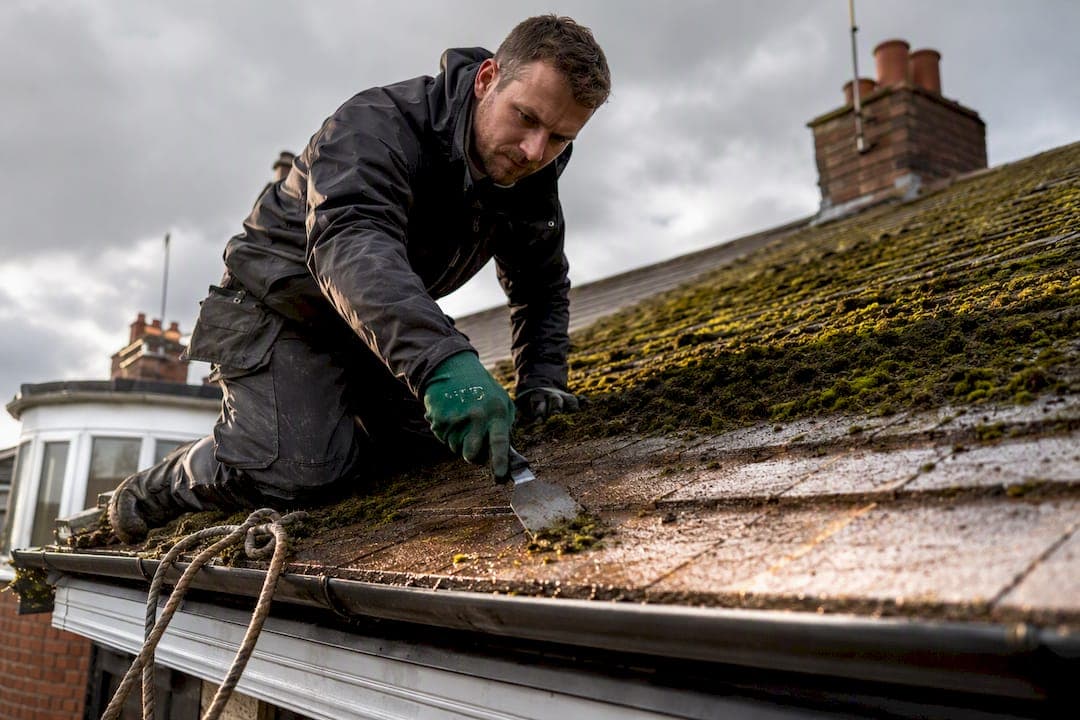
Expect to pay roughly £500 to £800 for a standard roof clean on a typical London semi-detached property, with small terraces starting nearer £400 and larger detached or period roofs running £1,200 to £2,500 or more. The figure that moves this range most is access: scaffolding or a tower can add several hundred pounds on top of the base clean, and the cleaning method a contractor recommends (soft wash, manual scrape, steam or biocide) changes both price and how long moss stays away. Everything below explains how quotes are built, what should be included, and how to budget with confidence.
TL;DR:
- Roof size, access difficulty, and property type significantly influence the overall cost, with larger and taller roofs requiring more equipment and height safety measures.
- The cleaning method chosen, such as soft wash, manual scrape, or steam cleaning, directly impacts the price and effectiveness, especially for heavy moss build-up.
- Added treatments like biocide and waste disposal can increase the total cost by hundreds of pounds, with scaffolding often being the largest expense for complex jobs.
- Quotes should clearly specify the method, access plan, safety measures, insurance, and waste management to avoid hidden costs and ensure safety compliance.
- Routine moss prevention through annual inspections and light biocide treatments is much cheaper than full cleanings with scaffolding and mitigates long-term damage risks.
Table of Contents
- Roof cleaning cost London at a glance
- How cleaning method affects roof cleaning prices
- What actually drives your roof moss removal cost
- What should a proper roof cleaning quote include?
- When should you actually remove moss, and what's the best time of year?
- Prevention costs far less than a full clean
- Sample budgets and a quick decision checklist
- Why London homeowners trust LookDeVis for roof and exterior work
- Author perspective: when we recommend professional roof cleaning
- Get a fixed quote for roof moss removal in London
- Sources
- FAQ
Roof cleaning cost London at a glance
Contractors working across London typically price roof moss removal by the square metre, then add extras for access, biocide treatment and waste disposal. National guidance from trade cost sites puts standard roof cleaning at £8.50 to £14 per square metre, though London and the South East commonly sit above that, with typical regional ranges around £500 to £800 for a standard clean on an average semi-detached roof.
Property type dictates most of the swing in price, simply because it dictates roof area and how tricky the access is.
| Property type | Typical London price range | Notes |
|---|---|---|
| Small bungalow or terrace | £400–£700 | Ground-level access often possible without scaffolding |
| Standard 2 to 3 bed semi | £500–£800 | Most common London job; ladder or tower access |
| 4 bed detached | £1,000 | Larger roof area, sometimes multiple pitches |
| Tall townhouse or period property | £1,200–£2,500+ | Steep pitches and height often require scaffolding |
Add-ons are where a quote either stays honest or quietly balloons. Biocide treatment, applied after cleaning to slow regrowth, typically adds £80 to £250, and annual maintenance-strength biocide applications sit nearer £80 to £150. A gutter clear bundled into the same visit generally costs £75 to £300 depending on length and blockage. Scaffold or tower hire is the biggest variable of all and can add several hundred pounds to a job on a tall or awkward roof.
Most residential roof cleaning quotes in London include VAT within the headline figure, but always ask a contractor to confirm this in writing before you compare prices. Costs also vary borough to borough. A ground-floor terrace in Ealing with easy street access will price differently to a three-storey Victorian townhouse in Islington needing full scaffolding, even though both roofs might be a similar size.
How cleaning method affects roof cleaning prices
The method a contractor proposes has almost as much bearing on price as the size of your roof. Each approach suits different levels of moss growth, roof material and budget.
- Manual scrape and brush: physical removal of moss clumps by hand, often followed by a rinse. Effective for heavy, established moss but labour-intensive, which pushes cost up on larger roofs.
- Soft washing: low-pressure application of water with a biocide or cleaning solution, left to work before a gentle rinse. This is the method most roofing bodies favour for tiled and slated roofs because it doesn't dislodge the granules or seals on the tile surface.
- Steam cleaning: uses controlled heat and pressure to lift moss and algae without the chemical load of a biocide wash. It tends to sit at the higher end of the price scale because of the specialist equipment involved.
- Biocide treatment alone: a chemical application designed to kill moss and lichen in place, often used as a maintenance step between full cleans rather than a standalone removal method.
The NFRC, the trade body for roofing contractors, warns against high-pressure jet washing on pitched tile and slate roofs. The force can strip the protective granules from concrete tiles or crack older slates, shortening the roof's working life rather than extending it. If a contractor's quote leans heavily on pressure alone with no mention of a softer method or biocide follow-up, treat that as a red flag rather than a bargain.
Steam and full manual scrape jobs generally cost more per square metre than a soft wash because they take longer and need more hands-on labour. A soft wash with biocide follow-up is usually the most cost-effective route for moderate moss, while heavy, years-old growth on a north-facing pitch may genuinely need the scrape-first approach regardless of price.
What actually drives your roof moss removal cost
Contractors price a job on a handful of variables, and understanding them helps you spot a fair quote from an inflated one.
- Access equipment: a simple extension ladder job costs far less than one needing a tower system or full scaffold. Scaffold hire alone is frequently the single largest cost line on quotes for tall or terraced London properties where there's no side access for a tower.
- Roof pitch and height: steep pitches slow the work down and increase the safety equipment needed under the Work at Height Regulations 2005, which adds labour time and therefore cost.
- Tile or slate material: concrete tiles, clay tiles and natural slate all respond differently to cleaning, and some materials need gentler, slower methods.
- Extent of moss growth: light surface moss on a south-facing pitch clears quickly; thick, matted moss built up over several damp winters takes longer and may reveal cracked tiles underneath once removed.
- London-specific costs: labour rates, congestion charging, parking restrictions and travel time between jobs all sit inside a London contractor's overheads in a way they don't for a rural job.
Pro Tip: Take photos of your roof from ground level before you call anyone. A contractor can often give you a more accurate ballpark price over the phone if they can see the pitch, material and rough moss coverage first, saving you a wasted site visit.
What should a proper roof cleaning quote include?
A trustworthy quote reads like a plan, not a price tag. Before accepting one, check it covers these points:
- Scope and method — exactly which cleaning method is proposed (soft wash, manual scrape, steam, biocide) and why it suits your roof.
- Access plan — whether the job uses ladders, a tower system or full scaffold, and who's supplying it.
- RAMS documentation — a written Risk Assessment and Method Statement showing how the contractor plans to work safely at height.
- Proof of insurance — public liability cover, ideally with the policy limit stated, given the risks of working on roofs.
- Waste disposal terms — confirmation that any removed moss, debris or old guttering material is taken away by a licensed waste carrier rather than left for you to deal with.
- Timeline — a realistic start and completion window, including how weather delays are handled.
- Before and after evidence — sample photos from previous jobs of a similar scale, where available.
- Payment and VAT terms — a clear total with VAT status stated, and payment terms set out before work starts.
- Product details — if biocide or a coating is used, the product name and any trade accreditation or COSHH information, so you know what's going on your roof.
Quotes that skip several of these items, particularly insurance and RAMS, are usually the ones priced suspiciously low. Reputable contractors build safety, waste handling and insurance into their pricing; corners cut here tend to show up later as either a damaged roof or an uninsured incident.
When should you actually remove moss, and what's the best time of year?
Moss on a roof isn't automatically an emergency. The NFRC is clear that moss is rarely a structural problem on its own, and removal only becomes necessary once it starts causing functional issues rather than sitting there as a cosmetic nuisance.
Signs it's time to act:
- Moss is visibly blocking gutters, downpipes or valleys, causing water to pool or overflow.
- You can see moss trapping moisture against the tile surface for extended periods, which risks frost damage in colder months.
- Tiles look lifted, cracked or displaced once moss clumps are pulled back.
- You've spotted damp patches inside the loft or on ceilings below the affected area, which needs prompt attention regardless of season.
For routine, non-urgent moss, aim for a dry spell in spring or early autumn. Wet, frosty conditions common through a London winter make roofs slippery and unsafe to work on, and biocide treatments need a dry window to bind properly. If you're dealing with an active leak, that's an emergency regardless of the calendar, and it needs prompt attention rather than waiting for a better month.
Prevention costs far less than a full clean
The most cost-effective moss strategy is never letting growth get established in the first place. Homeowners and property managers who treat minor moss early tend to avoid the larger hidden damage and repair bills that come with years of unchecked buildup.
- Annual inspection with light biocide top-up: roughly £80 to £150 a year, far cheaper than a full clean every few years.
- Gutter clearing: keeping downpipes free stops trapped water that feeds moss growth, typically £75 to £300 depending on property size.
- Tree and hedge trimming: overhanging branches keep roofs shaded and damp, which is exactly what moss thrives on; cutting back nearby garden maintenance growth reduces the moisture a roof holds onto.
A maintenance plan with an annual light treatment typically costs a fraction of what a single overdue full clean with scaffold access ends up costing. Roof cleaning in the UK runs £8.50 to £14 per square metre for a full job; an annual £100 biocide top-up on the same roof is a fraction of that over a five-year period, without ever needing scaffold hire at all.
Sample budgets and a quick decision checklist
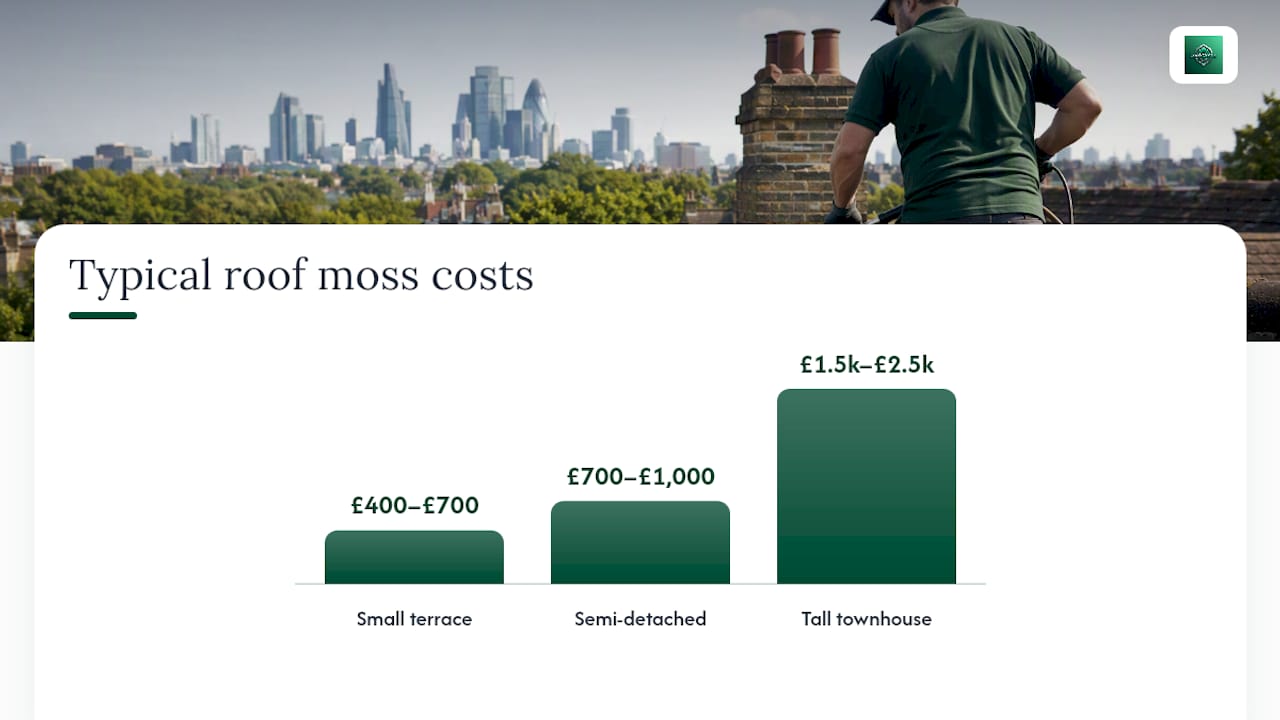
Seeing real numbers side by side makes the access-cost point concrete. A small London terrace with ground-level ladder access might run £400 to £600 for a soft wash and biocide treatment. A standard semi-detached with a tower system for a second-storey pitch typically lands £700 to £1,000. A tall period townhouse needing full scaffold could reach £1,500 to £2,500, with scaffold hire alone accounting for a large share of that figure.
Before you book anyone, run through this quick checklist:
- Photograph the roof from ground level, front and back.
- Note whether there's side access for a tower, or whether scaffold looks unavoidable.
- Ask every contractor for the same four things: method, access plan, RAMS, and waste disposal terms.
- Be wary of any quote that's dramatically below the others with no explanation of method or insurance.
| Scenario | Access | Typical price |
|---|---|---|
| Small terrace, easy ground access | Ladder | £400–£700 |
| Semi-detached, second pitch | Tower system | £700–£1,000 |
| Tall townhouse, full height | Scaffold | £1,500–£2,500+ |
DIY moss removal is reasonable for a single-storey extension roof with safe ground access and light, surface-level growth using a soft brush and water, but for more complex jobs it's best to consult a professional roofer with experience in roofing services in Kent. It stops being reasonable the moment a ladder, steep pitch or second storey is involved. That's when the Work at Height Regulations exist for good reason, and it's a job for a professional with the right equipment and insurance.
Why London homeowners trust LookDeVis for roof and exterior work
Choosing a contractor for work at height comes down to whether they can show you the basics: insurance, licensed waste handling and a team that turns up when they say they will.
- Lookdevisservices operates as an insured property services provider across Greater London, covering pressure washing and exterior cleaning work alongside gardening, landscaping and refurbishment.
- Waste removed during a clean, including old guttering debris or garden material cleared as part of the same visit, goes through a licensed waste carrier rather than being left on site.
- **Same-day availability is sometimes offered for selected services and locations subject to team schedules, useful if prompt attention is needed.
- Coordinating gardening, tree work, waste removal and exterior cleaning under one team can allow handling a moss-affected roof next to overgrown trees or a cluttered garden as a single, coordinated visit rather than separate call-outs.
- You can view examples of completed projects in the LookDeVis Services gallery before requesting a quote.
Work at height is assessed job by job. Method statements and access plans are discussed with the customer before any work begins, in line with the safety approach the NFRC recommends for pitched roof work.
Author perspective: when we recommend professional roof cleaning
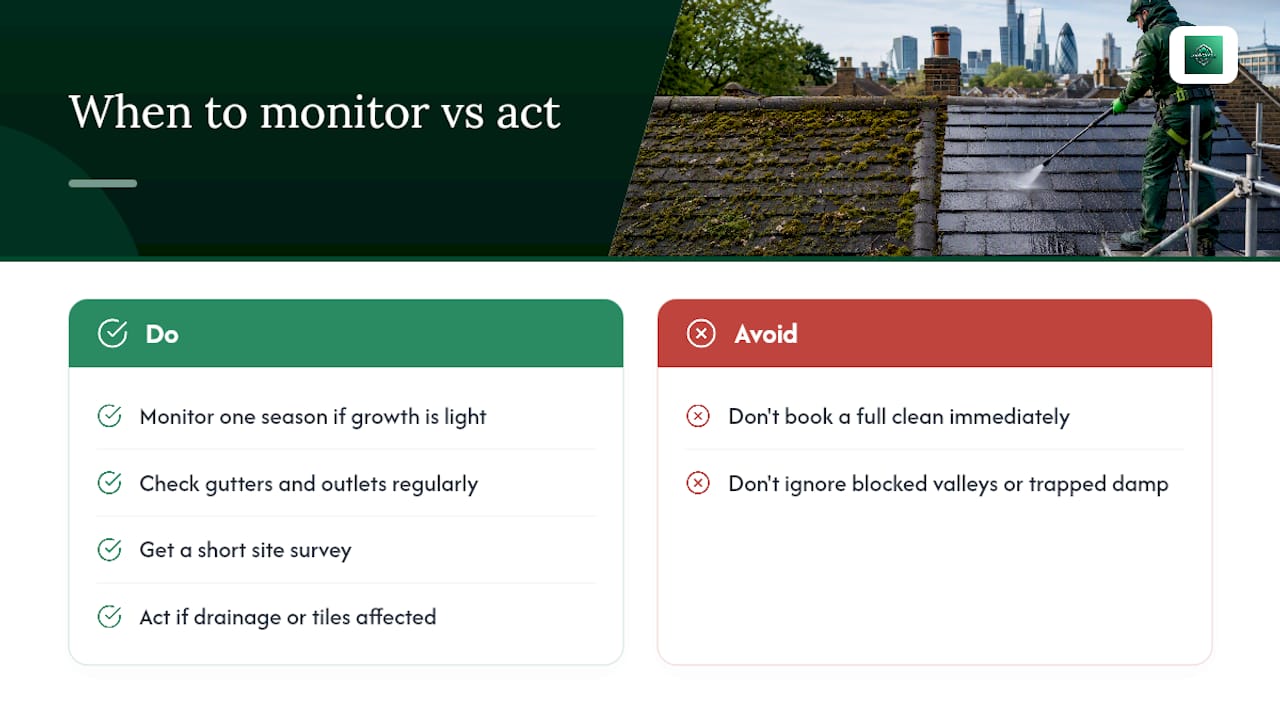
Not every mossy roof needs immediate action, and it's worth resisting the urge to book a full clean the moment moss appears. If growth is light, sits away from gutters and outlets, and the roof shows no sign of trapped moisture, monitoring it through one more season is often the sensible call rather than paying for a clean that gives only cosmetic benefit.
Where I'd push back on the "just leave it" advice is once moss starts affecting drainage or you can see tile movement underneath it. At that point, cost of inaction (trapped damp, frost-cracked tiles, blocked valleys) tends to outweigh the cost of a proper clean by a wide margin, particularly on London's older housing stock. A short site survey settles the question either way, and it's a far cheaper conversation to have than a ceiling repair.
— Roman
Get a fixed quote for roof moss removal in London
There are DIY guides, generic price calculators and one-off tradespeople you could piece together for this job. Lookdevisservices offers a simpler route: one insured team that surveys your roof, gives you a fixed price in writing, and handles the cleaning, biocide treatment and waste disposal without you needing to coordinate separate contractors.

To get moving, have your postcode, a couple of ground-level photos of the roof, and any access notes (side gate width, parking restrictions, neighbouring scaffolding) ready when you call. Your quote will set out the proposed method, access plan, insurance confirmation and a fixed price before any work starts, so there are no surprises once the job is underway. If you'd rather start with the broader exterior cleaning offer, the pressure washing services page covers roofs, driveways and patios together. Call 07348 758581 or email lookdeviscompanylegal@gmail.com to book a survey.
Sources
For independent guidance beyond this article: the NFRC's advice on roof moss covers when removal is genuinely necessary; Checkatrade's cost guide breaks down UK pricing per square metre; PureSeal's pricing analysis explains regional cost differences; and Homebuilding's practical guide covers hands-on removal and prevention techniques.
- Roof Cleaning Cost in the UK (2026 Price Guide)
- Are you worried about moss on your roof? | NFRC
- Roof Cleaning Costs in the UK: Average Prices, Factors, and Methods
FAQ
Should moss be removed from a roof in the UK?
Not always immediately. The NFRC advises that moss is rarely a structural problem on its own, and removal becomes worthwhile once it blocks gutters, traps moisture against tiles, or causes visible tile movement.
Is it worth removing moss from a roof?
It's worth removing once moss affects drainage or has built up thickly over several seasons, since trapped moisture can lead to frost damage and hidden tile cracking. Light, isolated moss with no drainage impact can often wait until a routine inspection.
What is the best time of year to remove moss from a roof in London?
Spring or early autumn dry spells work best, since biocide treatments need dry conditions to bind properly and wet or frosty roofs are unsafe to work on. Leaks are the exception and need attention regardless of season.
Why is roof cleaning so expensive?
Access equipment such as scaffolding or tower systems is often the single largest cost line on a quote, alongside insurance, trained labour and compliance with the Work at Height Regulations 2005. In London, higher labour rates and parking or access restrictions add further to the base cost.
How much does roof moss removal cost in London?
Most London properties fall between £500 and £800 for a standard clean, with small terraces from around £400 and larger detached or period roofs reaching £1,200 to £2,500 or more depending on access and method.
Recommended
- Garden Maintenance London | From £68/Hour
- Garden Waste Removal London | From £50/Bag | Licensed Collection
- Garden Clearance London | Overgrown Garden Tidy-Ups
- Licensed Waste Removal & Rubbish Clearance Services in London
Prices, timescales and information provided in this article are for general guidance and may vary depending on the property, site conditions, materials and scope of work. Please contact LookDeVis Services for an individual assessment and quotation. Where regulatory, planning or legal requirements apply, appropriate professional advice should be obtained.