
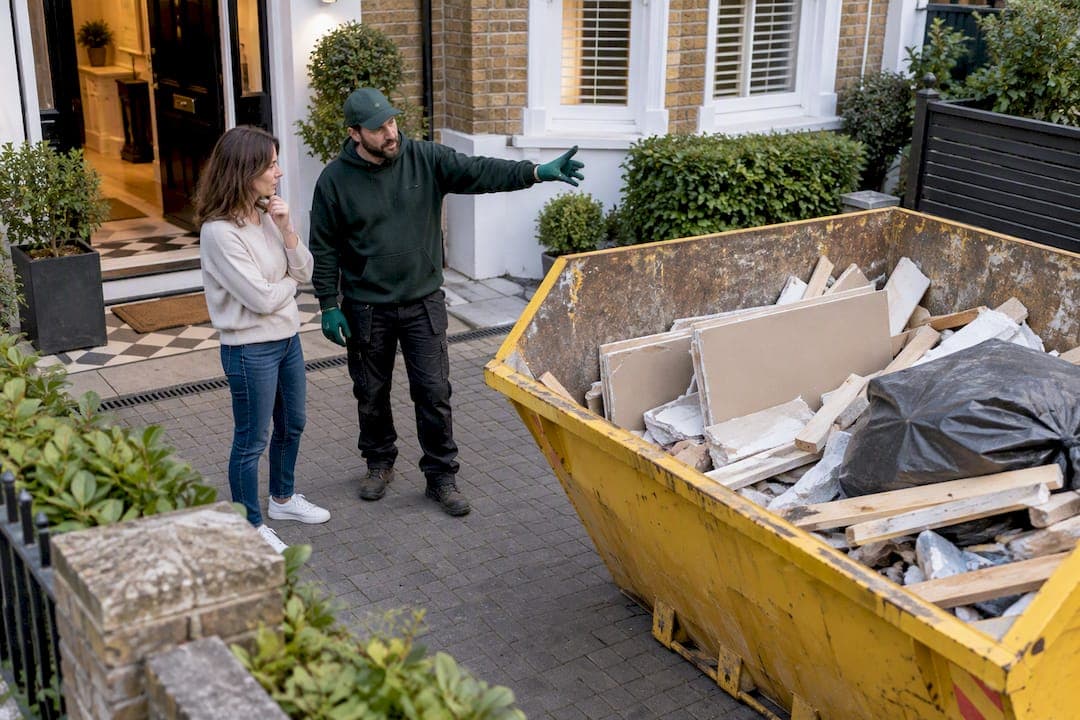
For large, ongoing building work, a skip is usually the cheaper option, provided you have space to keep one on your property or can secure a permit. For single bulky items, awkward access or a same-day clearance, a rubbish removal crew is usually the better fit. Whichever you choose, check the provider is a licensed waste carrier and, if the skip needs to sit on the road, that a permit is arranged before it arrives.
TL;DR:
- Skip hire is generally cheaper for large, ongoing projects if you have space and can secure a permit for public road placement.
- Rubbish removal is more practical for single items, tight access spaces, or same-day clearance, with no permit required and usually quicker turnaround.
- London residents should factor in higher costs and permit delays for larger skips, while small skips tend to be more economical for steady waste over weeks.
- Always verify the waste carrier’s registration and obtain a waste transfer note to ensure legal disposal and avoid fines or liability for fly-tipped waste.
- Proper site access, waste type, and volume influence the choice, with hazardous materials requiring specialist handling regardless of the chosen method.
Table of Contents
- At-a-glance comparison: pros, cons and typical use cases
- Indicative costs, permit fees and how long each option takes
- Waste duty of care, waste carrier checks and record keeping
- How site access, waste type and volume influence the choice
- A concise decision checklist and the exact questions to ask suppliers
- A practical view from LookDeVis Services
- How LookDeVis Services can handle your clearance safely and compliantly
- Sources
- FAQ
At-a-glance comparison: pros, cons and typical use cases
Skip hire suits projects that generate a steady stream of waste over days or weeks, such as a kitchen refit, a loft conversion or a full house clearance. You load it yourself, at your own pace, and it stays on site until the job is done. The catch is space: a skip needs somewhere to sit, and if that somewhere is a public road, you will need council permission first.
Rubbish removal suits everything else. A team turns up, loads the waste themselves, and takes it away in one visit, which makes it the practical choice for flats, terraced houses with no driveway, or anyone who just wants a sofa and some garden waste gone by the end of the day.
Skip hire pros and cons:
- Cost-effective for high volumes and multi-day projects
- No labour cost since you load it yourself
- Requires driveway space, or a permit for road placement
Rubbish removal pros and cons:
- No permit needed, since the waste never sits on your property or the highway
- Works around stairs, narrow corridors and tight London streets
- Usually finished in one visit, with the crew doing the lifting
A garden clearance or a stripped-out bathroom of rubble typically points towards a skip. A single wardrobe, a fridge, or post-house-clearance junk from a flat with no parking typically points towards a removal crew.
Indicative costs, permit fees and how long each option takes
Skip costs generally depend on size, how long you keep it and where you live, with London prices often trending higher than elsewhere due to demand and permit charges. A small 4-yard skip for a bathroom strip-out costs less than an 8-yard skip for a loft clearance kept for two weeks.
If the skip goes on the public highway, the council adds a permit fee on top of the hire price. Local authority pages, such as Bristol City Council's and Walsall Council's, show that fees and required notice periods vary by borough, so always check with your local council before booking.
Statistic callout: Skip providers typically need several working days' notice to arrange a council permit, which means same-day skip placement on a public road is rarely possible.
Rubbish removal, by contrast, is usually priced per load, per hour or as a fixed quote, and same-day slots are common because no permit is involved.
- Skip: price scales with size and hire duration, plus permit fees where applicable
- Removal: price scales with volume and labour, often quoted as a fixed job
Waste duty of care, waste carrier checks and record keeping
Anyone who produces or arranges the disposal of waste in England has a legal duty of care under the Environmental Protection Act 1990. This means you must make sure your waste only goes to someone authorised to take it, such as a registered waste carrier, and that it ends up somewhere legitimate.

Many people assume the duty ends once a van drives away with their old furniture. It does not. The person who produced the waste keeps a responsibility to check the carrier is properly registered and, ideally, to hold onto a record such as a waste transfer note.
Before booking either a skip or a removal service, check:
- The company's upper-tier waste carrier registration number
- Whether you will receive a waste transfer note or similar receipt
- That the price includes lawful disposal, not just collection
Skipping these checks carries real risk. If waste you handed over is later found fly-tipped, you can face fines or prosecution, even though you were not the one who dumped it. A five-minute registration check at booking stage avoids that entirely.
How site access, waste type and volume influence the choice
Access is often the deciding factor before cost even enters the conversation. A skip lorry needs room to manoeuvre and a flat, accessible spot to drop the skip, which rules it out for many terraced London streets, basement flats or properties reached only by narrow passageways. In those cases, a man-and-van style removal service, where the crew carries everything out by hand, is often the only workable option.
Waste type matters too. General skips and standard removal services will not take hazardous materials such as asbestos, which requires specialist handling regardless of which method you were planning to use.
- Check driveway or road space before assuming a skip is viable
- Ask about hazardous materials separately, since they need specialist disposal
- Weigh up whether one large skip beats two or three separate removal loads
- Consider neighbours and pavement obstruction if the skip must go on the road
Pro Tip: If you are unsure whether your street allows a skip permit, ask your local council before you book the skip itself, since cancelling a hired skip is more hassle than checking first.
A concise decision checklist and the exact questions to ask suppliers
Before booking, work through a short checklist to match the method to your project rather than defaulting to whichever option you have used before.
- Estimate your volume and whether the waste will build up over days or arrive in one go.
- Check access: driveway, road space, stairs, or narrow streets that a skip lorry cannot reach.
- Decide your timing: does the work stretch over weeks, or do you need same-day clearance?
- Confirm disposal method: ask exactly where the waste goes and how it is processed.
- Set a cost tolerance and get quotes for both options where your project allows either.
- Check permit needs if a skip might sit on a public road.
When you contact a supplier, ask directly for their waste carrier registration number, whether they provide a waste transfer note, proof of insurance, and exactly what the quote covers. A vague answer to any of these is worth treating as a warning sign.
For London projects, LookDeVis Services works as a licensed waste carrier with insured teams, and can offer same-day availability for garden and house clearances depending on location and scheduling.
A practical view from LookDeVis Services
The most common mistake we see is people assuming a skip is always cheaper, without factoring in permit fees or the fact that half the skip sits empty. The second is skipping the carrier check entirely, which leaves the householder exposed if waste is mishandled downstream. We keep things straightforward: proper registration, clear documentation, and a quote that says exactly where your waste is going before we collect it.
— Roman
How LookDeVis Services can handle your clearance safely and compliantly
Whether your project needs a skip-sized clean-out or a single-visit removal, licensed waste removal, garden clearance and house clearance services are available across Greater London, with insured teams and same-day options depending on location.

Every quote sets out the disposal route, includes a waste transfer note where applicable, and states the price clearly before work begins, so there are no surprises once the job is done. If you are weighing up skip hire against a removal service and want a straight answer for your specific property, request a free quote from LookDeVis Services and we will recommend the option that actually fits your access, volume and timeline.
FAQ
What is the cheapest way to get rid of rubbish in the UK?
For small amounts, council bulky waste collections or local recycling centres are often the cheapest route, though availability and charges vary by borough. For larger volumes, skip hire tends to work out cheaper per item than removal services, provided you have space to place the skip without needing a permit.
Is it illegal to take rubbish from a skip?
Skips are the property of the hire company or the person who booked them, so removing items without permission can amount to theft. It is always best to ask the skip's owner before taking anything from it.
What is the average cost of skip hire in the UK?
Skip hire costs vary widely by size, hire duration and location, with London typically at the higher end due to demand and permit charges where a skip sits on the road. Get a quote based on your specific size and duration, and check whether a council permit fee applies before comparing prices.
How much does it cost to remove rubbish in the UK?
Rubbish removal is usually priced per load, per hour, or as a fixed quote based on volume and access, so costs depend heavily on your specific job. Always ask for a clear, itemised quote that confirms lawful disposal is included.
How do I choose between skip hire and a rubbish removal service?
Choose skip hire for ongoing projects with steady waste and space for the skip, and rubbish removal for one-off items, tight access or urgent same-day jobs. Checking the provider's waste carrier registration matters more than the method itself, since that protects you from liability either way.
Prices, timescales and information provided in this article are for general guidance and may vary depending on the property, site conditions, materials and scope of work. Please contact LookDeVis Services for an individual assessment and quotation. Where regulatory, planning or legal requirements apply, appropriate professional advice should be obtained.