
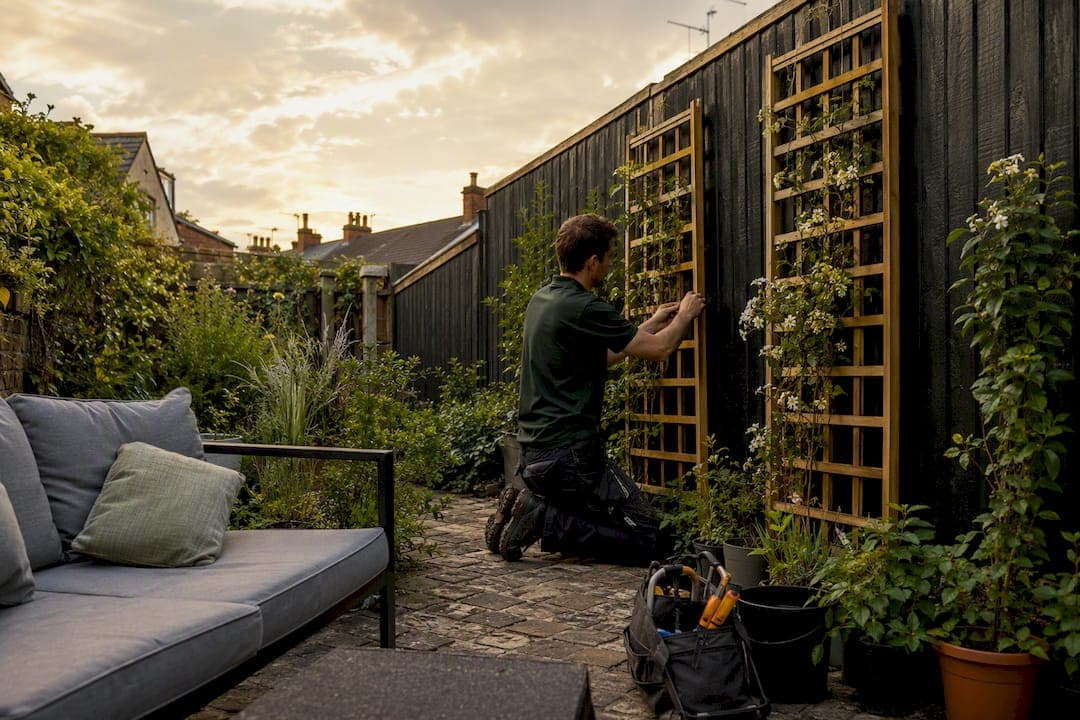
Five moves deliver most of the impact in a small London garden: plant vertically wherever you have a fence or wall, build one focal point at the far end to draw the eye, choose pale paving to bounce light around, buy furniture that folds or doubles as storage, and pick plants that tolerate shade, clay and traffic fumes. A single 2m fence panel can provide a significant amount of extra planting surface when used vertically. One in eight British households in the UK has no garden at all, which is exactly why making the most of what you have matters so much here.
- Go vertical on every boundary fence or wall
- Anchor the far end with one strong focal point
- Use pale, large-format paving to reflect light
- Choose fold-away or storage-doubling furniture
- Match planting to your plot's actual microclimate
Key Takeaways
Vertical planting, one strong focal point, pale reflective surfaces and multifunctional furniture deliver the biggest visible change in a small London garden for the least outlay.
| Point | Details |
|---|---|
| Go vertical first | A 2m fence panel gives roughly 8 square metres of extra planting surface once trellis goes up. |
| Match plants to microclimate | Choose Sarcococca, hellebores and ferns for shaded, clay-heavy borders rather than fighting a lawn. |
| Respect balcony weight limits | Keep planted loads under roughly 60kg per square metre unless a structural check says otherwise. |
| Zone before you buy materials | Split the plot into dining, planting and focal zones so single ideas connect into one layout. |
| Book a local professional for hard work | Lookdevisservices provides insured design, paving and maintenance plans across Greater London. |
Further reading: RHS shade planting advice for plant choices, ONS garden ownership data for UK context, and the Gardens Illustrated London case study for a real layout example.
Table of Contents
- Quick small London garden ideas by theme
- Planning the layout before you plant a thing
- Plants that thrive in London's shade, clay and traffic fumes
- Choosing paving and surfaces that suit a small plot
- Furniture and storage that earn their floor space
- Balcony and pocket-garden weight and layering rules
- What small garden projects cost and how often they need attention
- How LookDeVis Services helps with small London gardens
- A short word on what actually matters
- Ready to turn ideas into a working garden?
- Sources
- FAQ
Quick small London garden ideas by theme
Most of these you can start this weekend. A few need a professional, and we've flagged those.
Verticals and climbers
- Fix a timber or wire trellis to a fence and train a clematis or star jasmine up it (renter-friendly if freestanding).
- Build a living wall panel using modular planters for herbs near the kitchen door.
- Espalier a fruit tree flat against a sunny wall to save floor space entirely.
- Hang a shoe-organiser style pocket planter for salad leaves on a balcony rail.
- Use obelisks or bamboo wigwams for sweet peas or runner beans in narrow borders.
Visual tricks and framing
- Hang a weatherproof mirror on the rear wall. It can increase perceived depth by 30–50%.
- Paint fences a dark charcoal or bronze green so boundaries visually recede rather than draw attention.
- Lay paving on the diagonal to lengthen the apparent floor plane.
- Repeat one or two plant species rather than mixing dozens. Designers use this trick constantly to calm a small plot.
- Frame the far end with an arch, a single specimen tree, or a piece of art.
Hard-surface tactics
- Choose large-format porcelain slabs (600mm+) over small pavers to reduce visual clutter.
- Leave paving joints slightly open and seed with creeping thyme for permeability and softness.
- Edge a gravel seating area with steel or timber to stop scatter (needs a pro for a neat finish).
- Curve a path rather than running it straight to slow the eye and add interest.
Fold-away and built-in furniture
- A wall-mounted drop-leaf table doubles a 4sqm patio as a dining spot.
- A storage bench along one boundary hides tools and cushions.
- Stackable bistro chairs free up floor space when not in use.
Container and productive planting
- Grow tomatoes, chillies and salad in 40 litre+ pots on a sunny patio.
- Underplant a small tree in a large container with trailing bacopa for year round texture.
- Group pots in odd numbers of three or five for a designed, not accidental, look.
Wildlife and water
- A small bee hotel or log pile in a shaded corner supports pollinators without taking real space.
- A half-barrel pond, even 60cm across, brings in frogs and hoverflies within a season.
- Native hedging like hawthorn in a large trough offers nesting cover and screens a fence.
Pro Tip: Before buying any climber, check the fence or wall it's meant to cover isn't shared with a neighbour without agreement, London's terraced plots make boundary disputes far more common than you'd think.
Planning the layout before you plant a thing
Start by watching your garden for a day. Note where the sun actually falls in winter and summer, whether water pools after rain (a sign of London's notorious heavy clay), and which corners trap cold air. These three details decide almost every planting choice that follows, and skipping this step is the single most common reason small garden projects underperform.
Zone the space in three bands: a hard-surfaced dining or seating area nearest the house, a middle band of planting and screening, and a destination point at the far end, a bench, a specimen tree, or a small water feature. Mark the transitions with a change of level, material or planting density rather than a fence, so the zones read as connected rather than chopped up.
- Test drainage by digging a 30cm hole and timing how fast water disappears
- Use one paving material throughout to unify the zones visually
- Set larger slabs on the diagonal near boundaries to soften straight edges
- Place your single focal point directly on the sightline from the back door
Gardens Illustrated has documented several small London garden projects built exactly on this layered, repeated planting principle, and the results consistently read larger than their footprint. If you want a professional eye on the layout before committing to materials, LookDeVis Services offers garden design consultations that map zones against your specific aspect and soil.
Plants that thrive in London's shade, clay and traffic fumes
Most London gardens fight three things at once: shade from tall terraces, heavy clay soil that waterlogs in winter and bakes hard in summer, and airborne pollution near busy roads. The plants below are chosen because they tolerate all three, not because they look nice in a catalogue.
For shaded, clay-heavy borders, the RHS specifically recommends Sarcococca confusa, hellebores and hardy ferns over trying to nurse a lawn that will only ever grow patchy. For structure and year-round interest in tighter plots, dwarf acers, amelanchier and pittosporum earn their space because they hold shape through winter and cope with urban pollution better than many showier alternatives.
- Sarcococca confusa for winter scent in deep shade
- Hellebores and ferns for ground cover under trees or walls
- Dwarf Japanese maples for structure in a large container
- Amelanchier for spring blossom and autumn colour in a small footprint
- Pittosporum for evergreen screening against a fence
A 14sqm container garden grown well can produce 15 to 20kg of vegetables a year, which is a genuinely useful yield from a space many people write off as too small to bother with. Espaliered fruit trees against a warm wall extend that further, giving you apples or pears without sacrificing a single square metre of lawn. LookDeVis Services can plan and plant a seasonal flower bed scheme alongside any productive planting so the ornamental and edible zones work together rather than competing for light.
Choosing paving and surfaces that suit a small plot
Pale porcelain or light natural stone reflects available light back into the garden, which matters enormously in a north-facing London courtyard hemmed in by terraces. Dark composite decking looks striking in photographs but tends to make a small space feel like a box, especially once it's wet through a London winter.
- Choose light grey or cream porcelain for maximum light reflection
- Leave paving joints unsealed and consider a permeable gravel strip near boundaries
- Direct roof and patio runoff into a border rather than straight to a drain
- Budget porcelain from roughly £40 to £90 per square metre installed, natural stone higher
- Artificial grass suits low-light plots but check drainage and consider the environmental trade-offs first
LookDeVis Services installs both paving and artificial grass, and can advise on which surface actually performs best against your specific aspect and drainage rather than which one looks best in a showroom.
Furniture and storage that earn their floor space
In a small garden, every piece of furniture should do at least two jobs. A storage bench along a boundary wall hides tools and cushions, while doubling as extra seating for guests. Fold-down wall tables free the whole patio when you're not eating outside, and a bench built with a planter integrated into the backrest gives you greenery without eating into paving.
- Favour teak, powder-coated aluminium or resin weave over untreated softwood for London's wet winters
- Stackable chairs beat fixed dining sets for anything under 12sqm
- Freestanding trellis panels and wheeled planters suit renters who can't fix to walls
Pro Tip: If you're renting, avoid anything bolted to brick or fence panels, freestanding troughs with integrated trellis give you the same screening effect and you take them with you when you move.
Balcony and pocket-garden weight and layering rules
Balconies and roof terraces carry real structural limits that a ground-floor garden never has to consider. As a safe working rule, keep total planted load under roughly 60kg per square metre unless a structural engineer or your building manager has confirmed a higher limit for your specific balcony.
- Build in three layers: floor pots, mid-height rail planters, hanging baskets above
- Use lightweight resin or fibreglass containers rather than stone or terracotta
- Fill large pots with a lightweight compost mix, not garden soil, to cut weight
- Ask your managing agent for the balcony's load rating before adding anything substantial
What small garden projects cost and how often they need attention
A pocket garden refresh, new planting, a bit of trellis, some pots, can often be done for a few hundred pounds and a weekend of effort. A small courtyard redesign involving new paving, a raised bed and lighting typically runs into the low thousands once labour and materials are both accounted for. A full town-garden overhaul with structural landscaping, drainage and a designed layout sits at the top end of that range and is genuinely cost-effective relative to a larger plot simply because there's less ground to cover.
- Weekly visits suit gardens with a lawn or heavy summer growth
- Fortnightly visits cover most planted courtyards through spring and summer
- Seasonal visits (four times a year) handle low-maintenance, paved or gravel gardens
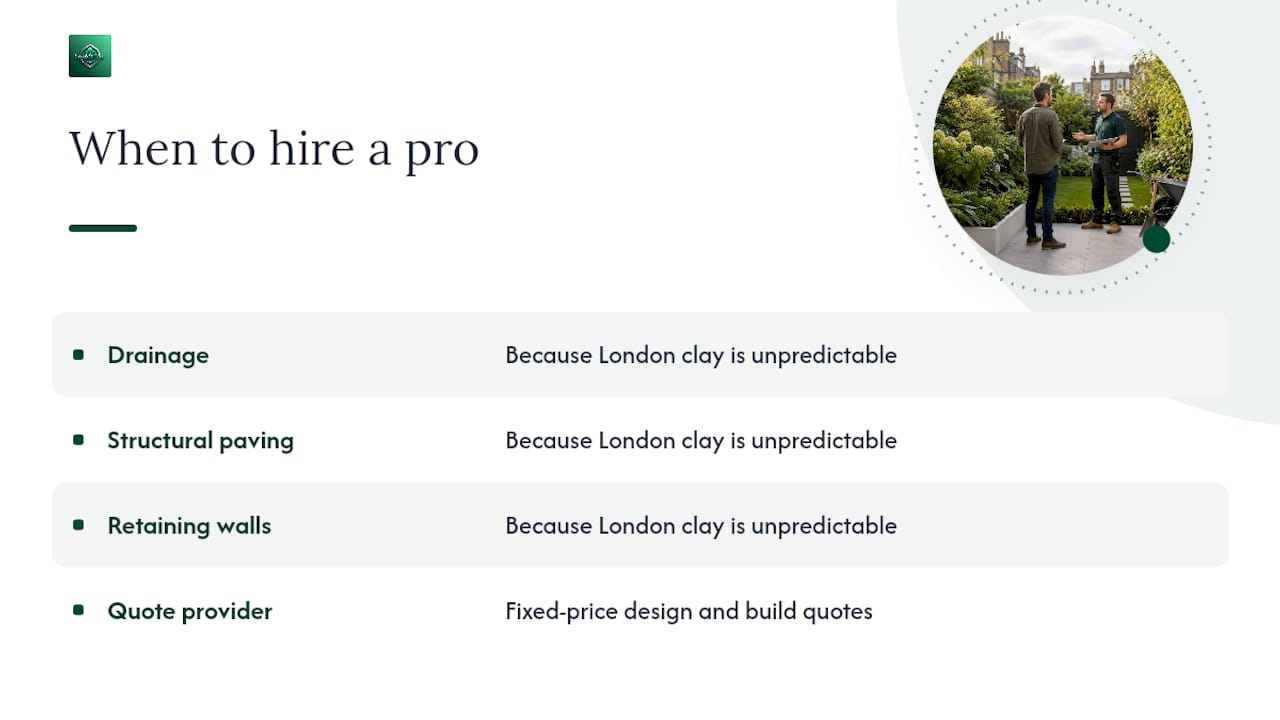
- Bring in a professional for drainage work, structural paving, or anything involving retaining walls
Hard landscaping, drainage and heavy planting installs are where DIY projects most often go wrong, largely because London clay behaves unpredictably once you dig into it. LookDeVis Services offers regular maintenance plans that scale from weekly lawn care to seasonal tidy-ups, so you only pay for the frequency your specific garden actually needs.
How LookDeVis Services helps with small London gardens
We handle garden design, planting, paving, artificial grass, ongoing maintenance plans and licensed waste removal, all through insured teams working across Greater London. Coverage spans one-off tidy-ups through to full courtyard redesigns, with flexible scheduling for both homeowners and landlords.
- Send us your garden's dimensions and a few photos
- Note access points (side gate, shared passage) and any weight restrictions
- Mention your preferred budget band so we can quote accurately
A short word on what actually matters
London plots rarely fail from lack of ideas, they fail from trying to do everything at once. Pick one focal improvement, commit to it properly, and let the rest follow.
Ready to turn ideas into a working garden?
Pinterest boards and inspiration lists only get you so far when you're working with London clay, a north-facing wall and a fence your neighbour half-owns. Lookdevisservices turns the ideas in this guide into a working plan, with insured teams who already know how local soil, drainage and terrace shading behave, rather than generic advice that assumes a blank suburban plot.

A typical small-plot quote covers a site visit or photo assessment, a proposed layout addressing your zoning and focal point, a materials shortlist matched to your light levels, and a fixed price with no hidden extras. We're fully insured, operate as a licensed waste carrier for anything we clear during the build, and can schedule around your working week rather than the other way round. For inspiration on making the finished space look sharper still, the polish-focused tips from One Day Doors & Closets apply just as well to a garden's boundary treatments as they do indoors.
Start with a free quote on our gardening services page, send through your garden's dimensions and a couple of photos, and we'll tell you honestly what's achievable within your budget before any work begins.
Sources
- ONS: one in eight British households has no garden
- Small London garden case study — Gardens Illustrated
FAQ
What's the cheapest way to make a small London garden look bigger?
Paint the fence a dark recessive colour and hang a weatherproof mirror on the rear wall. Together they can increase perceived depth by 30–50% for the cost of a tin of paint and one mirror.
What plants survive shade and London clay soil?
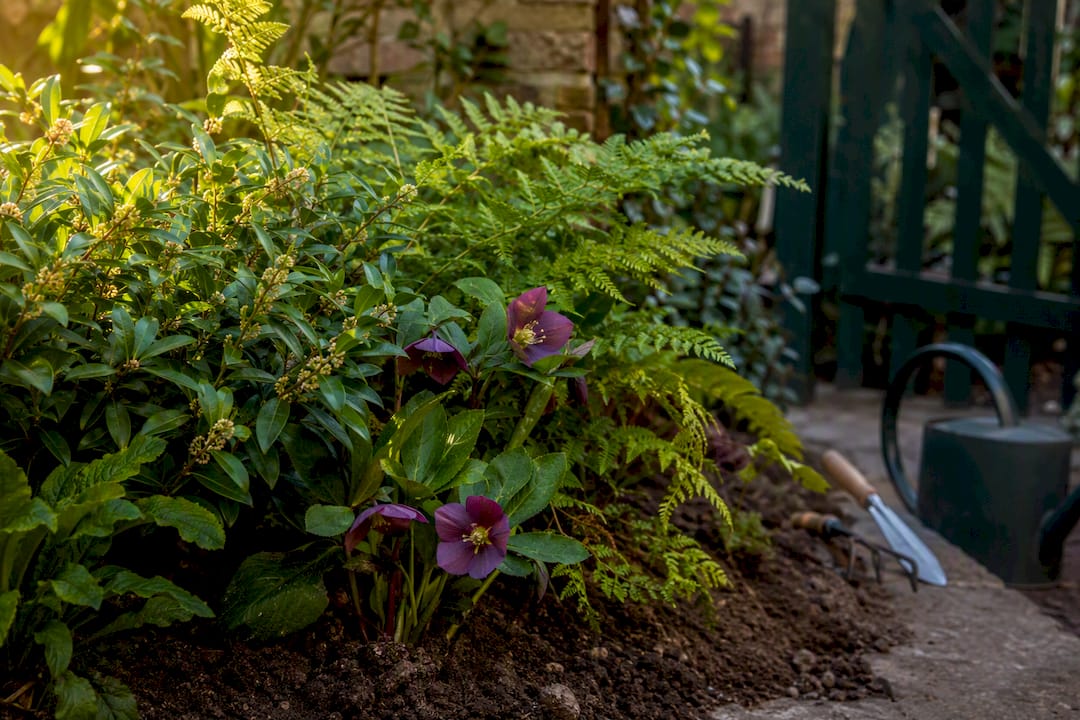
Sarcococca confusa, hellebores and hardy ferns are specifically recommended by the RHS for shaded plots with heavy clay, since they tolerate waterlogging better than most lawn grass or sun-loving perennials.
How much weight can a London balcony safely hold for planting?
Treat 60kg per square metre of planted load as a safe working ceiling unless a structural engineer or building manager confirms a higher rating for your specific balcony.
Is it worth hiring a professional for a small garden redesign?
Yes for drainage, structural paving or retaining walls, since London clay behaves unpredictably once disturbed. Lookdevisservices offers fixed-price design and build quotes for exactly this scope.
How often does a small London garden need maintenance?
Weekly visits suit lawned gardens through summer, fortnightly suits most planted courtyards, and seasonal visits four times a year cover low-maintenance paved or gravel designs.