
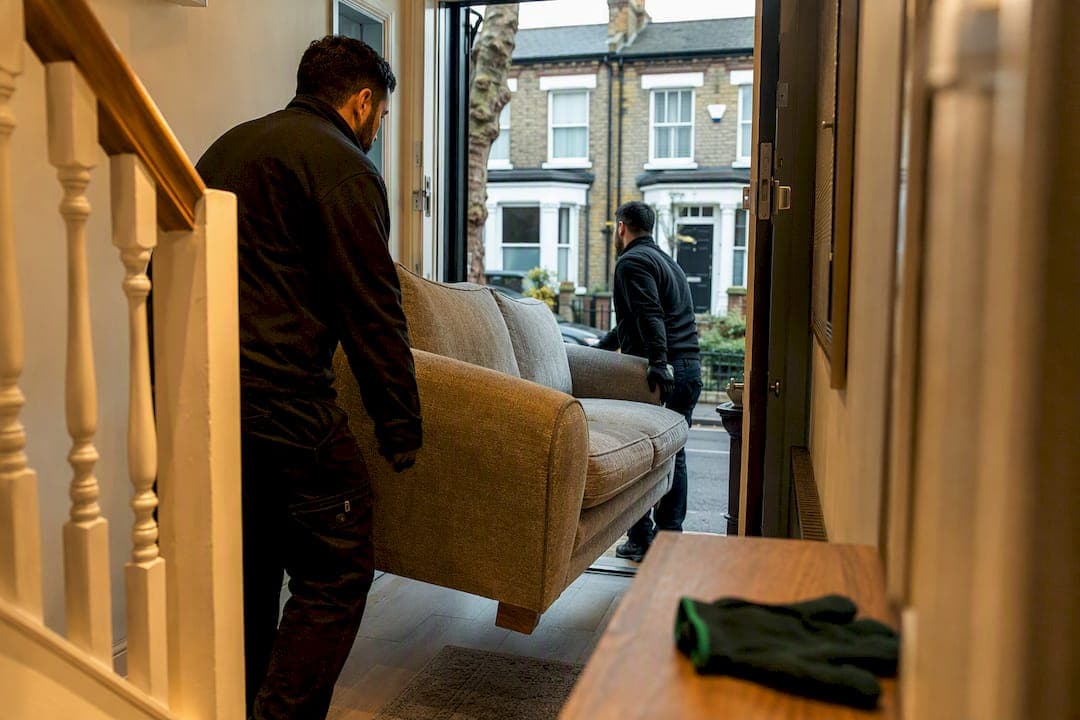
If your sofa is clean and intact, book a free charity pickup first. If it's damaged, stained or missing its fire label, your council's bulky waste collection or a licensed private remover is the lawful route. For urgent same-day removal, a licensed local team such as Lookdevisservices handles the job in one visit, insured and compliant with disposal rules.
TL;DR:
- Most London residents should opt for charity donation if the sofa is in good condition and has an intact fire label, but strict acceptance rules apply.
- Council bulky waste collection requires booking several days in advance and charges vary depending on the borough and the number of items.
- Private licensed removal is faster and offers same-day service but costs from around £60, with proof of proper disposal necessary to avoid illegal dumping.
- Damage, missing labels, or non-compliance with fire safety rules often necessitate a council or private collection, especially if immediate removal is needed.
- Proper preparation, including measuring, photographing, and following access instructions, can prevent delays and ensure smooth pickup or donation.
Table of Contents
- Sofa disposal options London households can choose between
- How do council bulky waste collections work in London?
- Can you donate your sofa to charity for free collection?
- Selling or giving away a used sofa in London
- Why choose licensed private sofa removal in London?
- How to prepare a sofa for collection or donation
- What does sofa disposal typically cost and how long does it take?
- What London sofa removals actually look like on the ground
- Book licensed sofa removal with Lookdevisservices
- Sources
- FAQ
Sofa disposal options London households can choose between
London gives you five realistic routes for getting rid of an old sofa, and the right one depends on the sofa's condition and how quickly you need it gone.
- Charity donation costs nothing when the sofa is accepted, but charities apply strict rules on condition and fire labels.
- Council bulky waste collection is available in every borough, usually charged per booking, with concessions for some residents.
- Licensed private removal costs more than council collection but is faster, insured, and flexible on timing.
- Selling or giving away through online platforms can recover some value, though it takes more of your time.
- Recycling centres and specialist recyclers handle damaged sofas or those containing materials that need separate processing.
Most readers land on one of the first three. A sofa in genuinely saleable condition should go to charity before anything else. One that's torn, damp or beyond repair needs a council booking or a private collection, particularly if you're short on time or can't easily move it yourself.
How do council bulky waste collections work in London?
Every London borough runs a bulky waste collection service, but the booking process, pricing and restrictions differ from one council to the next.
- Search your borough's website using your postcode to find the correct bulky waste booking page.
- Select the items you want collected and enter how many pieces of furniture you're disposing of.
- Choose a collection date, which is typically three to ten working days out depending on demand.
- Pay the fee online, where applicable, and note any specific placement instructions for your street.
- Request an assisted collection if you're elderly, disabled or otherwise unable to move the sofa to the collection point.
Charges vary by borough and by the number of items booked, though most residents pay a moderate fee for a small batch of bulky items. Hackney Council's bulky waste booking system is a useful example of how a typical London borough structures its charges and concessions, including reduced or free collections for residents receiving certain benefits.
Pro Tip: Book your council slot as early as possible. Popular collection dates fill up fast, and if you're clearing a property before a tenancy change or sale, a delayed booking can throw off your whole schedule.
Some councils bill separately when a sofa needs to be processed apart from general bulky waste, because upholstered seating often contains Persistent Organic Pollutants that require dedicated handling under Gov. Always check whether your borough treats sofas as standard bulky items or flags them for separate collection, since this affects both price and timing.
Can you donate your sofa to charity for free collection?
Charities including the British Heart Foundation and Sue Ryder run free furniture collections across much of London, but they only take items that meet clear acceptance criteria.
- The sofa must have its original fire safety label attached and legible.
- Upholstery needs to be clean, free of rips, stains, odours and pet damage.
- The frame and springs must be structurally sound, with no obvious sagging or breakage.
- Charities generally ask for photos of the sofa before confirming a booking slot.
British Heart Foundation's furniture collection service is one of the most widely used free options in London, and it prioritises pieces that can genuinely be resold in its shops. Sue Ryder's donation guidance makes the fire label requirement explicit: without it, staff legally cannot accept the item, no matter how good the condition otherwise looks.
Send clear photos from the front, back and any damaged areas when you request a slot. Charities that see the sofa in advance are far less likely to turn a collector away on the day, which saves everyone a wasted trip.
Selling or giving away a used sofa in London
If your sofa has some life left in it, selling or giving it away can save you money and reduce waste at the same time.
- List it on Gumtree or Facebook Marketplace with an honest description and realistic price, since overpricing usually means weeks of no responses.
- Try Freegle or Freecycle if you'd rather give it away quickly to someone local who'll collect it themselves.
- OLIO works well for smaller households looking to pass items on within their immediate neighbourhood.
- Arrange same-day pickup through a man-with-a-van app if the buyer can't collect, and always confirm payment before the sofa leaves your property.
London Recycles encourages residents to try local reuse networks before booking a bulky collection, on the basis that reuse reduces landfill pressure and avoids unnecessary fly-tipping further down the chain.
Why choose licensed private sofa removal in London?
Licensed private removal costs more than council collection, but it buys you speed, flexibility and a paper trail proving the sofa was disposed of legally.
Before booking any private remover, confirm three things: that they appear on the public register of waste carriers, brokers and dealers, that they hold public liability insurance, and that they'll issue a written waste transfer note once the job is done. That note is your proof the sofa went to a licensed disposal site rather than an unlicensed operator who might dump it illegally.
- Ask for the waste carrier registration number and check it against the public register yourself.
- Request the waste transfer note in writing, not just a verbal confirmation.
- Get at least two quotes if the job isn't urgent, since prices vary by access, stairs and dismantling needs.
- Confirm whether the price includes disposal fees or if these are billed separately.
A licensed waste carrier operating locally provides insured teams with same-day and urgent availability for sofa and bulky furniture removal. Quotes reflect factors like the number of operatives needed, whether the sofa must be dismantled to clear doorways, and how many flights of stairs are involved, which is why a quick phone description rarely gives an accurate price without a few extra details.
Pro Tip: If you're clearing a rental property between tenants, book the removal and any pressure washing or garden clearance together. Coordinating multiple jobs through one team on the same visit usually works out more efficient than booking separate contractors on separate days.
How to prepare a sofa for collection or donation
A little preparation prevents wasted visits, whether you're booking a charity, council or private collection.
- Measure the sofa's width, depth and height, and check it will clear doorways, stairs and any tight corners on the way out.
- Take photographs from the front, back, underside and any damaged areas, and check whether the fire safety label is still attached and readable.
- Remove loose cushions and detachable legs if the collector has asked for this, and keep any small fixings together in a labelled bag.
- Place the sofa at the agreed collection point, following your council or collector's placement instructions exactly.
- Declare any known issues, such as damp, infestation or loose nails, before the visit so the team can bring the right equipment or decline safely.
What does sofa disposal typically cost and how long does it take?
Costs and timelines vary considerably by route, so it helps to know roughly what to expect before you commit.
Charity collection is free when the sofa is accepted, but scheduling can take anywhere from one to fourteen days depending on inspection and local demand. Council bulky collections generally cost between £20 and £70 depending on your borough and the number of items booked, with a typical wait of three to ten working days. Private licensed removal costs more, often from £60 upwards depending on access, size and urgency, but can be arranged for same-day or next-day collection.
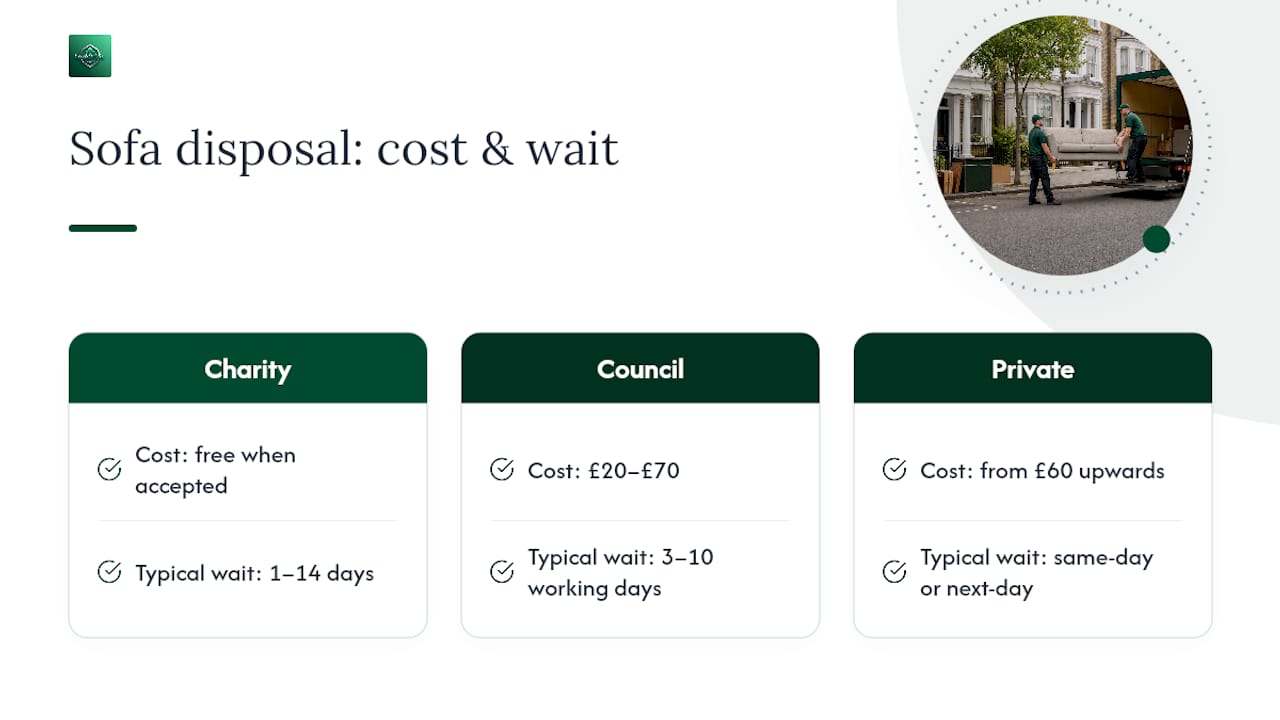
The biggest cost drivers across all three routes are access difficulty, the number of stairs, whether the sofa needs dismantling to fit through doorways, and whether it requires separate processing under POPs handling rules. Assisted collections, where a resident cannot move the item outside themselves, also tend to add a small premium to council bookings.
What London sofa removals actually look like on the ground
Narrow hallways and missing fire labels cause more delays than anything else we see. A licensed team that knows what to check on arrival saves you a second failed visit, and keeps the whole job on the right side of the law.
— Roman
Book licensed sofa removal with Lookdevisservices
Skip the borough waiting list and the awkward Marketplace back and forth. Using a licensed waste carrier service is often a faster route to legally cleared sofa removal: offering same-day and urgent slots with insured teams handling disposal properly.

We collect sofas and other bulky furniture as part of our wider licensed waste removal and rubbish clearance service, covering house clearances, garden clearances and assisted collections across Greater London. To get a free quote, have your postcode ready along with a couple of photos showing the sofa's condition and any access challenges, such as stairs or narrow doorways, so we can give you an accurate from-price rather than a rough guess. If you're clearing a garden at the same time, our garden waste removal service can be booked alongside it in one visit.
Call 07348 758581 or email lookdeviscompanylegal@gmail.com to book your sofa collection and get a free, no-obligation quote today.
Sources
- Gov
- Book a bulky waste collection - Hackney Council
- Book furniture collection - British Heart Foundation
FAQ
How do I dispose of a sofa for free in London?
Book a free collection through a charity such as British Heart Foundation or Sue Ryder, provided the sofa has an intact fire label and is in clean, saleable condition. Some councils also offer a free or reduced-cost bulky collection for residents receiving certain benefits, depending on eligibility.
How much does it cost to get rid of a sofa in London?
Charity collection is free when accepted, council bulky collections typically cost a moderate amount depending on your borough, and licensed private removal usually starts from around £60 depending on access and urgency.
Can you take a sofa to the tip in London?
Most London household waste recycling centres accept sofas, though some sites restrict certain items or require proof of local residency, so it's worth checking your borough's tip policy before loading up a car or van.
Does DFS offer sofa removal when delivering a new one?
Some retailers offer an old-sofa take-back service when delivering a replacement, but policies vary and often require proof of purchase or a separate paid removal charge, so check directly with the retailer before assuming it's included.
What happens if I dump a sofa illegally in London?
Fly-tipping is a criminal offence in the UK and councils can issue fines or prosecute residents found dumping furniture illegally, which is one reason a licensed carrier with a proper waste transfer note is worth the extra cost over an unlicensed "cash in hand" collector.
Recommended
- Avoid Fly Tipping: 5 Legal Mattress Disposal Routes in London
- Garden Waste Removal in Ealing (W5, W7, W13)
Prices, timescales and information provided in this article are for general guidance and may vary depending on the property, site conditions, materials and scope of work. Please contact LookDeVis Services for an individual assessment and quotation. Where regulatory, planning or legal requirements apply, appropriate professional advice should be obtained.