
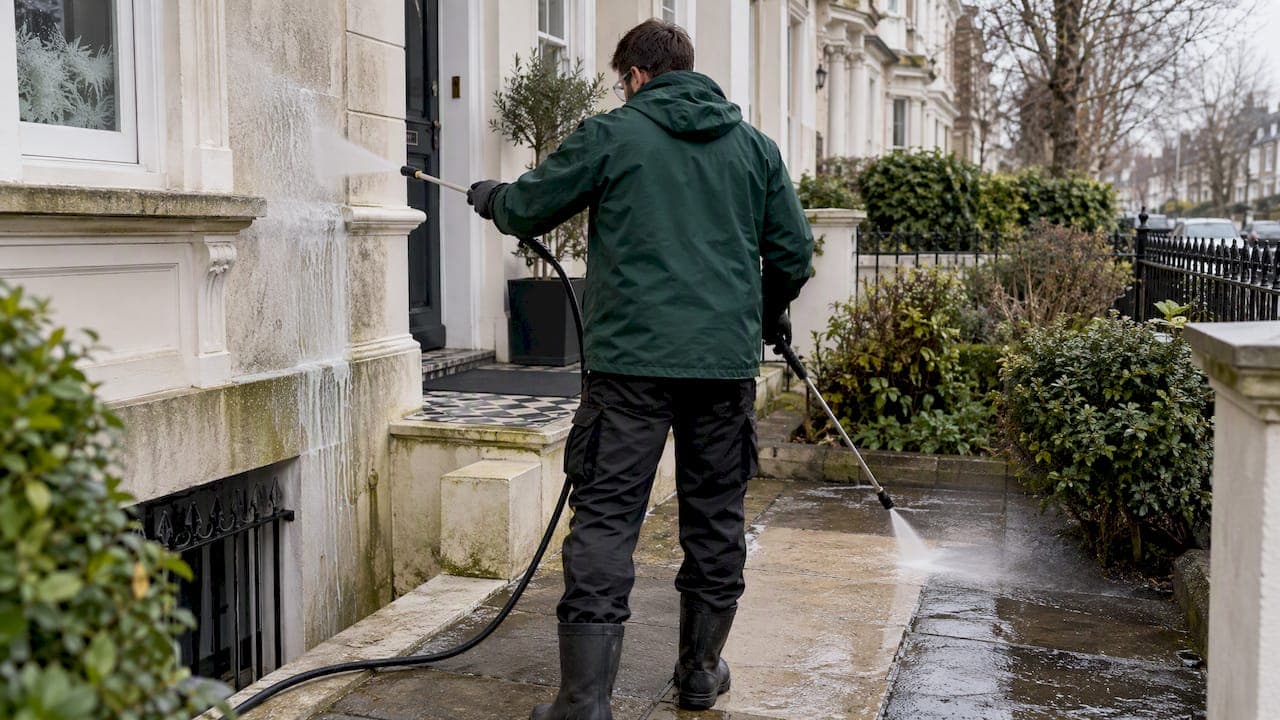
Soft washing suits delicate, porous or biologically affected surfaces such as roofs, render and painted timber, while pressure washing suits durable hard surfaces like concrete, block paving and stone that can tolerate mechanical force. The choice comes down to chemistry versus force: soft washing relies on low-pressure application and cleaning agents, pressure washing relies on water propelled at high force. Below, we compare both methods, the equipment involved and the safety and environmental duties that apply to each.
TL;DR:
- Soft washing requires chemicals and low pressure to effectively remove biological growth without damaging delicate surfaces, making it ideal for roofs and render.
- Pressure washing utilizes high-pressure water to clean hard, non-porous surfaces like concrete and stone, but risks damaging fragile or historic materials if misused.
- Both methods entail safety and environmental risks, including electrical hazards and pollution of watercourses, requiring proper containment, PPE, and licensing.
- Soft washing lasts longer on porous surfaces due to root-killing chemistry, while pressure washing often needs more frequent maintenance on hard surfaces.
- Proper site assessment and planning, including controlling runoff and protecting nearby plants, are essential for compliant and safe exterior cleaning.
Table of Contents
- Soft washing vs pressure washing: a side-by-side comparison
- Pressure washing explained: equipment, uses and hazards
- Soft washing explained: chemistry, application and limits
- Safety, regulation and environmental controls
- Which surfaces need which method
- Costs, frequency and realistic result expectations
- A practitioner's pre-job checklist for homeowners
- Our approach to choosing the right method
- How we can help with soft washing and pressure washing
- FAQ
- Sources
Soft washing vs pressure washing: a side-by-side comparison
Soft washing uses a cleaning solution applied at low pressure to kill algae, moss, lichen and mould at the root, while pressure washing uses high-pressure water alone to physically scour dirt, grime and staining from a surface. The gap between the two is considerable: soft-wash application for roofing typically runs under 100 PSI, whereas domestic and commercial pressure washers commonly operate between 1,500 and 3,000 PSI, which explains why one method preserves delicate coatings and the other can strip them.
- Roofs (tile, slate, asphalt shingle): soft washing protects granules and coatings; pressure washing risks stripping surfaces and voiding manufacturer warranties.
- Render and painted timber: soft washing removes organic growth without forcing water behind coatings; pressure washing can cause blistering or water ingress.
- Patios and driveways (concrete, block paving, stone): pressure washing handles ground-in dirt and oil staining that soft washing alone cannot shift.
- Decking: soft washing lifts algae without splintering the grain; pressure washing needs a wide fan nozzle and careful distance control to avoid gouging.
Quick decision rule: if the surface is porous, painted or affected by biological growth, soft washing is the safer starting point. If the surface is hard, non-porous and heavily soiled, pressure washing earns its place. High-pressure washers can use a wide range of water volumes per hour, depending on the equipment and nozzle depending on the equipment and nozzle. This is a figure worth factoring into any job that needs contained runoff.
Pressure washing explained: equipment, uses and hazards
Pressure washing forces water through a narrow nozzle to physically dislodge dirt, moss, grease and old coatings from a surface. Domestic machines typically sit at the lower end of the PSI range, while commercial units used for driveways, stonework and heavy soiling run higher, with nozzle choice (from a narrow, aggressive jet to a wide fan spread) determining how concentrated the force becomes on any one point.
Pressure washing suits concrete, block paving, metal and other heavily soiled, non-porous surfaces where mechanical force will not cause structural harm. The main hazards are surface damage from excessive pressure, injury from fluid injected into skin at close range, and electrical risks highlighted in HSE guidance PM29, which stresses safe installation, bonding and trained operation because misuse of steam and water pressure cleaners can cause serious injury.
A practical safety checklist for any pressure washing job:
- Wear appropriate PPE, including eye protection and suitable footwear.
- Maintain exclusion zones around the work area while the machine runs.
- Use fixed electrical installations and bonded equipment where the job demands it.
- Ensure operators are trained before working near fragile surfaces or at height.
- Follow HSE guidance OCE19, which warns that pressure washing produces hazardous mists and recommends COSHH assessments alongside safe housekeeping.
Soft washing explained: chemistry, application and limits
Soft washing applies a cleaning solution at low pressure, allowing the chemistry to break down algae, moss, lichen and mould rather than relying on mechanical force to blast it away. Because the water pressure stays low, the method suits roofs, render, painted surfaces and other finishes that would otherwise be damaged by a high-pressure jet.
Active chemistries vary by job and surface, and responsible application includes protecting nearby plants and landscaping before treatment begins, since run-off from any chemical wash needs managing regardless of method. Soft washing tends to leave results that last longer on porous and biologically affected surfaces, since killing growth at the root slows regrowth compared with surface scouring alone.
- Soft washing preserves roofing granules and coatings that high-pressure jets can strip away.
- Low pressure reduces the risk of forcing water behind render, cladding or painted timber.
- Plant and landscape protection measures should be part of every soft-wash visit.
- Oil, grease and deep-set grime on hard surfaces often still need mechanical action, meaning soft washing has clear limits on driveways and heavily stained concrete.
Safety, regulation and environmental controls
Both methods carry legal and environmental duties, and getting these wrong exposes homeowners and contractors to pollution risk and possible enforcement action. HSE guidance OCE19 sets out PPE requirements, COSHH assessments and housekeeping practices to limit exposure to the mists that pressure washing produces, while HSE PM29 covers the electrical risks specific to steam and water pressure cleaners.
On the environmental side, Gov is clear that wash-off must not enter surface-water drains, and that effluent should go to the foul sewer with permission or be handled through licensed disposal. NetRegs' Guidance for Pollution Prevention adds that high-pressure washers can use between 500 and 7,200 litres of water per hour, and that contaminated run-off containing detergents must never reach surface drains untreated.
Practical steps that keep a job compliant:
- Assess the site for nearby drains, watercourses and planting before work begins.
- Contain, filter or divert wash-off, using bunding, filter socks or a reclaim unit where the drainage demands it.
- Direct contaminated effluent to the foul sewer with permission or arrange licensed disposal.
- Protect plants and soft landscaping from chemical overspray throughout the job.
- Use a designated wash bay where the site or local rules require one.
Which surfaces need which method
Matching the method to the material avoids both wasted effort and avoidable damage. Roof tiles, slate and asphalt shingles generally respond best to soft washing, since the chemical action lifts growth without stripping protective granules. Painted timber and render favour the same approach, as high pressure risks forcing water behind the surface and causing blistering later.
Brick and natural stone sit in the middle: sound, modern brickwork can often tolerate moderate pressure washing, but older or more fragile masonry calls for caution. Historic England's guidance on controlling biological growth warns that aggressive high-pressure cleaning can cause irreversible damage to masonry and soft renders, and recommends site-specific assessment rather than a one-size-fits-all approach.
- Loose mortar, friable stone or recent repointing are red flags that call for a specialist assessment before any cleaning.
- Fresh paintwork should be left to cure fully before any wash treatment.
- Decking and patios generally take pressure washing well, provided the nozzle and distance are controlled carefully.
- Heritage or listed properties should always have a tailored plan rather than a standard clean.
Costs, frequency and realistic result expectations
Pricing for either method depends on access, surface area, the containment and disposal plan, chemical use and labour time. Jobs with awkward access, extensive drainage protection or large volumes of run-off to manage will generally cost more and take longer than a straightforward driveway clean.
- Soft washing tends to need less frequent repeat treatment on porous, biologically affected surfaces, since it addresses the root cause of regrowth.
- Pressure washing on hard surfaces often needs more regular maintenance visits to keep staining and grime under control.
- Water use and disposal requirements, including any need for a designated wash bay or foul sewer connection, directly affect both price and job duration.
A practitioner's pre-job checklist for homeowners
Before booking any exterior clean, walk the site and note the surface type, access arrangements, nearby drains or planting, any visible damage, and whether electrical supply or height access will be needed. These details shape both the method chosen and the containment plan required on the day.

When speaking to a contractor, ask what chemicals they intend to use, how they plan to contain and dispose of run-off, and whether they carry insurance and hold a waste carrier licence for anything removed from site.
Pro Tip: Ask to see the containment and disposal plan in writing before work starts, not after the first rinse hits the drain.
Our approach to choosing the right method
Our default position puts the material and the safety of the site first: we assess the surface before deciding between soft washing and pressure washing, rather than defaulting to the more aggressive option. Insured, trained teams and correct containment matter because the wrong call on a porous or heritage surface cannot be undone. You can read more or request a quote through our services page when you are ready to book an assessment.

How we can help with soft washing and pressure washing
We offer both soft washing and pressure washing, with trained teams, licensed waste handling and same-day availability for selected jobs where practicable. Before requesting a quote, it helps to have your surface type, approximate area and any access restrictions ready.

Get in touch for a free, no-obligation quote and we will recommend the method that fits your property, not the one that is easiest to schedule. Request your free quote with LookDeVis Services and tell us what you need done.
FAQ
What is soft wash pressure washing?
Soft washing is a low-pressure cleaning method that uses a chemical solution to kill algae, moss and mould rather than relying on mechanical force. It is often confused with standard pressure washing, but the two work on different principles and suit different surfaces.
Where should you not use a pressure washer?
High-pressure washing is generally unsuitable for fragile or porous surfaces such as roofing tiles, render, painted timber and older or friable masonry, where Historic England warns aggressive cleaning can cause irreversible damage. It should also be avoided near unprotected electrical fittings, given the risks set out in HSE guidance PM29.
Do you rinse the roof after soft washing?
Soft washing typically leaves the cleaning solution to continue working on remaining biological growth rather than requiring an immediate high-pressure rinse. A light rinse may be used depending on the product and surface, but this stays at low pressure to protect roofing granules and coatings.
What is the difference between power washing and pressure washing?
The terms are often used interchangeably, though power washing usually refers to a heated water version of pressure washing, while pressure washing uses unheated water at high force. Both differ from soft washing, which depends on chemical action at low pressure rather than heat or force.
Sources
- Electrical risks from steam/water pressure cleaners (HSE PM29)
- Gov
- Guidance for Pollution Prevention (GPP)
- Control of biological growth on masonry (Historic England)
- Pressure washers and the summer water scarcity issue in Britain
Prices, timescales and information provided in this article are for general guidance and may vary depending on the property, site conditions, materials and scope of work. Please contact LookDeVis Services for an individual assessment and quotation. Where regulatory, planning or legal requirements apply, appropriate professional advice should be obtained.