
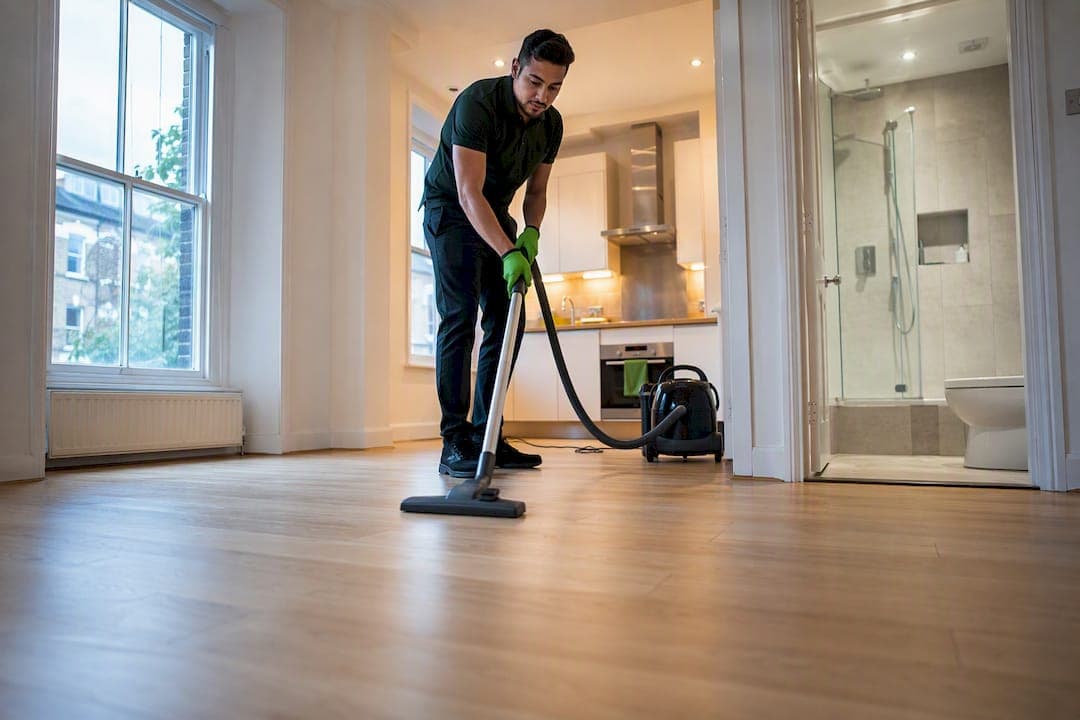
Budget between £170 and £600 for a professional end-of-tenancy clean in London, with most flats landing somewhere in the middle of that range depending on size and condition. Bathrooms, kitchens, and add-ons like carpets or oven cleaning are common factors that push a quote from the low end to higher prices. Before booking anything, get a written, itemised quote that names a re-clean guarantee, so you know exactly what you are paying for and what happens if the agent isn't satisfied.
TL;DR:
- End-of-tenancy cleaning in London costs between £170 and £600, with prices primarily influenced by property size, condition, and location within the city.
- Additional charges for ovens, carpets, and upholstery are usually separate, and surcharges may apply for parking or congestion zones, especially in central London.
- Fixed-price quotes, with clear itemisation and guarantees, reduce the risk of unexpected costs compared to hourly billing that can escalate with time or property condition.
- Proper preparation, such as decluttering, and upfront inquiry about surcharges help tenants avoid disputes and deposit deductions.
- Booking in advance and requiring written, detailed estimates protect tenants from inflated or vague quotes, emphasizing the importance of a re-clean guarantee and transparent pricing.
Table of Contents
- How much is tenancy cleaning cost in London by property size?
- Why do tenancy cleaning quotes vary so much?
- What add-ons and surcharges should you check for?
- How do you get an accurate tenancy cleaning quote?
- How Lookdevisservices prices and guarantees tenancy cleaning jobs
- Is a cheap tenancy clean ever worth the risk?
- Sources
- FAQ
How much is tenancy cleaning cost in London by property size?
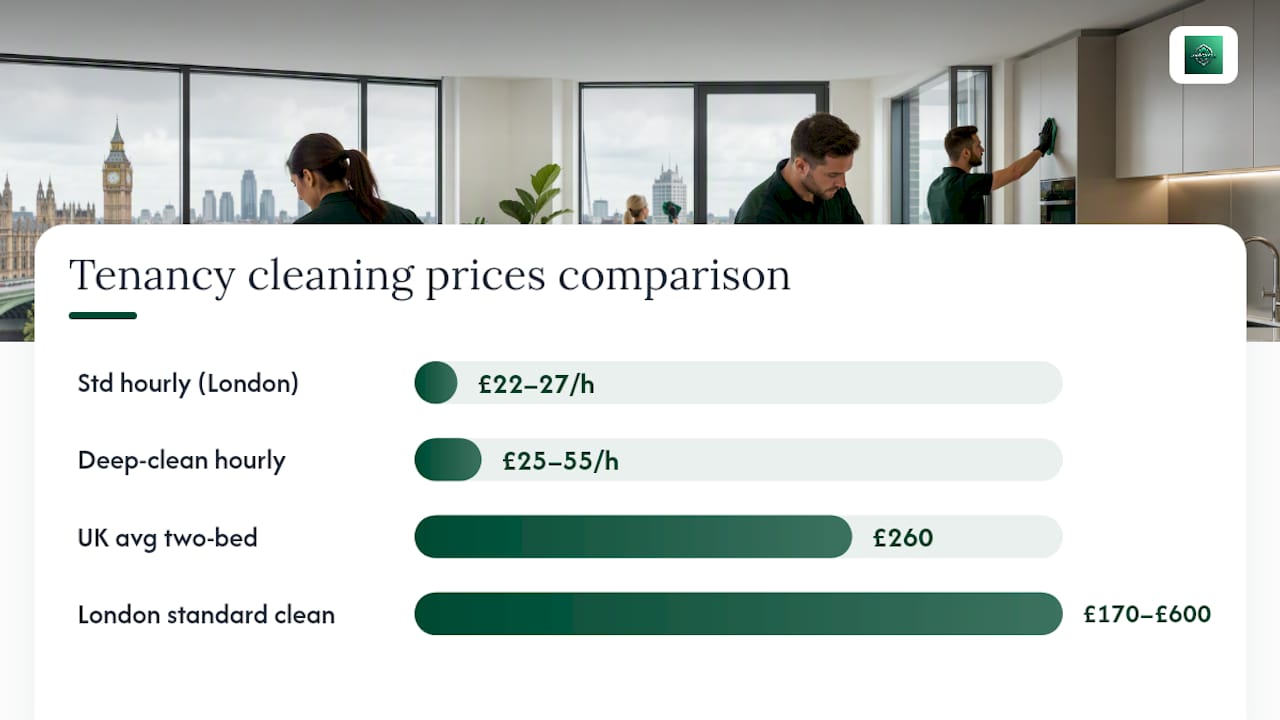
London prices sit noticeably above the rest of the country. A standard residential clean in the capital typically costs between £170 and £600, and that range runs roughly 15 to 30% higher than what tenants pay elsewhere in the UK. If you're comparing quotes against a friend's experience in Manchester or Leeds, don't expect the numbers to match.
The size of the property is the single biggest factor in the base price, closely followed by how many hours a team needs to complete the job properly.
These figures broadly line up with the average two-bed cost of around £260 that Checkatrade reports for the wider UK market, with London sitting at the upper end of that band. Hourly rates in London commonly fall between £22 and £27 for standard work, rising to £25–£55 an hour for full end-of-tenancy deep cleans, according to London-specific pricing data.
What a base quote usually includes
A standard quote generally covers kitchen surfaces, cupboard interiors and exteriors, all rooms' dusting and vacuuming, bathroom sanitising, window interiors, skirting boards, and light fittings. What it usually doesn't cover is anything requiring specialist equipment or extra time: carpets, upholstery, curtains, and heavily soiled ovens or extractor fans are typically quoted as separate line items rather than baked into the headline price.
Fixed price or hourly rate?
Hourly billing sounds fair until the job runs long because the previous tenants left the oven caked in grease. A fixed-price quote, agreed after the cleaner has seen photos or visited the property, shifts that risk away from you. Hourly billing works better for smaller, lighter jobs where you're confident the property is in reasonable shape. For a full move-out clean where you can't personally verify the starting condition, a fixed price with a clear scope of work is almost always the safer bet.
Why do tenancy cleaning quotes vary so much?
Two flats of identical size can generate wildly different quotes, and it almost never comes down to the company being greedy. It comes down to condition, layout, and access.
- General condition: built-up grease on hobs, limescale in showers, and neglected skirting boards all add real time to a job that a well-maintained flat wouldn't need.
- Number of bathrooms: each additional bathroom adds a fixed chunk of labour, not a small tweak.
- Kitchen appliances: ovens, extractor hoods, and fridge interiors are consistently the most time-consuming single items in a move-out clean.
- Access and parking: restricted parking, no lift, or a flat above the third floor all add friction that shows up in the final figure.
- Congestion zone location: properties located in central London may have small transport surcharges.
Bathrooms deserve special mention because they're routinely underestimated. Deep descaling, grout treatment, and disinfection can add roughly 45 to 60 minutes of labour per bathroom to a job. On a flat with two bathrooms, that's potentially an extra hour and a half of billable time before anyone has touched a bedroom or living room.
Access issues are often the most avoidable cost driver. Central London and restricted-parking postcodes frequently attract small fixed surcharges, generally between £5 and £20, which any reputable provider should show on the written quote rather than tack on after the van has left the road. If a quote arrives with no mention of parking at all, ask directly. It's usually not an oversight, it's a fee waiting to appear on the invoice.
What add-ons and surcharges should you check for?
The base price is only half the story. Most tenancy cleans generate at least one or two add-ons, and knowing the typical range for each helps you spot a quote that's either suspiciously cheap or quietly padded.
- Carpet cleaning: commonly £30 to £60 per room, quoted separately from the main clean because it needs different equipment and drying time.
- Upholstery cleaning: priced per item rather than per room, and rarely included in a standard quote.
- Oven cleaning: typically £40 to £80 as an add-on, reflecting how labour-intensive a genuinely deep oven clean is.
- Fridge and freezer interiors: usually a smaller fixed add-on, but worth confirming if the appliance is staying with the property.
- Urgent or same-day bookings: providers commonly apply a premium of roughly 10 to 20% for last-minute slots, since squeezing a job into an already-booked schedule costs the business flexibility elsewhere.
- VAT and materials: a properly itemised quote states whether the price is VAT-inclusive and whether cleaning products are supplied or charged separately.
Pro Tip: Ask for the quote broken down into base clean, named add-ons, parking or congestion charges, and VAT, all on one page. If a provider can't itemise it in writing before the job, that's a signal to keep comparing.
How do you get an accurate tenancy cleaning quote?
Getting burned by a vague quote is one of the most common complaints among London tenants, and it's almost entirely preventable. Work through this before you agree to anything.
- Request the scope in writing. Ask for hours estimated, team size, exactly what's included, and exactly what's excluded, before you confirm the booking.
- Confirm the guarantee. A re-clean or deposit-back guarantee, typically honoured within 48 to 72 hours if the letting agent flags an issue, is one of the clearest signs you're dealing with a serious provider.
- Ask about parking and congestion fees upfront. These should appear as named line items, not a surprise on the final invoice.
- Declutter and remove personal items yourself. Cleaners charge for cleaning, not for moving your belongings out of the way, so clearing surfaces and rooms in advance genuinely reduces the time a job takes.
- Leave the deep technical work to the professionals. Attempting a DIY oven strip-down or carpet shampoo the night before often makes things worse and can cost more to fix than if you'd left it alone.
- Book with a few days' notice where possible. Urgent same-day requests routinely carry a premium, and booking a midweek morning slot tends to secure better value than a Friday afternoon rush.
- Check the cancellation and refund terms before paying a deposit. A transparent provider states clearly how much notice you need to give and what happens to any deposit if plans change.
One point worth flagging: if you skip organising your own clean and the landlord arranges one after you've left, the cost is often deducted from your deposit at a rate higher than a market quote. Arranging your own reputable cleaner before you hand back the keys is almost always the cheaper, safer route. It's also worth knowing that under the Tenant Fees Act 2019, a landlord cannot lawfully write a compulsory professional cleaning fee into your tenancy agreement, though you're still required to hand the property back in the condition you found it, fair wear and tear aside.
Our own guide to end-of-tenancy pricing in London covers these ranges in more detail if you want to cross-check a quote against current market rates.
How Lookdevisservices prices and guarantees tenancy cleaning jobs
Lookdevisservices operates as a fully insured property services provider across Greater London, and end-of-tenancy cleaning sits alongside our wider work in gardening, waste removal, and property refurbishment. That breadth matters more than it might seem: if a move-out job also needs garden clearance or bulky item disposal, we can coordinate it through one team rather than leaving you to juggle separate bookings.
Our approach to pricing follows the same principles set out above, because they're the ones that protect tenants from disputes.
- Every quote is provided in writing before work begins, itemising the base clean, any add-ons like ovens or carpets, and parking or congestion charges where they apply.
- We operate as a licensed waste carrier, which matters if your move-out also involves clearing furniture or garden waste alongside the clean.
- Our teams work with homeowners, landlords, letting agents, and property managers, so we're used to the standards agencies check against at inventory checkout.
- Same-day and urgent appointments may be available depending on location and team capacity, particularly useful when a tenancy end date shifts unexpectedly.
If you're weighing up whether the cost of a professional clean is worth it against your deposit, get in touch and we'll talk through the scope of your property honestly, without inflating the estimate to pad the invoice. You can view examples of completed work in our project gallery, and if the job also involves clearing items from the property, our licensed waste removal service can run alongside the clean.
Is a cheap tenancy clean ever worth the risk?
Here's the trade-off nobody states plainly enough: a cheap quote isn't a bargain if it costs you your deposit. I've seen the maths work out badly for tenants more often than the maths working out badly for cleaning companies. A £150 job that misses the oven or skips the bathroom grout can trigger a landlord deduction worth several times that saving.
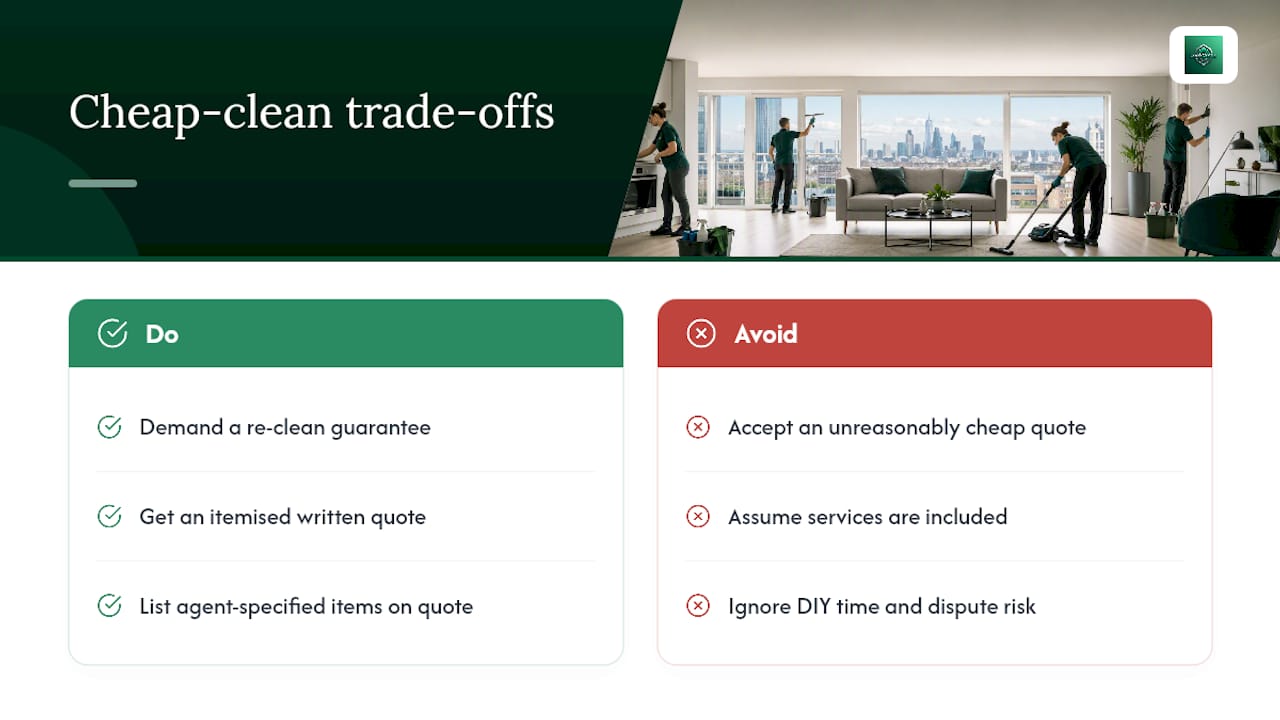
The safest approach isn't necessarily the most expensive one. It's the one with the clearest paperwork. Three rules of thumb hold up consistently: insist on a re-clean guarantee before you pay anything, get the quote itemised so parking and add-ons can't appear as surprises, and if your letting agent has specified oven or carpet cleaning in the checkout inventory, make sure those exact items are named on your quote, not assumed to be included.
Time is the other variable people underweight. Doing it yourself might save £200, but a weekend lost to scrubbing skirting boards and disputing a deposit deduction afterwards rarely feels like a saving in hindsight. Professional cleaning isn't about avoiding effort. It's about transferring risk to someone who does this daily and stands behind the result.
— Roman
Sources
- End of tenancy cleaning costs | MyJobQuote
- End of tenancy cleaning prices | Checkatrade
- London cleaning price index 2026 | St Anne's Housekeeping
FAQ
How much can a landlord charge for cleaning in the UK?
Landlords cannot lawfully write a compulsory professional cleaning fee into a tenancy agreement under the Tenant Fees Act 2019. Tenants must still return the property to its original condition, excluding fair wear and tear, and any deduction from a deposit must reflect the actual, reasonable cost of restoring that condition.
What is the average cost of end-of-tenancy cleaning in London?
Most London properties fall between £170 and £600, with a typical two-bed flat costing around £180 to £340 depending on condition and add-ons. That's roughly 15 to 30% higher than average prices elsewhere in the UK.
Is £20 an hour a lot for a cleaner?
For general domestic cleaning, £20 an hour sits near the lower end of what's typical in London, where standard rates commonly run £22 to £27 an hour. For specialist end-of-tenancy work, hourly rates are usually higher, often £25 to £55 an hour, since the job demands more intensive labour than a routine tidy-up.
What will a cleaner do in three hours?
In three hours, a professional cleaner can typically complete a full clean of a studio or small one-bed flat, covering kitchen surfaces, bathroom sanitising, dusting, and vacuuming throughout. For a property with two bathrooms or a neglected oven, three hours is unlikely to be enough, since each bathroom alone can add up to an hour of extra work.