
Removing a tree in London typically costs a few hundred to over a thousand pounds per tree, with a mid-sized garden tree averaging around £1,000 once labour, access and disposal are factored in, according to Costwise. That figure sits above the UK average of roughly £800, mainly because of London's higher labour rates, congested access and parking restrictions.
Before you book anyone, take three actions:
- Check whether the tree is protected by a Tree Preservation Order (TPO) or sits in a conservation area, since both affect what your Local Planning Authority (LPA) will allow.
- Get at least three written quotes so you can compare scope, not just the bottom-line figure.
- Ask every contractor, including firms like LookDeVis Services, to confirm their public liability insurance and licensed waste-carrier status before work starts.
Key Takeaways
Tree removal in London costs more than the UK average mainly because of higher labour rates, restricted access and permit requirements, so getting a written, itemised quote matters more than chasing the lowest headline price.
| Point | Details |
|---|---|
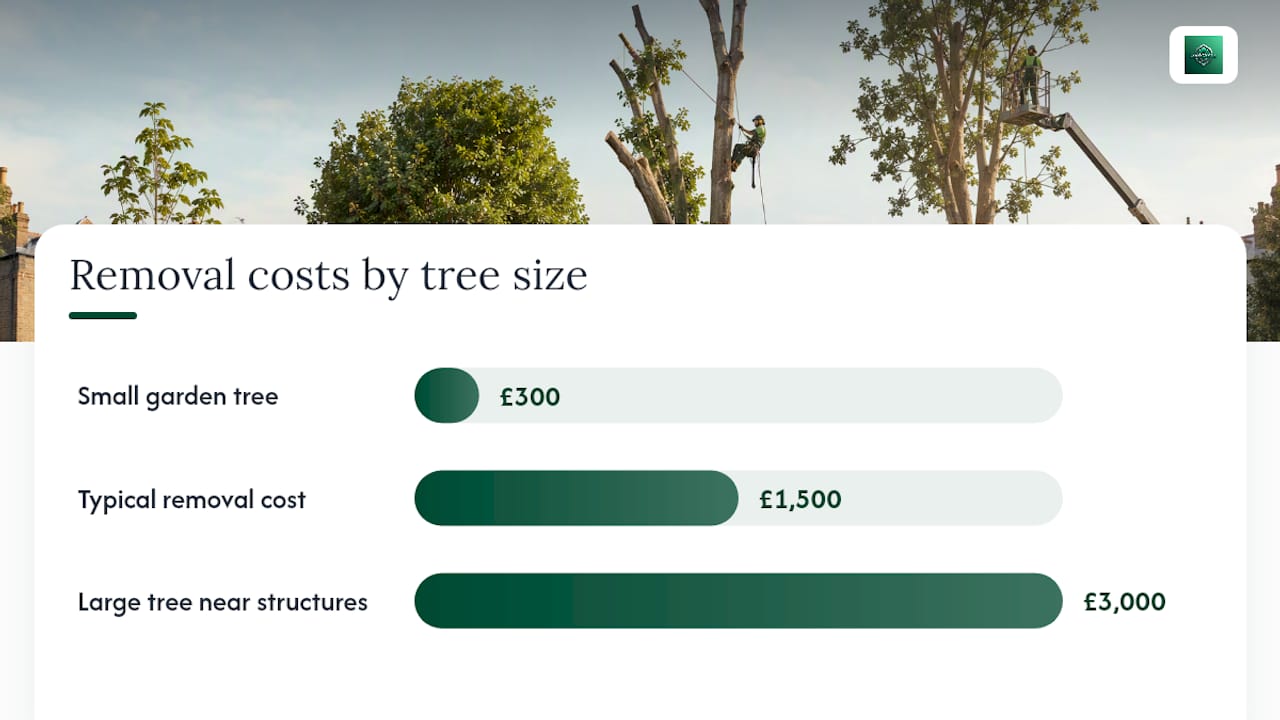
| Expect £300 to £1,500 per tree | Small gardens sit near the bottom; large trees near structures or wires push toward £3,000. |
| Check protection status first | TPOs and conservation-area rules can require six weeks' notice and formal council applications. |
| Stump grinding costs extra | Budget several hundred pounds separately, as it's almost never included in a removal quote. |
| Compare written quotes, not verbal estimates | Insist on scope, exclusions, insurance proof and waste-carrier licence details in writing. |
| LookDeVis Services provides fixed, insured quotes | Site assessments, licensed waste disposal and clear timescales are included as standard across London. |
This article is general information, not a substitute for advice from a qualified lawyer. Consult a qualified legal professional about your own circumstances before acting on anything here.
Table of Contents
- Tree removal cost London: what the headline figures actually mean
- Tree removal cost by size and service in London
- What factors push tree surgeon prices up or down in London?
- Do you need permission to remove a tree in London?
- How much do stump grinding and other extras add to the bill?
- What should a proper tree removal quote include?
- How LookDeVis Services estimates tree removal costs
- A local perspective from LookDeVis Services
- Get a straightforward tree removal quote from LookDeVis Services
- Sources
- FAQ
Tree removal cost London: what the headline figures actually mean
The cost range hides a lot of variation, and understanding why matters more than memorising the number. London prices run consistently higher than the rest of the country, largely because tree surgeons here spend more time on parking, permits and traffic management before they even pick up a chainsaw. HowMuchShouldItCost's London-specific data puts the capital's premium at roughly 24% above national average labour rates, and separate analysis suggests the same job can cost substantially more in London than in a comparable regional town.
That premium isn't padding. A team working in Zone 1 or 2 often loses an hour or more each day to loading restrictions, congestion charging, or simply finding somewhere legal to park a chipper van. Add in London's higher wage floor for skilled tradespeople and you get a genuine cost difference, not an inflated one.
Three example scenarios illustrate how this plays out in practice:
- Small garden tree (under 5 metres, easy access): A young ornamental tree in a rear garden with clear side access might cost £250 to £450. A two-person crew can usually complete this in half a day, including basic haulage.
- Medium suburban tree (5 to 12 metres, moderate access): A mature apple or birch in a typical semi-detached garden, requiring some dismantling and a narrow-access route to the street, tends to fall between £600 and £1,200. This is the most common job type across outer London boroughs.
- Large street or complex removal (over 12 metres, tight access): A large oak or sycamore close to a house, overhead cables, or a shared boundary wall can push costs to £1,500 to £3,000 or more, especially where rigging and staged dismantling are unavoidable.
The gap between the smallest and largest scenario isn't really about the tree's species. It's about how much time and equipment the access and surroundings demand.
Pro Tip: If you have more than one tree needing attention, ask your contractor to quote for the whole job in one visit rather than booking separate call-outs. Combining pruning, a small removal and stump grinding into a single site visit often reduces the total because the team only sets up access and traffic control once.
Scheduling also matters. Late autumn and winter, once deciduous trees have shed their leaves, tend to be quieter for tree surgeons than spring and summer, when storm damage and overgrown gardens create a backlog. Booking off-peak can sometimes shave a modest amount off labour costs simply because crews have more availability to negotiate on timing.
Tree removal cost by size and service in London
Pricing changes significantly depending on both the size of the tree and the type of work involved. Felling a whole tree, dismantling it piece by piece near a building, pruning back a crown, and grinding out a stump are four distinct jobs with different labour, equipment and time requirements, even on the same tree.
Size bands used across most London quotes break down roughly as follows:
- Small: under 5 metres in height, typically a young or ornamental tree with a trunk diameter under 30cm.
- Medium: 5 to 12 metres, covering most mature garden and suburban trees.
- Large: over 12 metres, including mature oaks, sycamores and street trees, often requiring specialist rigging.
| Service | Small (low/mid/high) | Medium (low/mid/high) | Large (low/mid/high) |
|---|---|---|---|
| Felling / full removal | £250 / — / — | £600 / — / £1,200 | £1,200 / — / £3,000+ |
| Dismantling near structures | — / — / — | £800 / — / — | — / — / — |
| Crown reduction / pruning | — / £250 / — | £300 / £450 / — | — / — / — |
| Stump grinding | — / — / — | — / — / — | £300 / £450 / — |
These bands draw on regional figures from HowMuchShouldItCost's London data and Costwise's UK calculator, and they assume reasonably straightforward access. Complex jobs near buildings or overhead cables sit at the top of each range, or above it.
A standard quote should include:
- Labour for the full crew and job duration
- Use of a chipper for branch and small-limb waste
- Haulage of arisings away from site
- Basic disposal of the resulting green waste
What it usually won't include unless specifically agreed:
- Traffic management or road closures for street-facing work
- Crane hire for large or structurally awkward removals
- TPO or conservation-area application fees
- Stump grinding, which is almost always priced as a separate line item
Always ask your contractor to confirm exactly which of these apply before you sign anything, because the gap between "removal" and "removal plus everything needed to actually complete it safely" is where quotes tend to diverge.
What factors push tree surgeon prices up or down in London?
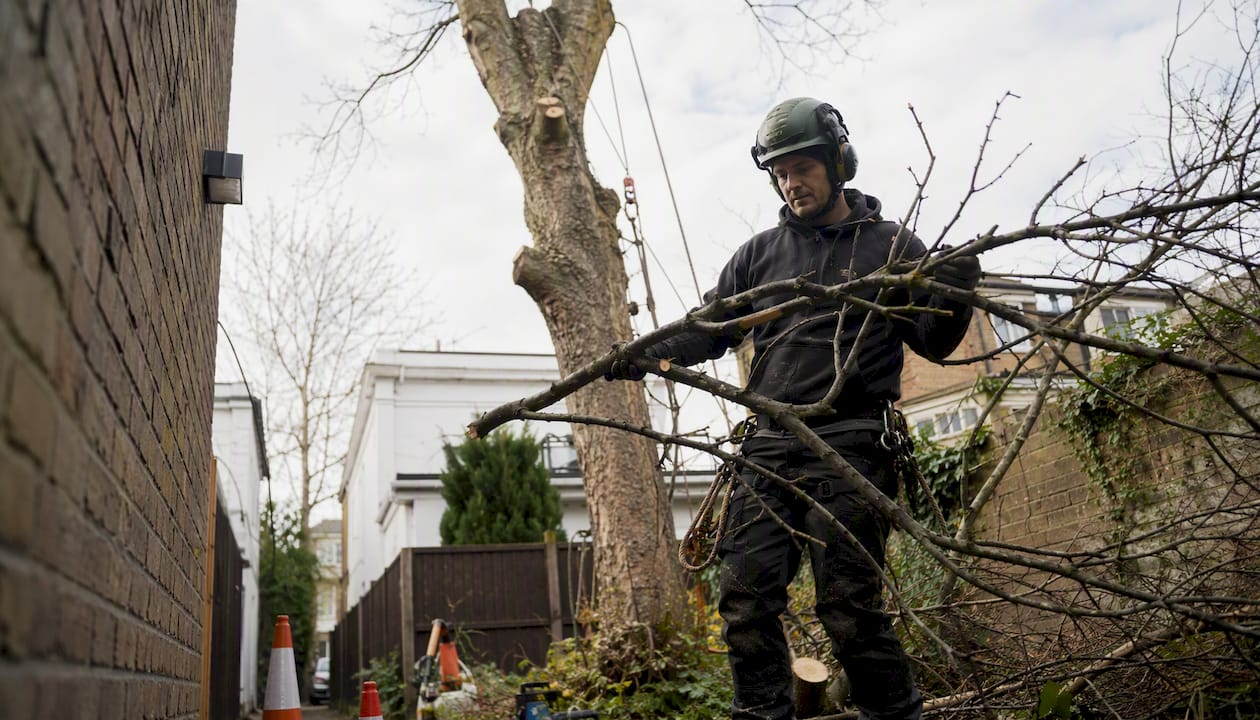
Access is usually the single biggest swing factor. A tree that a two-person crew can reach in ten minutes from a driveway costs far less to remove than an identical tree accessible only through a narrow side passage or over a neighbour's fence. Every extra hour spent manoeuvring equipment or carrying branches by hand adds directly to the labour bill.
Species and condition matter too. Dense hardwoods like oak take longer to cut and dispose of than softer species such as poplar or willow, simply due to the sheer weight of timber. A dead, diseased or structurally compromised tree can also demand more careful, staged dismantling for safety.
Proximity to structures, fences, greenhouses or overhead power lines changes the entire approach. Forestry Commission guidance on safe felling practice makes clear that specialist plant, such as cranes, becomes necessary once a straightforward directional fell isn't a safe option. Rigging teams and staged dismantling can multiply baseline costs by two to four times compared with an open-field fell.
Other factors worth flagging when comparing quotes:
- Waste disposal distance to the nearest licensed tip or recycling site
- Team size and equipment needed for the specific job
- Working at height requirements, which affect insurance and labour rates
- Traffic, parking or permit needs for street-adjacent trees
Pro Tip: If your garden has a tight access route, ask whether temporary protection over a driveway or lawn, or a short arrangement with a neighbour for wider access, could reduce the crew's setup time. Contractors sometimes pass on real savings when they don't need to hire additional rigging or engineer support just to get equipment on site.
Use this quick checklist when comparing two or more quotes for the same tree: access difficulty, species, proximity to structures, disposal distance, crew size, and whether working at height is involved. If one quote is notably cheaper, one of these factors is usually the reason.
Do you need permission to remove a tree in London?
Many London trees are protected, and removing or heavily pruning one without checking first is a criminal offence, not just a bureaucratic inconvenience. Two separate protections apply across the capital: Tree Preservation Orders (TPOs), which protect individual trees or groups regardless of location, and conservation-area rules, which apply to any tree over a certain size within a designated conservation area even without a specific TPO.
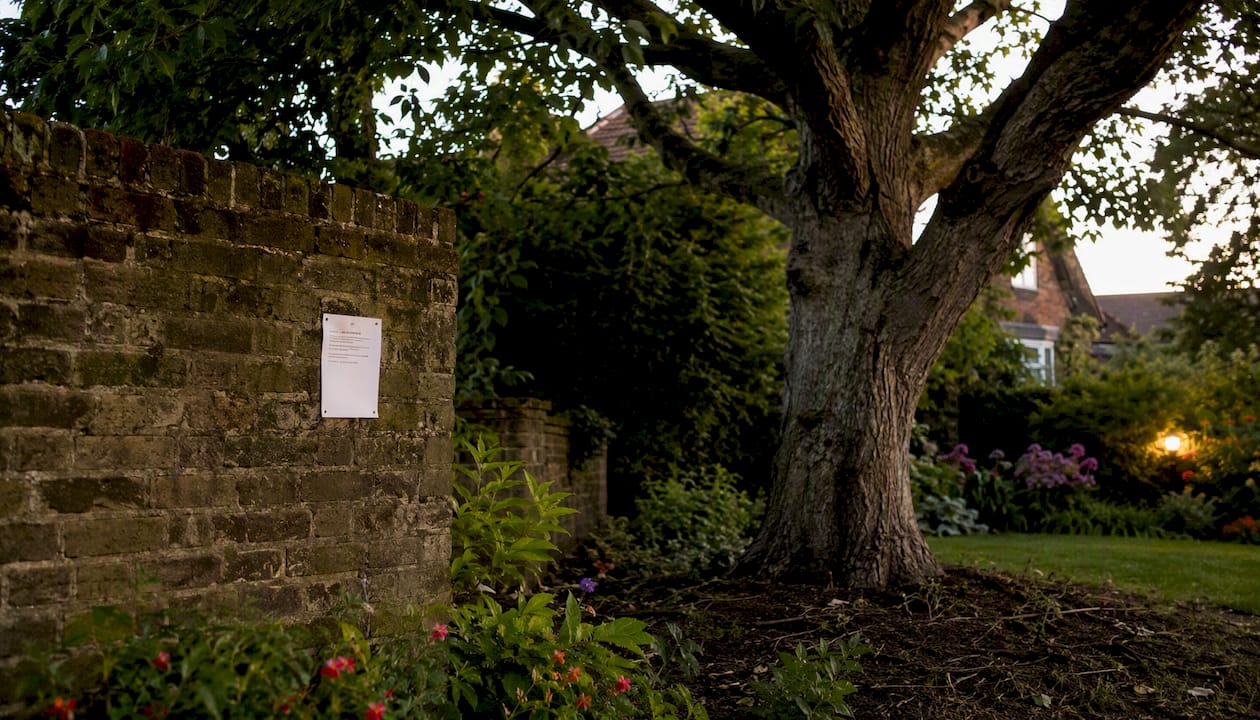
Gov sets out the formal application route for protected trees, and the Planning Portal explains when you must notify your council before starting work. If your tree sits in a conservation area, Westminster City Council's guidance confirms you must give six weeks' notice before proceeding, and unauthorised work on a TPO tree can result in significant fines through magistrates' court.
Here's the practical sequence to follow:
- Check protection status with your borough council's tree officer or planning portal, since TPOs and conservation-area boundaries aren't always obvious from the street.
- Submit the correct notice. A TPO tree needs a formal application; a conservation-area tree needs a Section 211 notice, sometimes called a TCA notice.
- Prepare supporting documents, typically a location plan, clear photographs and a written specification of the proposed work, as outlined in guidance from councils including Waltham Forest.
- Wait for the council's response. TPO applications commonly take around eight weeks; conservation-area notices run on the six-week window unless the council objects sooner.
Emergency exceptions exist for genuinely dangerous trees, such as storm-damaged limbs threatening a building, and City of London guidance covers how these urgent cases are handled. Even then, keep photographic evidence and notify the council as soon as reasonably possible, because retrospective justification is far harder than getting it right first.
How much do stump grinding and other extras add to the bill?
Stump grinding is almost never included in a removal price, and it's the extra most homeowners forget to budget for. Typical London costs can be several hundred pounds depending on stump diameter and root spread, a range consistent with figures reported by the City of London.
Other add-ons that regularly appear on invoices:
- Root removal or major excavation, needed when roots are damaging paving, drains or foundations
- Arboricultural reports, required for subsidence claims or contested TPO applications, typically adding £250 to £1,000
- Traffic management, for street-facing trees needing cones or a partial road closure
- Crane hire, for large trees in confined spaces
- VAT and licensed waste-carrier disposal charges, which some smaller outfits quote separately
Pro Tip: If you're planning to replant or re-turf the area afterwards, ask your contractor to grind the stump and prepare the ground in the same visit. It avoids paying for a second site visit purely to remove roots you'd have needed cleared anyway.
What should a proper tree removal quote include?
A written quote is your main protection against disputes once work begins, so it's worth being specific about what you expect to see on paper.
Every reliable quotation should state:
- The full scope of work, tree by tree if more than one is involved
- Clear exclusions, such as stump grinding or permit fees if not included
- Team size and expected time on site
- Equipment to be used, including whether a chipper or crane is required
- Waste disposal method and confirmation of a licensed waste-carrier registration
- VAT treatment, clearly stated as included or added
- Timescale, both for starting the job and completing it
- Payment terms, including any deposit requirements
- Proof of public liability insurance, ideally with a coverage figure appropriate to the job
When you're on the phone with a contractor, ask directly:
- "Do you carry public liability insurance for a job of this value?"
- "Will you handle the TPO or conservation-area application if one is needed?"
- "Can you provide your waste-carrier licence number in writing?"
Watch for red flags: a contractor who won't provide a written quote, asks for a large cash deposit upfront, or can't produce insurance documents on request. If your removal relates to a subsidence claim or an insurance dispute, ask specifically whether a formal arboricultural survey is needed, since insurers often require independent evidence before accepting liability.
How LookDeVis Services estimates tree removal costs
Producing an accurate estimate means looking beyond the tree itself. LookDeVis Services builds every quote around a consistent set of inputs:
- Tree height and trunk diameter, which determine crew time and disposal volume
- Access rating, covering how easily equipment and vehicles can reach the site
- Team hours required for felling, dismantling or crown work
- Equipment needs, including whether a chipper, rigging kit or specialist plant is necessary
- Disposal distance to a licensed recycling or waste facility
- Council permissions, factored into the timeline where a TPO or conservation-area notice applies
- A contingency allowance for unexpected access or ground conditions
Every quote is built on insured teams, licensed waste-carrier handling and local London labour rates, so the figure you receive reflects the actual job rather than a generic national average.
A local perspective from LookDeVis Services
Across Greater London, we see the same pattern again and again: the jobs that go smoothly are the ones where access and permissions were checked before the crew arrived, not after. Our teams work insured, use licensed waste disposal throughout, and are happy to talk through a job over the phone before quoting. If you'd like an on-site estimate, call 07348 758581 or email lookdeviscompanylegal@gmail.com.
Get a straightforward tree removal quote from LookDeVis Services
LookDeVis Services gives London property owners something most quotes skip: a fixed, written price with no vague "subject to survey" clauses tacked on after the fact. Where many contractors quote a bare labour figure and leave permissions, waste disposal and insurance as an afterthought, our tree surgery team in London builds all of it into one transparent scope from the start.

A typical LookDeVis quote for tree removal includes:
- A site assessment covering access, tree condition and any protection status
- Written confirmation of public liability insurance and licensed waste-carrier registration
- Waste disposal handled through compliant channels, with charges itemised rather than bundled
- A clear timescale from acceptance of quote to completion
Whether you're a homeowner dealing with a single overgrown garden tree or a letting agent managing several properties across a portfolio, the process stays the same: an honest assessment, a written quote, and no surprises on the invoice. Call 07348 758581 or email lookdeviscompanylegal@gmail.com to arrange an on-site estimate, or visit our tree surgery services page to see the full scope of what we cover.
Sources
- Gov
- TREES PROTECTED BY TREE PRESERVATION ORDERS AND TREES IN CONSERVATION AREAS (Westminster)
- Tree removal cost calculator UK 2026 | Costwise
- Tree Surgery Cost in London: £185–£685 (2026)
FAQ
How much does it cost to remove a tree in London?
Most London tree removals cost between £300 and £1,500 per tree, with a typical mid-sized garden tree averaging around £1,000, according to Costwise. Larger trees near structures or overhead cables can exceed £3,000 once rigging and staged dismantling are required.
What is the cheapest time of year for tree removal?
Late autumn and winter, once deciduous trees have shed their leaves, tend to be quieter for tree surgeons than the spring and summer storm-damage season. Booking off-peak can sometimes secure better availability and slightly lower labour costs, though prices vary by contractor.
What size trees can be cut down without permission in the UK?
There's no blanket size exemption; the deciding factor is whether the tree is protected by a TPO or sits in a conservation area, not its height. Always check with your council before assuming a small tree is exempt, since even modest trees in conservation areas can require six weeks' formal notice under Planning Portal guidance.
How much do tree surgeons charge per day in the UK?
Day rates vary with crew size, equipment and location, and London rates typically run around 24% above the national average according to HowMuchShouldItCost. Rather than asking for a flat day rate, request a job-specific written quote, since most London tree work is priced per project rather than per day.
What should I look for in a tree removal quote?
A reliable quote should state the full scope of work, exclusions, team size, waste disposal method, VAT treatment, timescale and proof of public liability insurance and a licensed waste-carrier registration. LookDeVis Services includes all of these as standard in every written quotation across Greater London.