
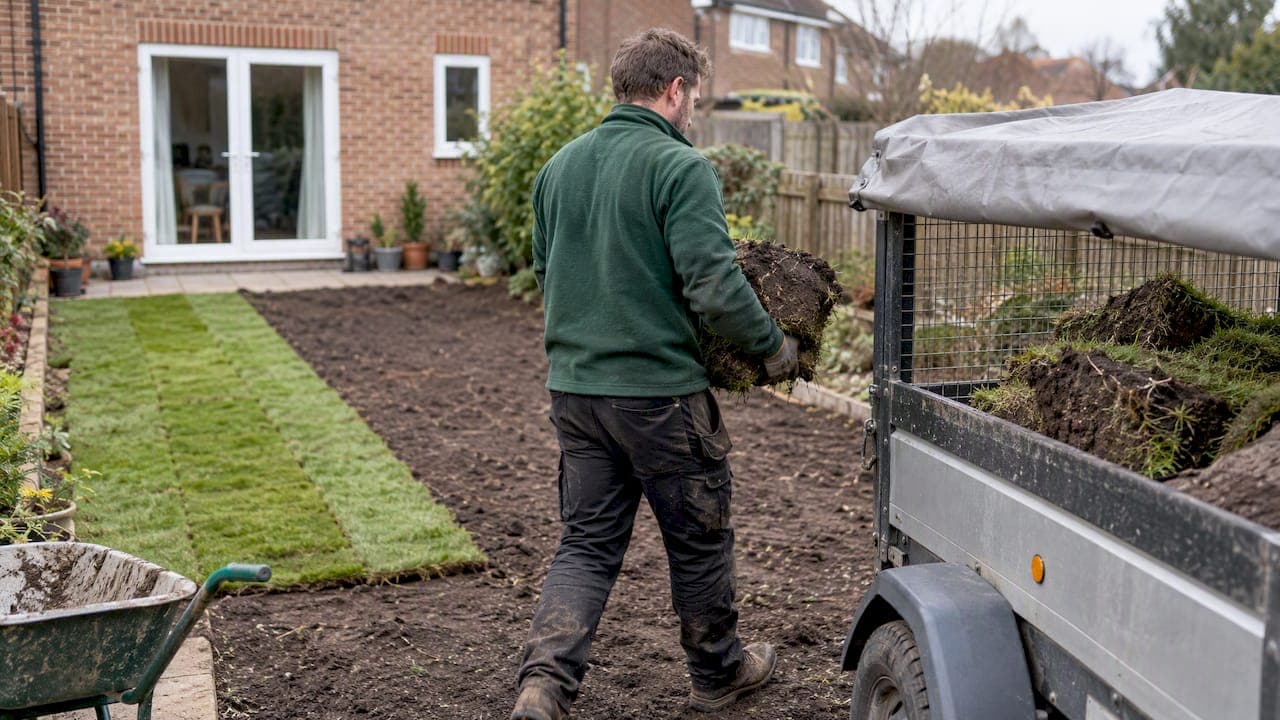
The practical move is to contact a trusted local contractor such as LookDeVis Services for a written quote and site assessment before you book anything. Turfing works best in autumn or early spring, and most gardens need some site preparation first. Below we explain the costs, the process and exactly what to ask before you hire.
TL;DR:
- Have compacted soil loosened to about 20cm, and allow four to six weeks for the ground to settle after major earthworks before laying turf.
- Schedule turfing for autumn or early spring, avoid frozen or waterlogged ground, and have delivered rolls laid within 24 hours where possible.
- Collect at least three written quotes and compare preparation, materials, labor, waste removal, timelines, and payment terms line by line, not only by total price.
- If clearance or disposal is included, verify the contractor’s waste carrier registration; also check public insurance and recent local work before hiring.
- After installation, water regularly during dry summer spells, wait about three weeks before mowing, and keep watering while the roots establish.
Table of Contents
- What turfing services include: natural turf, artificial turf and bundled works
- What to expect on site: the contractor's step-by-step method
- How quotes normally look, indicative price framing and realistic timelines
- Checklist for requesting quotes and what to check before you hire
- How we deliver turfing services in Greater London
- Comparing turfing for residential and commercial properties in London
- Request a written turfing quote from LookDeVis Services
- A note from Roman at LookDeVis Services
- FAQ
- Sources
What turfing services include: natural turf, artificial turf and bundled works
Choosing between natural and artificial turf comes down to how you use the garden, how much upkeep you want, and the look you are after. Natural turf suits families who enjoy a traditional lawn and do not mind watering, feeding and mowing through the growing season. Artificial grass suits shaded gardens, heavy‑use areas, or households who want a consistent green surface without ongoing maintenance.
A written quote rarely covers turf alone. Most jobs bundle in several related tasks that change the final price and timeline, including:
- Garden clearance and removal of existing lawn or weeds
- Topsoil supply and levelling
- Edging against paths, beds or fencing
- Drainage work where the ground holds water
- Compaction and sub‑base preparation, particularly for artificial grass
- Waste removal and disposal of old turf, soil or rubble
We can coordinate these stages as one project rather than several separate bookings, which keeps scheduling simple and avoids gaps between trades. For artificial grass specifically, build up and drainage deserve particular attention, something we cover in more detail in our piece on artificial grass construction.
What to expect on site: the contractor's step-by-step method
A proper turfing job follows a clear sequence, and a good quote should itemise most of these stages rather than lump them into one line.
- Clear the area of existing grass, weeds and debris, including excavation where levels need to change.
- Loosen or rotovate compacted soil to around 20cm deep, following RHS guidance on laying turf, and rake it level.
- Allow the ground to settle for four to six weeks where major earthworks have taken place, before laying turf.
- Add and firm topsoil to the right depth, with proper compaction for natural turf or a correctly built sub-base for artificial grass.
- Fit edging and address drainage where water tends to collect.
- Lay turf within 24 hours of delivery where possible, and avoid working on frozen or waterlogged ground.
Settling time matters more than most people expect. Skip it and the lawn can sink unevenly once it beds in.
Pro Tip: When your turf arrives, check that every roll is a consistent thickness and width before it gets laid, so you don't end up with visible gaps or ridges later.
How quotes normally look, indicative price framing and realistic timelines
A written quote for turfing should separate out the main cost drivers rather than giving one round figure. Typical lines include:
- Turf cost, usually priced per square metre
- Labour for preparation and laying
- Topsoil or other additional materials
- Waste removal and disposal of old lawn or soil
Many companies advertise prices as "from" a certain figure per square metre, which reflects a basic job on easy, level ground. Your own written quote will differ once soil condition, access and waste volumes are factored in, so treat advertised ranges as a starting point for comparison rather than a fixed cost. Our guide on typical landscaping cost overruns in London explains why building in a contingency is sensible.
For a typical domestic garden, clearance and laying usually takes a day or two once the site is ready, though settling time adds weeks where major groundwork is involved. Autumn and early spring are the busiest booking periods, so it pays to arrange your slot a few weeks ahead.
Once the turf is down, aftercare follows a simple rhythm: water regularly during dry summer spells, or fortnightly in other dry periods, and hold off mowing for about three weeks while roots establish, according to RHS advice on laying turf.
Compacted soil should be loosened to around 20cm deep before turfing, a step that directly affects how evenly the new lawn beds in and drains.
Checklist for requesting quotes and what to check before you hire
Comparing quotes properly means asking the same questions of every contractor, not just comparing the final figure.
- Ask for a written quotation covering scope of work, materials, timeline and payment terms.
- Confirm who removes the waste and ask for the contractor's waste carrier registration, checking the public register of waste carriers where construction or large volumes of garden waste are involved.
- Ask for proof of public insurance and examples of recent turfing work in your area.
- Avoid paying a large deposit upfront where possible, and clarify who owns delivered materials until the job is paid for.
- If you arranged the work remotely, check your cooling-off rights: Citizens Advice guidance explains that a cooling-off period usually applies, though you may be charged for work already carried out if you ask it to start within that time.
- Collect at least three written quotes before deciding, comparing scope line by line rather than just the total price.
Itemised quotes make disputes far less likely later, since everyone has agreed what "turfing" actually includes before work starts.
How we deliver turfing services in Greater London
We provide natural turf installation as part of a wider landscaping service, coordinating clearance, topsoil preparation, edging and waste removal within one booking. Our teams follow property services best practices, and waste produced on site is handled through registered waste carrier arrangements.
Same-day and urgent availability may be possible for selected locations and services, depending on team schedules and access. You can see examples of local coverage and request a quote through our location pages, including turfing in Harrow, turfing in Stanmore, and turfing in Pinner.

Comparing turfing for residential and commercial properties in London
Residential turfing jobs are usually smaller and more personal in scope: a back garden, a front lawn, or a rental property being prepared between tenants. Decisions often come down to appearance and low maintenance, particularly for landlords who want a lawn that survives neglect between visits.
Commercial turfing tends to involve larger areas, tighter access windows, and a stronger focus on durability under footfall, such as office grounds, communal areas in managed developments, or grounds around commercial premises. Scheduling often needs to work around business hours or tenant access, and waste volumes from clearance tend to be higher.

In both cases, the fundamentals stay the same: proper soil preparation, correct topsoil depth, and realistic aftercare. What changes is the scale of the job and how it fits into a wider maintenance arrangement. Property managers overseeing several sites often benefit from combining turfing with scheduled grounds maintenance, so the lawn stays in good condition long after installation rather than being a one-off job that gets neglected.
Request a written turfing quote from LookDeVis Services

If your garden needs a new lawn, we can assess the site and provide a written quote covering preparation, turf and waste removal as one job. Turfing can also be combined with garden clearance or waste removal in a single booking, which simplifies scheduling. Autumn and early spring slots fill quickly, so it's worth booking ahead through our garden maintenance page in Pinner.
A note from Roman at LookDeVis Services
Good turfing comes down to preparation most people never see: soil depth, settling time, and a clear written quote before anyone turns up with a spade. We've built our local teams around getting that groundwork right the first time.
— Roman
FAQ
How much does turf laying typically cost?
Costs vary by garden size, ground condition and whether clearance or waste removal is included, so the only reliable figure is a written quote for your own site. Treat any advertised "from" price per square metre as a starting point for comparison rather than a final cost.
What month should you lay turf?
Autumn and early spring are generally the best times, since the ground is workable and turf establishes roots without the stress of frozen or waterlogged soil. Avoid laying on frozen or very wet ground, as RHS guidance notes this can affect how well the turf takes.
How much would 30 square metres of turf cost?
There is no single market figure for a job this size, because price depends on ground preparation, topsoil needs and waste removal alongside the turf itself. The only accurate way to know is a written, itemised quote for your specific garden.
Is turfing worth it?
Turfing gives you an established lawn far faster than growing one from seed, which suits homeowners and landlords who need a finished garden quickly, though some may consider lawn seed and microclover mixes as a lower-maintenance alternative. Proper preparation and aftercare, including regular watering in the first few weeks, make the difference between a lawn that thrives and one that struggles.
How do I check a turfing contractor is legitimate?
Ask for proof of public insurance, a written quotation, and confirmation of waste carrier registration if clearance or disposal is part of the job. You can check waste carrier status yourself on the public register of waste carriers before work begins.
Sources
- How to lay turf | RHS Advice
- Cancelling a service you've arranged | Citizens Advice
- Public register of waste carriers, brokers and dealers
Recommended
- Turfing Harrow | New Lawn Installation HA1–HA3
- Hire One Insured Team for London Garden Maintenance and Clearance
- Artificial Grass in London: Ask for Written Quote on Build Up & Drainage
- Landscaping Services in London | Garden Design, Patios & Decking
Prices, timescales and information provided in this article are for general guidance and may vary depending on the property, site conditions, materials and scope of work. Please contact LookDeVis Services for an individual assessment and quotation. Where regulatory, planning or legal requirements apply, appropriate professional advice should be obtained.