

Expect to pay £60 to £80 for a minimum load, £150 to £250 for a half van and £300 to £450 or more for a full van of rubbish in London, according to current market data. The single biggest caveat: access, waste type and your borough can move that figure by hundreds of pounds, and licensed carriers price very differently to council bulky collections.
TL;DR:
- Prices for waste removal in London are heavily influenced by access, waste type, borough charges, and the load size, with full van jobs typically costing £300 to £450 or more.
- Green waste, bulky furniture, and construction debris have different disposal fees, making mixed loads more expensive than single-material ones.
- Council collection is often the cheapest method for small household items, while man-and-van, skip hire, and grab lorry services are better suited for larger or specialized waste.
- Accurate quotes require clear photos, detailed access information, and requests for itemized costs, with bids typically differing by around 55% between providers.
- Costs fluctuate seasonally, with prices rising 20 to 40% in peak spring and summer due to higher demand and transfer station fees.
Table of Contents
- Waste removal cost London: prices at a glance
- What drives the price on your quote?
- Council collection, man-and-van, skip hire or grab lorry: which is cheapest?
- How to get an accurate waste removal quote
- Extra costs and items that aren't always included
- Real London price scenarios
- Why London waste prices keep shifting
- How LookDeVis Services prices and handles waste removal in London
- What actually saves you money on a London clearance
- Get a fixed, transparent quote from LookDeVis
- Sources
- FAQ
Waste removal cost London: prices at a glance
London prices sit above the national picture. Checkatrade puts the average UK rubbish removal job at around £335, but inner and central London jobs regularly land higher once you factor in gate fees, parking restrictions and demand.
Real bid data tells a sharper story. Across 104 bids on 48 London jobs between April and August 2026, the median bid came in at £200, with garden waste averaging £150, bulky waste £170, mixed construction waste £225 and full house clearances £300.
| Load size / job type | Typical volume | Typical London price |
|---|---|---|
| Minimum / single item (sofa, mattress) | Up to 1m³ | £60–£80 |
| Quarter van | 2–3m³ | £100–£150 |
| Half van | 4m³ | £150–£250 |
| Full van | 6m³ | £300–£450+ |
| Builders' waste (per tonne) | Varies by material | Often quoted separately from volume jobs |
A few things worth flagging before you compare quotes:
- Most licensed carriers quote VAT-exclusive prices unless stated otherwise, so always ask.
- Garden-specific jobs, such as clearing overgrown beds or cut branches, often price closer to the garden waste removal end of the scale rather than general household rates.
- Mixed construction waste consistently costs more than single-material loads because of higher disposal gate fees.
What drives the price on your quote?
Carriers charge for space, weight and effort, not just "rubbish." Understanding the variables behind a quote helps you spot a fair price from an inflated one.
- Volume vs weight: most household jobs are priced by van space (cubic metres), while builders' waste and soil are often charged per tonne once weight becomes the limiting factor.
- Waste type: green waste, bulky furniture, builders' rubble and hazardous materials all carry different disposal gate fees, and mixed loads cost more to sort and tip than clean, single-material loads.
- Access: stairs, long carries, narrow streets and lack of kerbside parking add labour time that carriers build into the price.
- Location: borough-specific skip permits, ULEZ charges and Congestion Charge zones can all add to a job's overall cost, particularly for central boroughs.
- Timing: same-day or out-of-hours collections typically carry a premium over a job booked several days ahead.
Pro Tip: Take a couple of clear photos of the pile from different angles and mention any stairs or parking restrictions when you request a quote. Carriers who quote blind often revise the price upward on arrival, which is exactly the surprise you're trying to avoid.
Council collection, man-and-van, skip hire or grab lorry: which is cheapest?
Not every job needs a licensed carrier. Matching the method to the job is where most of the savings sit.
- Council bulky waste collection is often the cheapest option for a small number of household items, with some London boroughs offering it free and others charging £10 to £40, though a handful of charge £70 or more. Item limits and booking windows vary by borough.
- Man-and-van or licensed carrier services are the most flexible option, including loading and labour, and suit anything from a single sofa to a full house clearance.
- Skip hire works well for ongoing renovation waste on private land where you control loading over several days, but public-road placement usually needs a council permit.
- Grab lorry or bulk haulage suits heavy construction waste such as soil, rubble or hardcore, and is typically priced per tonne rather than by volume.
Quick decision guide:
- A handful of household items → try your council first.
- Ongoing DIY or building debris over days → skip hire.
- One-off clearance, awkward access or time pressure → man-and-van.
- Tonnes of soil, rubble or hardcore → grab lorry.
How to get an accurate waste removal quote
A good quote is comparable, itemised and free of surprises. Before you contact anyone, gather the basics.
- Take clear photos of everything to be removed, ideally from more than one angle.
- List individual items where possible, especially anything bulky like fridges, mattresses or sofas.
- Note access details: floor level, stairs, lift availability, and any parking or loading restrictions.
- Ask each supplier to break down disposal fees, labour, any permit cost and VAT separately, rather than quoting one lump figure.
- Check the carrier's registration on the Environment Agency's public register before booking, particularly for larger or commercial jobs.
Get at least two or three quotes for anything beyond a single item. Bid-tracking data shows a typical spread of around 55% between the highest and lowest quote on the same job, which means shopping around genuinely pays.
Pro Tip: Refuse any supplier who only accepts cash with no receipt or written estimate, and who won't confirm where the waste is going. That combination is one of the clearest signs of illegal fly-tipping risk.
Extra costs and items that aren't always included
An advertised price rarely covers everything. Budget for these separately:
- Hazardous items such as asbestos sheeting or fridges containing refrigerant gas, which require specialist handling and cost more to remove lawfully.
- Electrical items, which may carry a small WEEE compliance fee for proper recycling.
- Per-item surcharges for individual white goods, mattresses or oversized furniture beyond the base quote.
- Permit costs for skips placed on public roads, plus any ULEZ, Congestion Charge or overtime labour charges for out-of-hours jobs.
- VAT, which most licensed carriers quote separately unless a price is explicitly stated as inclusive.
Real London price scenarios
Seeing a few worked examples makes budgeting far easier than a bare price range.
| Scenario | Typical price | Main cost driver |
|---|---|---|
| Single sofa or mattress collection | £60–£80 | Item type and access to the street |
| Studio flat clearance (half van) | £150–£250 | Volume plus any stairs or lift access |
| Terraced house renovation debris (full van) | £300–£450+ | Mixed material disposal fees |
| Full house clearance | Around £300 median | Volume, item variety, access time |
A ground-floor flat with kerbside parking will consistently price lower than an identical job three flights up on a permit-only street, purely because of the extra labour time carriers must budget for.
Why London waste prices keep shifting
Prices aren't static, and understanding why helps you time a booking sensibly. Demand rises sharply in spring and summer as garden clearances and house moves peak, and commercial gate fees at transfer stations have been climbing steadily, a cost carriers pass straight through to customers.
- London prices sit roughly 20 to 40% above UK averages due to ULEZ, congestion charges and parking pressures.
- Peak-season jobs can cost £100 or more above the same job booked in winter.
- Borough permit costs for skips and street access vary and are usually passed to whoever books the job.
Booking outside peak spring and summer months, when carriers have more available slots, is one of the few genuine levers you have over timing.
How LookDeVis Services prices and handles waste removal in London
LookDeVis Services operates as a licensed waste carrier, which matters because it guarantees your rubbish goes through a proper disposal route rather than an unlicensed operator dumping it illegally. Services cover garden waste, house clearance and non-hazardous builders' waste, with each quote reflecting the actual scope of the job rather than a generic flat rate.
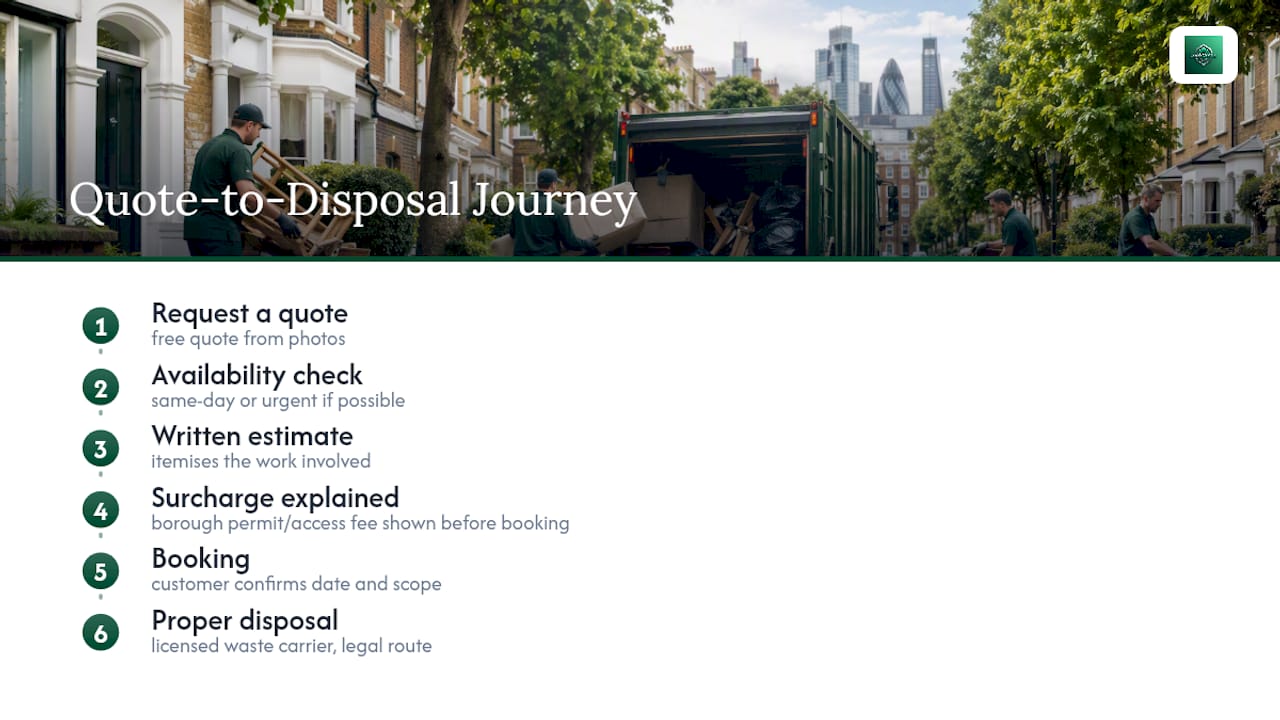
Customers can request a free quote from photos, with same-day or urgent availability offered where team schedules and location allow. Written estimates itemise the work involved, and any borough permit or access-related surcharge is explained before the job is booked, not added afterwards.
What actually saves you money on a London clearance
Send clear photos and a short note about access before you ask for a quote. Carriers who see the job upfront quote more accurately, and you avoid the awkward "revised price on arrival" conversation entirely.
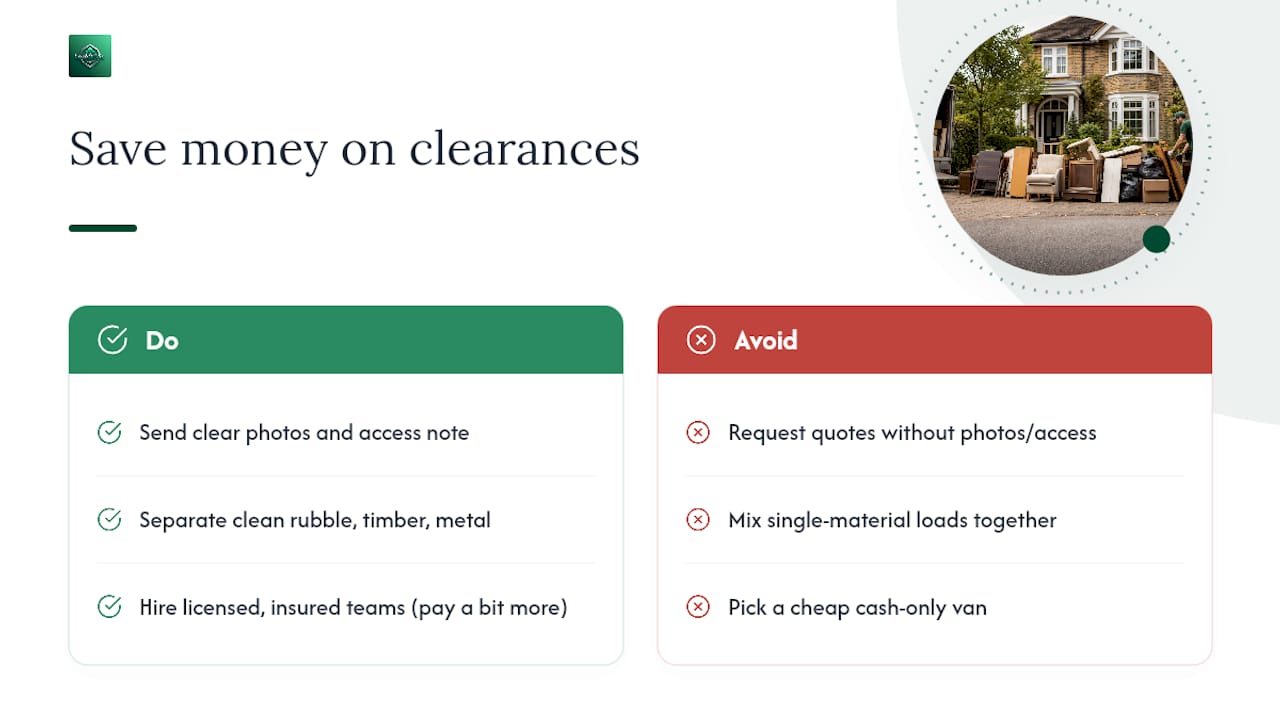
Where it's safe to do so, separate clean rubble, timber or metal from mixed waste. Single-material loads attract lower tipping fees, and that saving often gets passed straight to you.
Paying a little more for a licensed, insured team beats saving £20 with a cash-only van that might dump your waste in a layby. The risk simply isn't worth it.
— Roman
Get a fixed, transparent quote from LookDeVis
Unlike carriers who quote blind over the phone and adjust the price on arrival, LookDeVis Services is the licensed, insured option that prices from photos and gives you a written, itemised estimate before any work begins.

That means no guessing on VAT, no vague tipping arrangements and no surprise access charges tacked on after the van turns up. Whether it's a single sofa, a garden clearance or a full house clearance, our teams work with across Greater London and same-day availability where schedules allow. Visit the waste removal services page to send photos of your job and request your free, no-obligation quote, or call 07348 758581 to speak to the team directly.
Sources
- How much does rubbish removal cost in London? (RubbishBids)
- The real reason London’s rubbish removal costs keep changing (BM Magazine)
- How to dispose of rubbish in London: costs & collection options (LoveJunk)
- Environment Agency — public register (search)
FAQ
How much does it cost to dispose of waste in the UK?
Costs vary by region and method, but Checkatrade puts the UK average rubbish removal job at around £335, with London jobs typically running 20 to 40% higher due to local demand and access costs.
Why is waste removal so expensive in London?
Rising disposal gate fees at transfer stations, ULEZ and Congestion Charge costs, borough permit fees and limited parking all add to labour time and overheads that carriers pass on in their quotes.
How much is waste removal per tonne in London?
Per-tonne pricing mainly applies to builders' waste, soil and rubble rather than household clearances, and rates depend heavily on material type; mixed construction waste carries higher gate fees than clean, single-material loads.
What is the minimum price for junk removal in London?
Single-item or minimum-load collections, such as one sofa or mattress, typically start around £60 to £80, though access and item type can push this higher.